

Green Stone Jewellery
Green stone jewellery spans centuries of lapidary craft, bringing together vibrant emeralds, jade, and peridot set in fine gold and silver.
Green Stone Jewellery
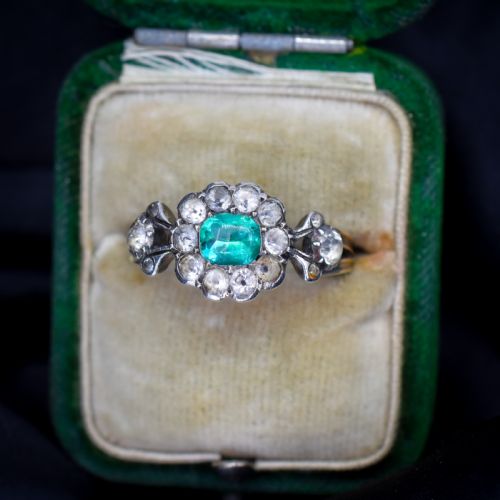
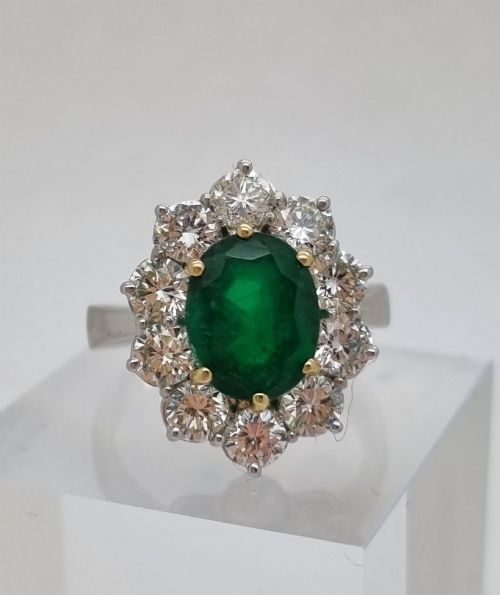
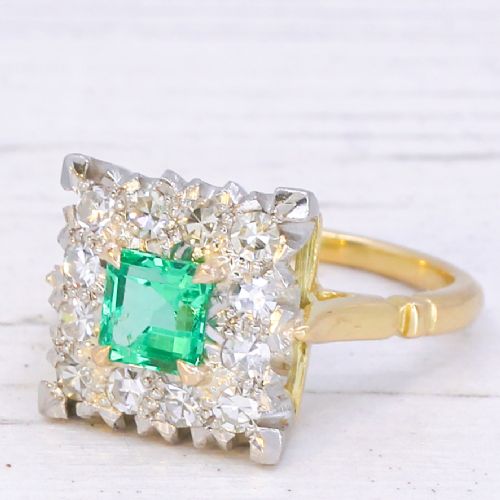
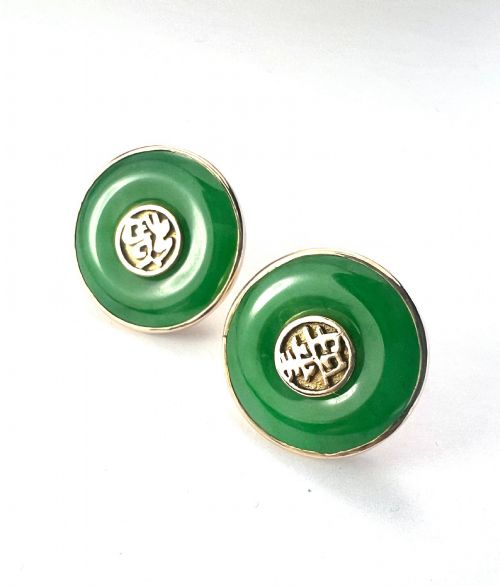
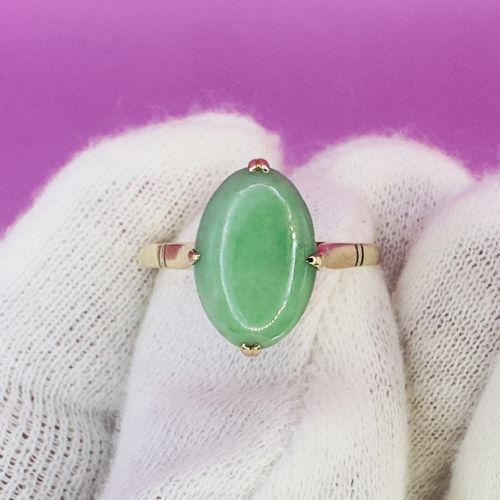
Green stone jewellery encompasses rings, earrings, pendants, and brooches set with naturally coloured minerals and gemstones. When searching for green stone jewellery, collectors encounter various pieces ranging from Georgian paste clusters to mid-century emerald rings.
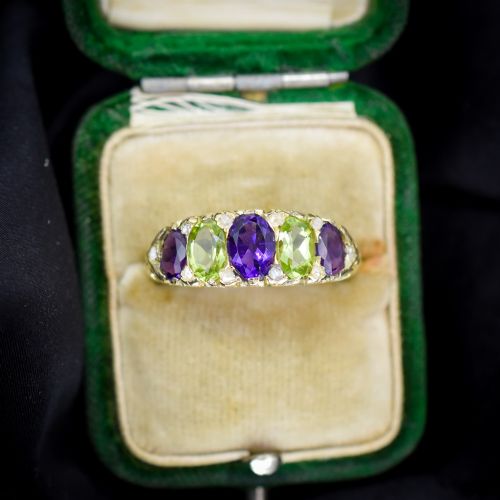
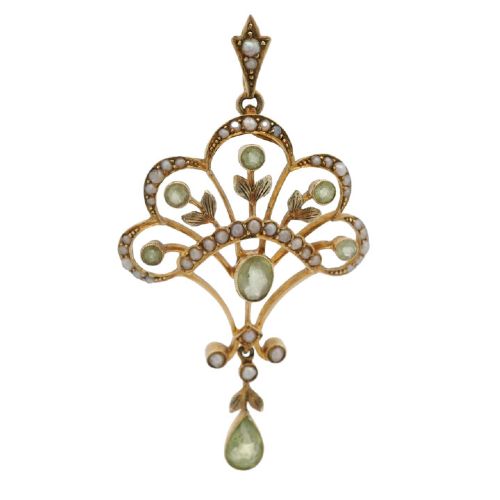
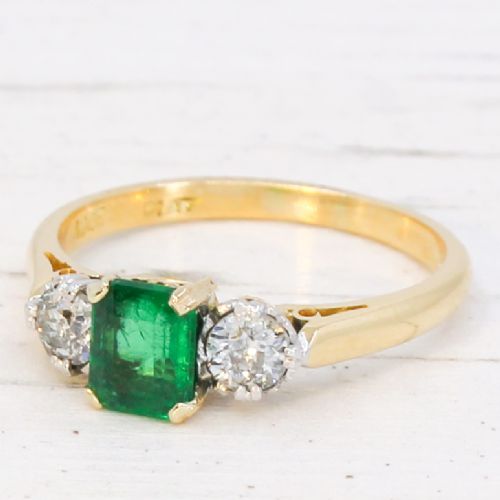
The selection on this page relies heavily on emeralds, jade, and peridot paired with diamonds in gold or silver settings. Victorian and Edwardian examples sit alongside Art Deco and vintage mid-century designs.
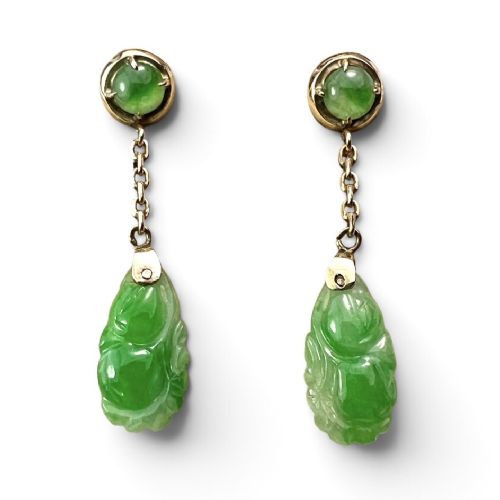
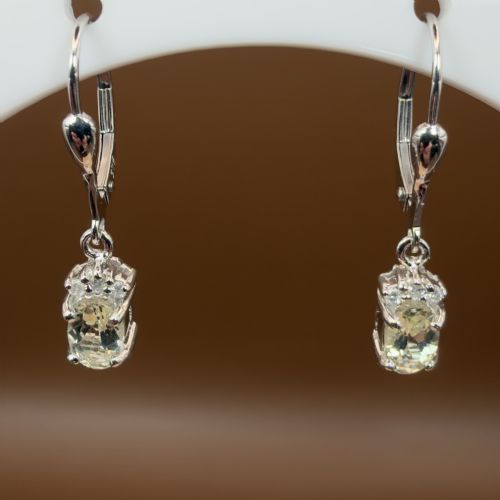
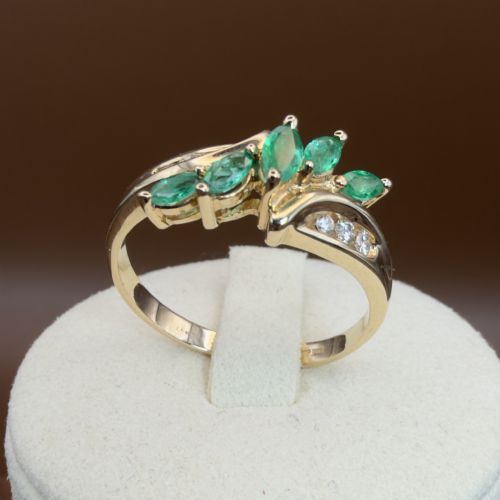
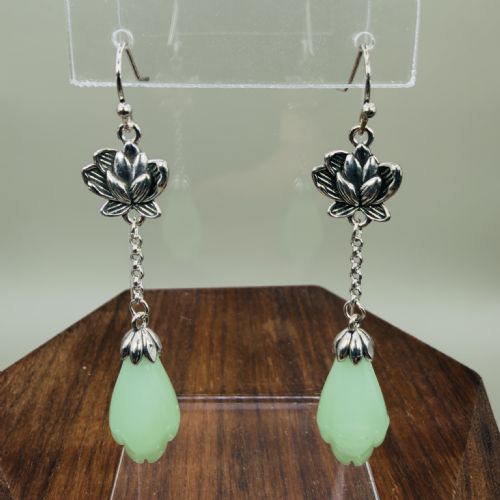
Earrings and rings dominate the selection, often taking the form of cluster settings or drop designs. Buyers frequently find green tourmaline, malachite, and chrysoprase represented among these object types.
Materials and construction methods
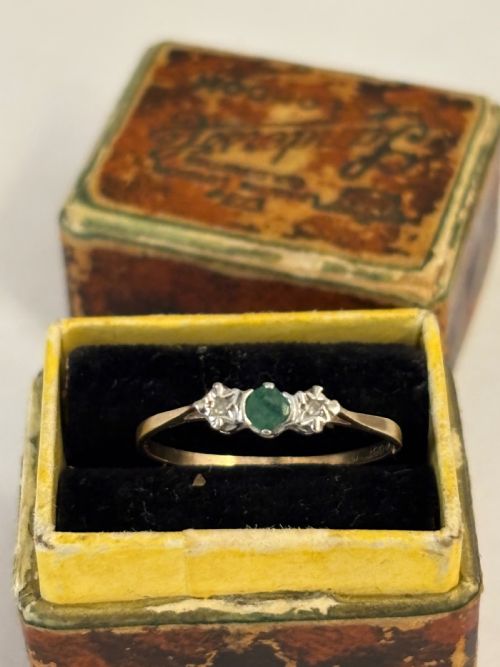
Goldsmiths set green stones in 9ct, 14ct, and 18ct yellow, white, and rose gold, as well as platinum and sterling silver. Diamonds frequently accompany emeralds and peridots in claw or cluster configurations.
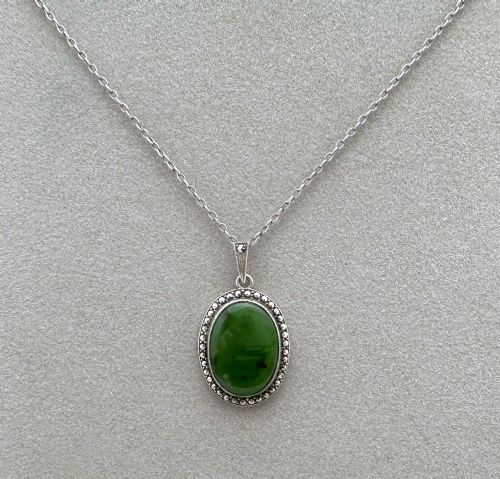
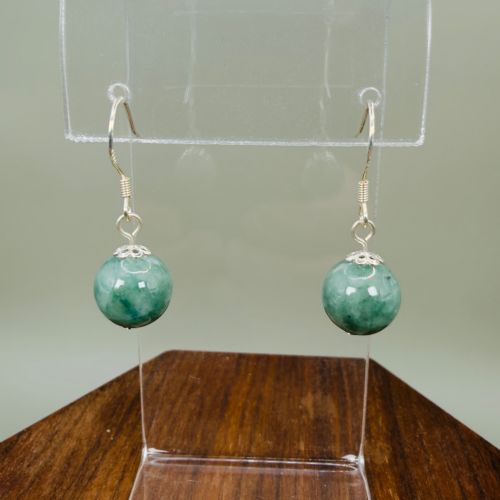
Lapidaries shaped jade, malachite, and chrysoprase into cabochons, carved panels, beads, and torus forms. Metalwork techniques range from Edwardian wirework and Victorian hinge backs to Art Deco geometric bezels.
Listings feature items from the Victorian, Edwardian, and Art Deco periods, utilising emerald, jade, peridot, and gold.
Distinctions in quality
Quality rests upon the natural saturation and clarity of the green gemstone, particularly in emeralds graded for oil treatments or origin. The precision of the stone cutting, whether marquise, oval cut, or carved, dictates the visual impact.
The integrity of the metal setting and the harmonious integration of supporting diamonds influence the overall calibre of the piece. Period-correct construction methods and well-preserved gemstone surfaces distinguish finer examples from standard items.
The Green Stone Jewellery Glossary
- Cabochon
- A gemstone shaped and polished with a smooth, rounded surface rather than faceted. This style highlights the internal colour and opacity of stones like jade and malachite.
- Cluster ring
- A ring featuring a central gemstone encircled by a border of smaller stones, typically diamonds. This arrangement maximises the perceived brilliance and spread of the centre stone.
- Chrysoprase
- A gemstone variety of chalcedony containing small quantities of nickel. It displays a characteristic apple-green colour seen in mid-century and Art Deco designs.
- Peridot
- A gem-grade olivine mineral valued for its distinct lime-green hue. It frequently appears in Edwardian and antique cluster brooches and rings.
Green Stone Jewellery: Frequently Asked Questions
What periods do these pieces come from?
The selection includes items spanning from the Georgian and Victorian eras through the Edwardian period and Art Deco movement. Mid-century and vintage 20th-century designs also feature prominently across the collection.
Craftsmanship evolves noticeably across these eras, moving from hand-worked antique settings to the stylised geometry of the 1920s and 1930s.
Which green stones appear most often?
Emeralds and jade are widely represented, alongside peridot, green tourmaline, malachite, and green paste. Diamonds frequently accompany these green stones in cluster and multi-stone configurations.
Each mineral brings a distinct shade of green, ranging from the deep saturation of Colombian emeralds to the soft translucence of carved jade.
How do I care for antique green stone jewellery?
Different stones require specific handling; softer materials like jade, malachite, and pearls need gentle cleaning without harsh ultrasonic devices. Professional checks ensure that claw settings and delicate hinges remain secure during regular wear.
Storing pieces individually prevents harder diamonds from scratching softer green gems and precious metals.
How can I tell an Art Deco piece apart?
Art Deco items rely on geometric lines, symmetrical patterns, and contrasting materials like platinum paired with carved jade or emeralds. Screw-back earrings and calibre-cut stones often indicate this 1920s and 1930s aesthetic.
Makers of this era favoured stylised floral motifs and stepped shoulders on rings to create a sharp, architectural silhouette.