


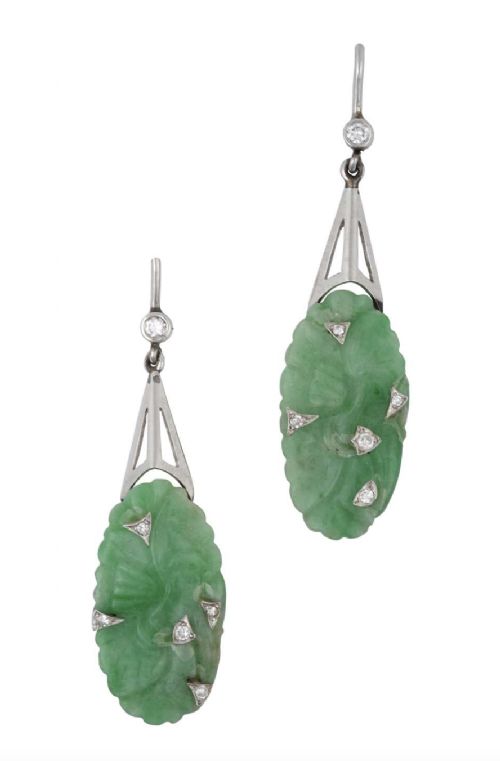


Green Jade Earrings
Green jade earrings bring a distinct mineral colour and polished weight to the ear, combining carved or bead forms with precious metal mounts.
Green Jade Earrings
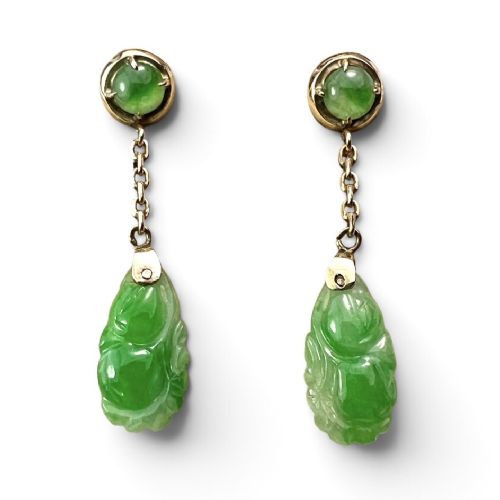
The selection ranges from platinum and diamond-set Edwardian Chinoiserie pieces to sterling silver and gold mountings holding pale green jadeite. Chinese export designs and Asian revival pieces frequently appear alongside European geometric work.
How they were made
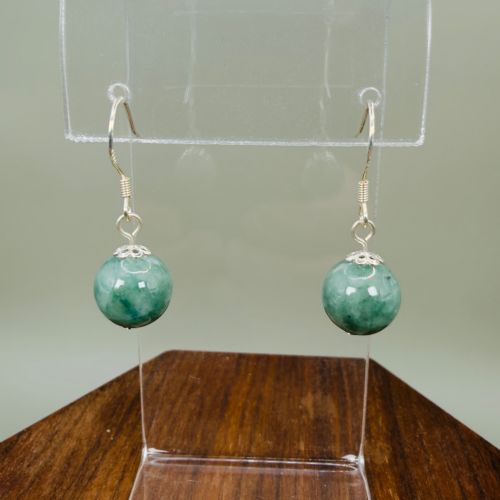
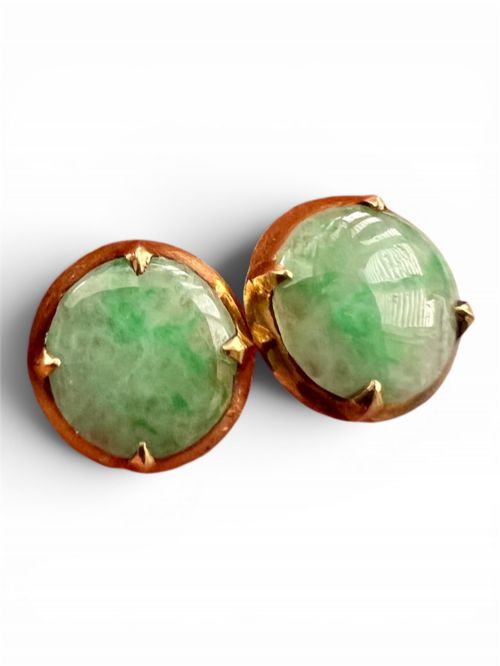
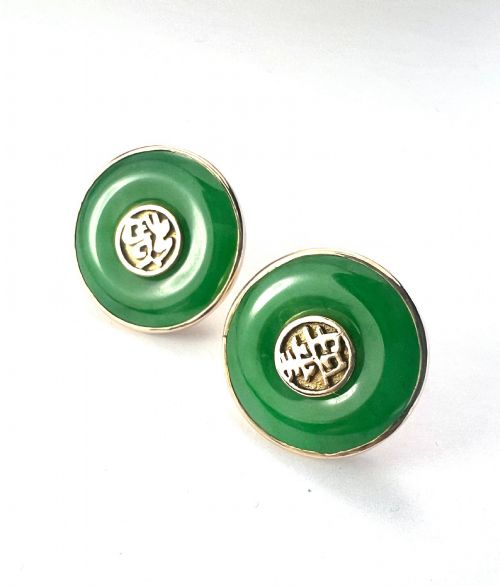
Lapidaries shaped natural jade and jadeite into smooth beads, carved drops, and flat toruses, pairing the carved green stones with durable metal settings. Jewellers utilised 9ct, 14ct, 15ct, and 18ct gold, platinum, and sterling silver to mount the stones securely.
Diamonds and occasionally pearls were integrated into platinum or gold frameworks, particularly in Art Deco configurations that utilised screw backs, hook fittings, or standard posts.
Some screw backs ensure that even historical lobes can host a dangling piece of carved green mineral.
What varies in quality
The visual depth and saturation of the green stone distinguish different tiers of quality, ranging from pale translucent jadeite to rich natural green tones. Metal selection also separates pieces, with platinum and higher carat golds marking out finer mountings.
The intricacy of lapidary work in carved drops and the precision of surrounding diamond or pearl settings demonstrate the original maker's standard of execution.
The Green Jade Earrings Glossary
- Jadeite
- A dense, pyroxene mineral valued for its vibrant green colours and smooth polish. It forms the primary gemstone material in many antique drop and stud earrings.
- Art Deco
- A design style spanning the 1920s and 1930s characterised by geometric symmetry and clean lines. Pieces from this era often pair green stones with diamonds and platinum.
- Torus
- A ring-shaped or doughnut-like form often used for carved jade components. These shapes hang smoothly from gold studs or hooks.
- Screw back
- A mechanical earring backing utilising a threaded post and screw mechanism. This fastening method secures non-pierced lobes comfortably.
Green Jade Earrings: Frequently Asked Questions
How do I date green jade earrings?
Dating relies on the mounting style, metal purity hallmarks, and fastening types used in the construction. Art Deco pieces from the 1920s and 1930s often feature platinum or geometric gold work.
Later mid-century designs from the 1940s and 1950s typically shift towards simpler studs, screw backs, or sterling silver hooks holding green beads and drops.
Are these earrings made of natural jade?
The listings include natural jadeite and jade alongside variations like jade glass in specific decorative pieces. Natural stones display individual mineral characteristics and colour depth.
Checking descriptions helps distinguish genuine carved mineral stones from glass alternatives produced during the twentieth century.
What metal types are common?
Gold appears frequently in 9ct, 14ct, 15ct, and 18ct variations alongside platinum and sterling silver. Platinum was often paired with diamonds during the 1920s.
Yellow and white gold mountings support both carved drops and simple spherical studs across the decades.
How should I care for jade earrings?
Clean jade gently using soft cloths and avoid harsh chemical dips or ultrasonic cleaners that might compromise the stone or delicate metal settings. Proper storage away from harder gemstones prevents surface scratching.
Securing screw backs or posts carefully during storage maintains the alignment of dangling drops and beads.