
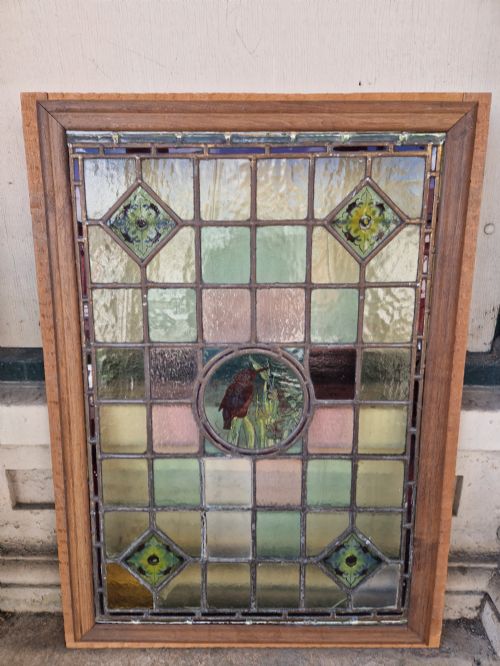


Green Stained Glass Panel
A green stained glass panel brings rich colour and historic character to a room, catching the light through traditional leaded designs.
Green Stained Glass Panel
When you search for a green stained glass panel, you encounter architectural salvage originating from Victorian, Edwardian, and early twentieth-century buildings. These pieces primarily take the form of stained glass windows and panels featuring leaded construction.
The selection ranges widely across decades, spanning the 1880s through to the 1930s. Alongside geometric and architectural layouts, many examples incorporate pictorial hand-painted scenes such as birds, countryside views, floral motifs, and figures.
Materials and construction methods
Maker construction relies on fitted glass held together by pliable lead cames, frequently framed in wood or pine timber for structural support. Artisans integrated painted details and bullseyes directly into the glass arrangements.
Makers combined traditional stained glass techniques with surface hand-painting to depict specific subjects like fruit, lifeboats, and Dutch folk art designs.
Green Stained Glass Panel Retail Price Guide 2026
Typical asking prices for green stained glass panel among the pieces listed under this phrase on Sellingantiques today, from the lower quarter to the upper quarter. They describe what is for sale here now, not the wider market.
Several panels feature hand-painted depictions of Dutch boys, lifeboats, and birds perched on branches.
Assessing quality in antique glass panels
Distinctions in quality often rest upon the intricacy of the hand-painted artistry and the complexity of the glass composition. Detailed pictorial representations require superior brushwork compared to standard geometric leaded grids.
The integrity of the lead network and the presence of specialised elements like amber bullseyes or church arch tops elevate certain examples above simpler utility windows.
The Green Stained Glass Panel Glossary
- Came
- A slender channel of lead used to hold pieces of glass together in a window. These strips form the rigid grid that supports the entire panel.
- Bullseye
- A circular roundel of glass formed by the rotation of the glassblower's pipe. These often feature prominently in period window designs.
- Architectural salvage
- Building materials recovered from structures slated for demolition or renovation. This category includes windows, panels, and timber frames.
- Leaded glass
- Individual pieces of glass joined together by lead cames. This technique predates modern glazing methods and defines much of the period work.
Green Stained Glass Panel: Frequently Asked Questions
How are green stained glass panels hung?
Most panels are designed to be mounted within a larger window frame or hung securely in front of an existing light source using appropriate brackets.
Weight distribution matters, so the wooden or metal frame supporting the leaded glass requires secure anchoring to bear the load.
What periods do these panels date from?
The available pieces span from the Victorian era, through the Edwardian period, and into the 1920s and 1930s.
Dates are determined by stylistic elements, framing materials, and the specific painting techniques employed during manufacturing.
What woods are used in the frames?
Original frames and surrounds commonly utilise pine or general timber construction suited to domestic and ecclesiastical architecture.
Some panels survive as unmounted glass segments, while others retain their original wooden housings.