
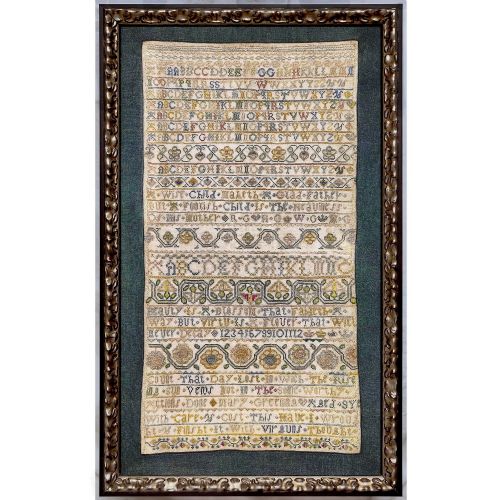


Green Silk Embroidery
Green silk embroidery brings together textile art, samplers, and furnishings where silk thread meets silk, velvet, or cotton grounds.
Green Silk Embroidery
Green silk embroidery encompasses antique textiles, framed wall art, needlework samplers, and sewing tables outfitted with silk components from the seventeenth century through to the early twentieth century. Buyers seeking green silk embroidery frequently encounter Central Asian suzanis, English band samplers, and Victorian or Edwardian work tables featuring silk storage baskets.
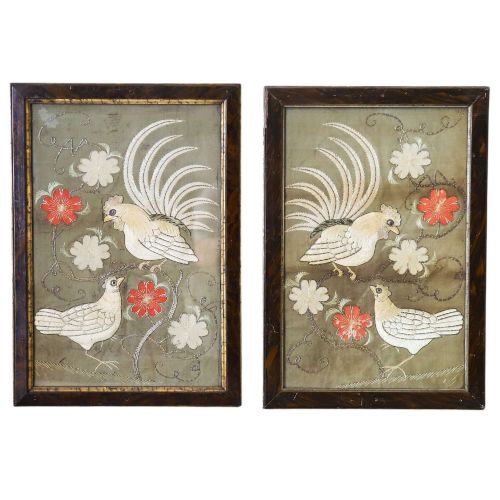
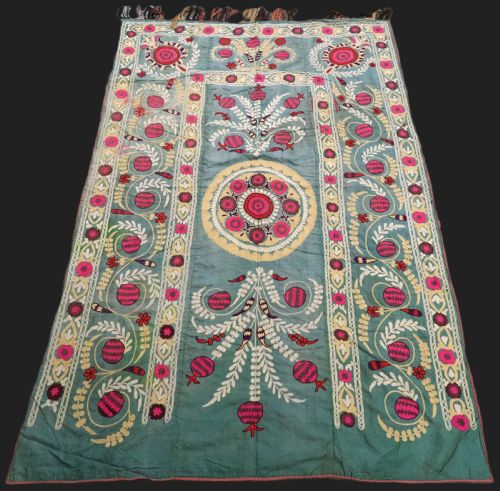
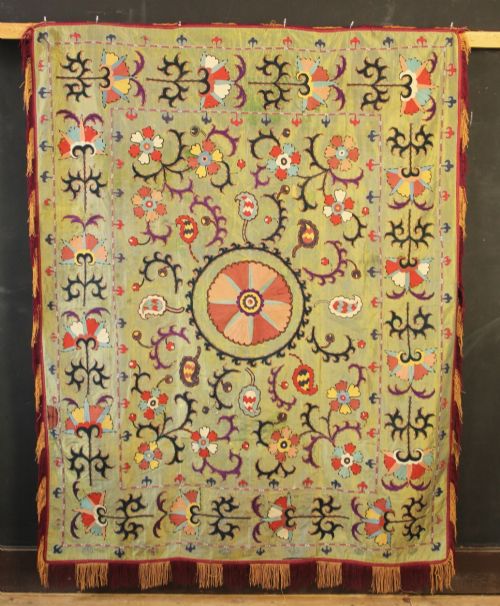
The selection ranges from large Uzbek bed cover suzanis and prayer suzanis to framed French silk embroideries of cockerels and hens in faux tortoiseshell frames. English needlework samplers worked by makers such as Mary Greening and Sarah Reading represent another prominent form within these listings.
Geographic origins span England, France, Central Asia, and India, with materials varying from mahogany and satinwood furniture structures to linen and cotton textile grounds. These pieces function historically as wall hangings, bed covers, decorative panels, and functional sewing furniture.
Materials and construction
Makers utilised silk thread applied to various foundational grounds including silk, cotton, linen, velvet, and wool. Wooden structures in mahogany, satinwood, and glass components appear where textiles intersect with nineteenth-century sewing tables and framed works.
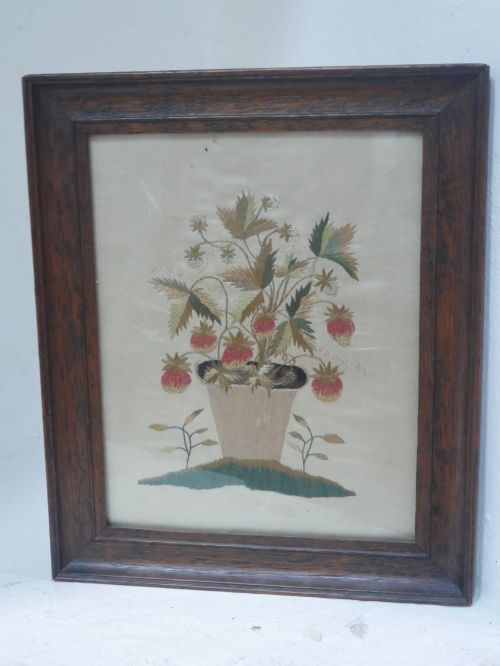
Needlework techniques are demonstrated through traditional sampler stitching, fine needlework panels, and elaborate Central Asian suzani embroidery executed on silk and velvet grounds. Frames incorporate faux tortoiseshell finishes to enclose French textile art.
Mary Mason carefully stitched her name and age at twelve years old, leaving a permanent record of an afternoon with a needle centuries ago.
Distinctions in quality
Quality rests upon the fineness of the needlework execution, the preservation of the silk threads and velvet or silk grounds, and the integrity of supporting wooden frames or furniture structures. Early English samplers display disciplined lettering and pictorial composition, while Central Asian suzanis show complexity in pattern density and dye preservation.
The integration of original materials, such as inlaid mahogany work tables housing intact silk baskets and period frames around French panels, elevates the standard of the piece.
The Green Silk Embroidery Glossary
- Suzani
- An embroidered tribal textile from Central Asia, often created as bed covers or wall hangings. These pieces frequently feature silk thread worked on silk or cotton grounds.
- Sampler
- A piece of needlework demonstrating various stitches and alphabets, commonly worked by young girls in the seventeenth, eighteenth, and nineteenth centuries. Examples recorded here include band samplers and prayer samplers.
- Work table
- A small piece of nineteenth-century furniture designed for sewing and needlework, often constructed in mahogany or satinwood and equipped with a sliding silk basket.
- Velvet
- A woven tufted fabric with a dense pile, utilised in Indian and seventeenth-century English pieces as a heavy ground for silk embroidery.
- Band sampler
- An early embroidery format featuring horizontal bands of different geometric and floral patterns stitched in silk thread on linen.
Green Silk Embroidery: Frequently Asked Questions
What is an antique suzani?
An antique suzani is a large embroidered textile originating from Central Asia, traditionally made as part of a bride's dowry. These pieces feature silk embroidery on silk or cotton grounds.
They function as bed covers, wall hangings, or prayer panels, displaying traditional motifs worked in vibrant or muted tones.
How do I care for antique silk embroidery?
Antique silk embroidery requires protection from direct sunlight to prevent the silk threads and grounds from fading and degrading over time. Framing under glass or mounting away from heat sources preserves the textile.
Avoid moisture and professional cleaning unless handled by a textile conservator familiar with antique silk and velvet.
What is a needlework sampler?
A needlework sampler is a piece of canvas or linen stitched with alphabets, numbers, and motifs to demonstrate a maker's skill. They were commonly produced by children and young women in Georgian and Victorian times.
Signed and dated samplers record the maker's name, age, and year of completion, offering a direct link to the past.
How can I tell the age of a textile?
Dating textiles relies on examining the types of silk thread, the composition of the backing fabric, the stitching techniques, and stylistic evidence such as lettering styles on samplers. Contemporary materials differ significantly from eighteenth and nineteenth-century fibres.
Documentation, signatures, and framing materials further assist in placing a piece within a specific century or period.