
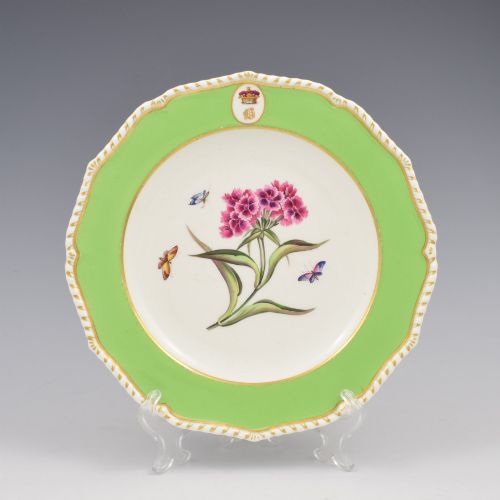


Green Porcelain Cabinet Plate
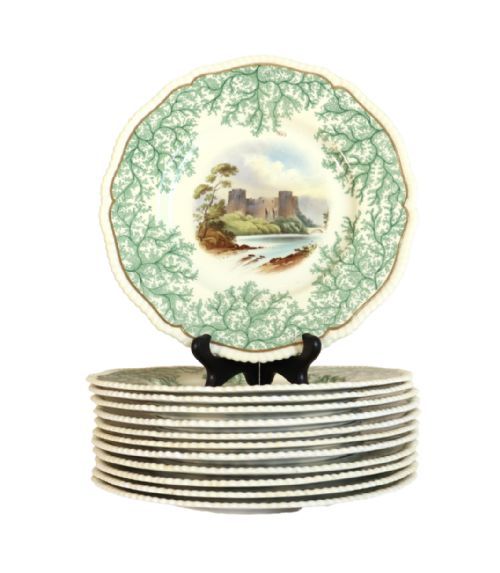
These green porcelain cabinet plate pieces are decorative display ceramics prized for botanical or armorial hand painting, made to sit on a stand or hang on a wall.
Green Porcelain Cabinet Plate
A green porcelain cabinet plate is a decorative ceramic dish produced primarily for display rather than dining use. The selection spans the eighteenth, nineteenth, and early twentieth centuries, featuring works from English factories such as Worcester, Derby, and Royal Doulton.
Forms include cabinet dishes, dessert plates, and saucers designed with distinct coloured borders. Many examples showcase botanical painting, armorial crests, or hand-painted birds and florals set against deep green ground colours.
The objects derive from periods spanning Georgian elegance through Victorian and Edwardian tastes. Buyers encounter both single cabinet plates and matched pairs or larger sets bearing distinguished provenance.
Materials and technique
These pieces utilise hard-paste or soft-paste porcelain, along with bone china and earthenware. Potters shaped the ceramic bodies before applying coloured glazes, enamel pigments, and metallic decoration.
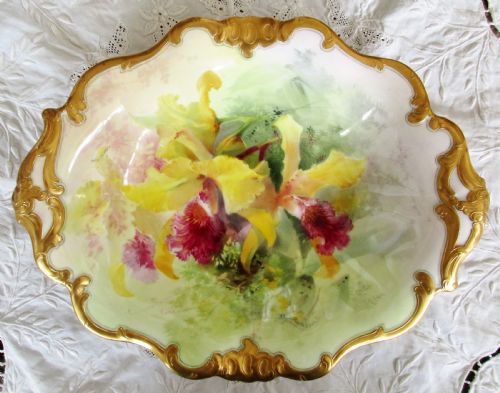
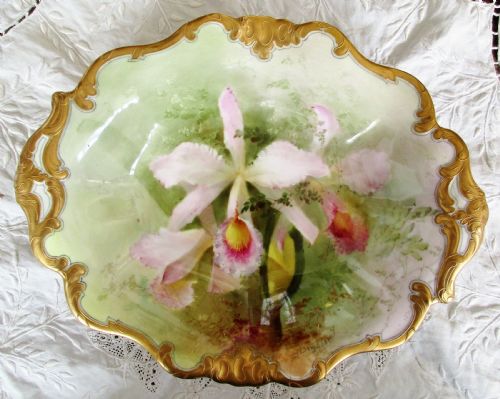
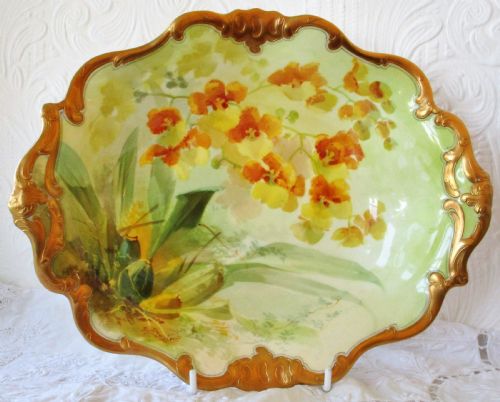
Gilding, gold leaf, and gold leaf highlights complement the green ground colours. Skilled artists painted botanical subjects, landscapes, and armorial details by hand before final kiln firing.
Several plates depict specific orchids like Oncidium Forbesii, painted by artists who clearly preferred botany over simple geometry.
Qualities that distinguish the pieces
Quality rests upon the precision of the hand painting and the depth of the porcelain body. Botanical studies and armorial crests executed by named artists elevate the status of an individual dish.
The richness of the green ground colour and the crispness of the surrounding gilding define the visual success of the surface. Condition, factory marks, and historical provenance further separate standard production from exceptional examples.
Spode·Royal Doulton·Bloor Derby·Minton·Worcester·Flight Barr And Barr·Coalport·Rockingham·Royal Crown Derby·Meissen
The Green Porcelain Cabinet Plate Glossary
- Cabinet plate
- A decorative ceramic dish intended for display in a cabinet or on a wall rather than everyday table use. These items often feature elaborate hand-painted scenes and gilt borders.
- Armorial
- A design incorporating a family coat of arms or crest. Such decoration was frequently commissioned by noble families for formal dining or display sets.
- Bone china
- A type of soft-paste porcelain incorporating bone ash for added strength and translucency. English factories used this ceramic body extensively during the nineteenth century.
- Enamel
- Opaque glass-like pigments fused to the ceramic surface during firing. These colours provide the vibrant hues seen in floral and landscape panels.
- Gilding
- The application of gold leaf or powdered gold to ceramic surfaces. It highlights borders, rims, and handle details on formal tableware.
Green Porcelain Cabinet Plate: Frequently Asked Questions
What is a green porcelain cabinet plate?
A green porcelain cabinet plate is a decorative ceramic dish made for display rather than dining. They typically feature hand-painted botanical subjects, armorial crests, or birds against a green ground.
Such items were produced by major European and English factories across the eighteenth and nineteenth centuries as ornamental pieces for formal rooms.
How were cabinet plates displayed?
Cabinet plates were displayed on dedicated stands within glazed furniture or hung directly on walls. Their rich green borders and gilt highlights made them effective focal points in drawing rooms.
Unlike everyday dinnerware, these plates remained protected from regular use to preserve the delicate hand-painted enamels.
How do I date a porcelain plate?
Dating relies on factory marks stamped or painted on the reverse, alongside the style of the decoration and the ceramic body used. Archival records often link specific ciphers to exact manufacturing decades.
Stylistic shifts, such as the transition from Georgian botanical realism to Victorian ornamentation, provide further chronological clues.
Are these plates safe to use for food?
These pieces are intended primarily for display and collection rather than culinary use. Historic glazes and delicate overglaze enamels can wear or degrade with modern food contact and washing.
Preserving the integrity of the hand-painted surface and gilding requires keeping the items on display stands.