
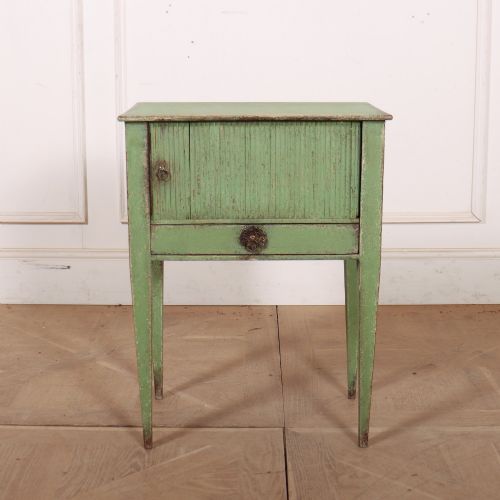

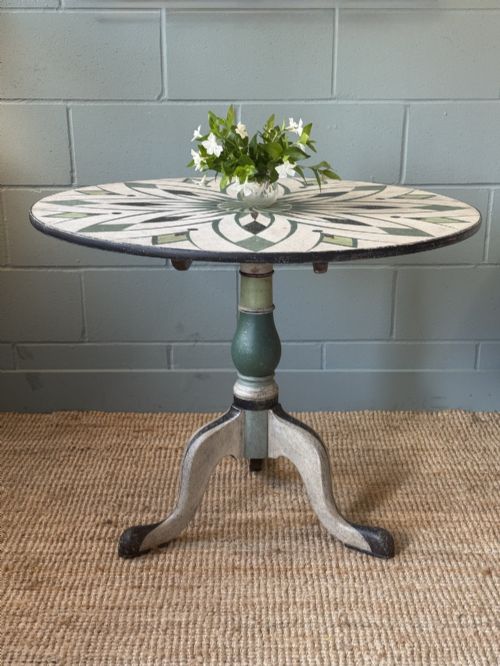


Green Painted Pedestal Table
A green painted pedestal table brings useful surface space and character to a room, drawing the eye with its painted finish and central support.
Green Painted Pedestal Table
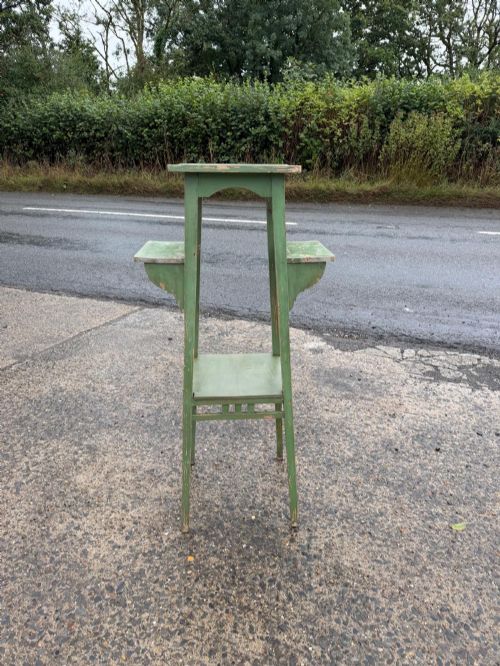
A green painted pedestal table comprises compact surfaces supported by a single central pillar, spanning forms such as occasional tables, bedside tables, plant stands, and drum tables. These pieces emerge from periods including the nineteenth century and the Victorian era, offering practical utility alongside distinct decorative presence.
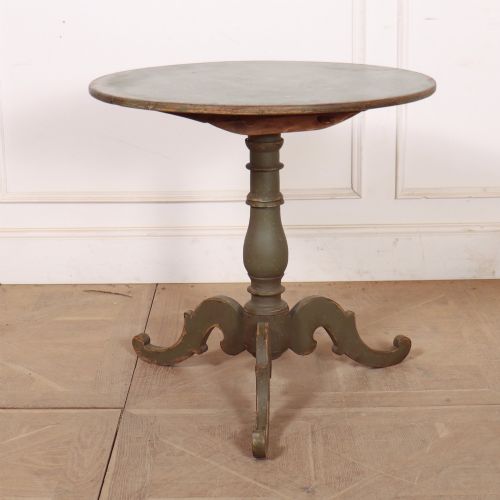
Support structures take the form of tripod bases or carved pedestals, occasionally featuring tilt mechanisms or multiple tiers. Their compact scale suits diverse domestic settings, functioning as side tables, lamp tables, or display stands.
How they were made
Construction relies upon traditional timber and pine substrates, shaped by turning and joining techniques suited to central pillar supports. Wood forms the structural core of pedestals and tabletop surfaces, whilst gesso provides a smooth preparation layer for subsequent paint application.
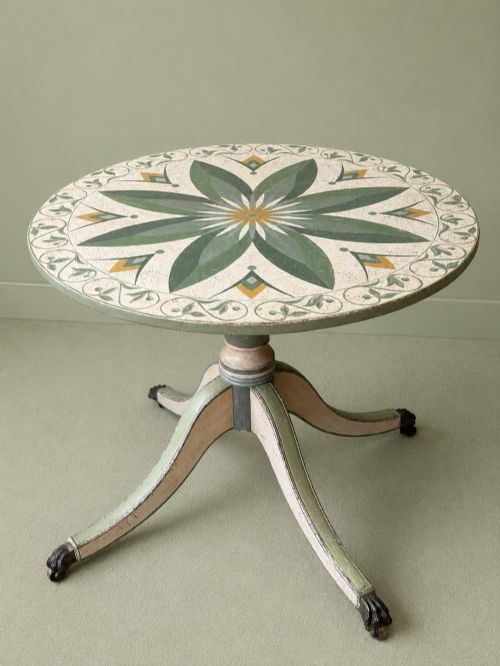
Surface decoration involves hand application of paint, sometimes incorporating decorative floral motifs or retaining original weathered finishes. Brass and metal components appear occasionally in hardware fittings or structural elements, complementing the painted wooden bodies.
Some nineteenth-century tables come equipped with hidden tilt mechanisms, ready to fold flat against the wall like obedient wooden soldiers.
What varies in quality
Quality separates according to the integrity of the surface finish and the harmony of the proportions. Original decorative paintwork holds greater visual coherence than later surface decoration applied over older timber.
The execution of carved details on pedestals and tripod bases reflects the skill of the maker. Finer examples maintain structural balance in tilt-top mechanisms and joinery, ensuring stability alongside decorative merit.
The Green Painted Pedestal Table Glossary
- Pedestal table
- A table supported by a single central pillar rather than four corner legs. This form allows for easier seating placement around the perimeter.
- Tilt top
- A tabletop hinged to the central pillar so it can pivot to a vertical position when not in use. This mechanism saved space in nineteenth-century interiors.
- Gesso
- A plaster-like mixture applied to wood surfaces to prepare them for painting or gilding. It provides a dense, smooth ground for decorative work.
- Tripod base
- A three-legged support structure commonly found beneath nineteenth-century pedestal tables. Three points of contact ensure stability on uneven floors.
- Drum table
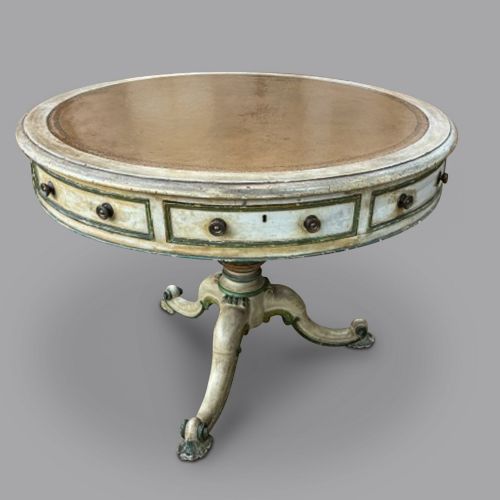
- A circular library or occasional table with a deep rim resembling a drum. These typically feature drawers around the perimeter and sit upon a robust central column.
Green Painted Pedestal Table: Frequently Asked Questions
Where should I place a pedestal table?
These tables fit easily beside seating, in hallways, or as plant stands in corners where space is restricted.
Their compact footprints and central pillars allow them to function effectively without crowding a room.
How do I care for painted wood?
Keep painted furniture away from direct sunlight and excessive moisture to protect the finish.
Dust gently with a soft cloth rather than using harsh chemical cleaning products.
What is a tilt top used for?
The tilting mechanism allowed nineteenth-century households to store tables flat against walls when not needed.
Today, this feature highlights the piece's mechanical history and original function.
How can I tell the age of a painted table?
Age is indicated by timber construction methods, nail types, and the wear patterns within the paint layers.
Nineteenth-century pieces often show authentic signs of age beneath original decorative schemes.