




Swedish Hall Table
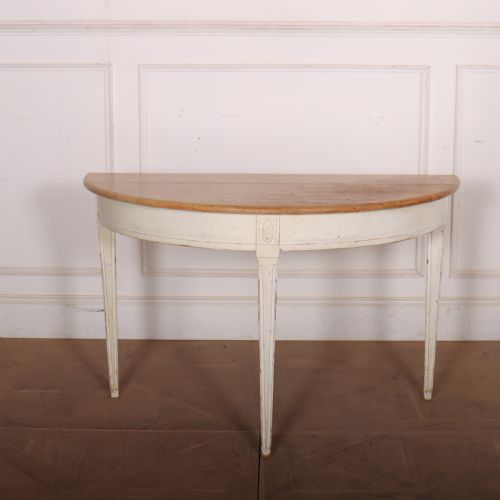
A swedish hall table brings a clean, pale proportion and understated Nordic character directly to an entrance.
Swedish Hall Table
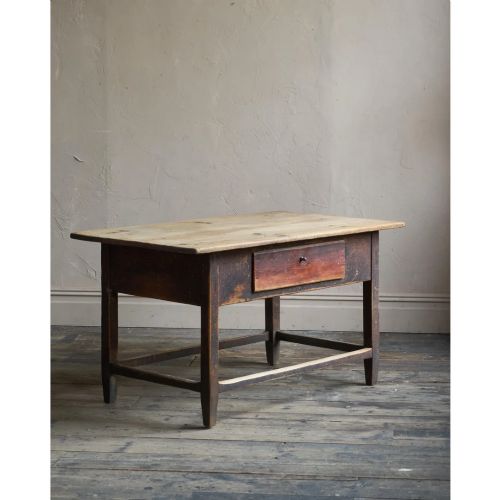
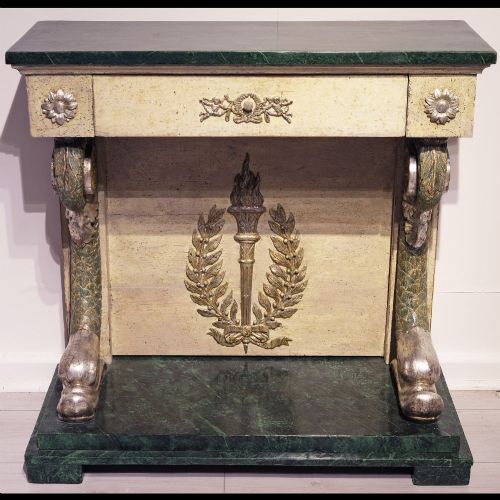
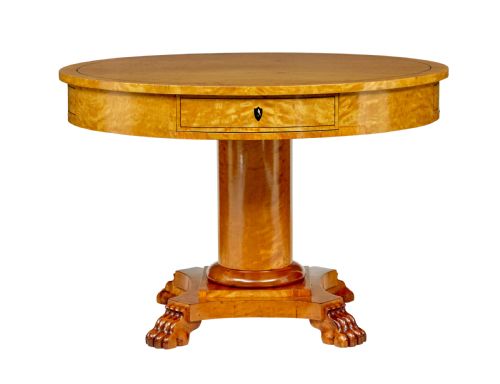
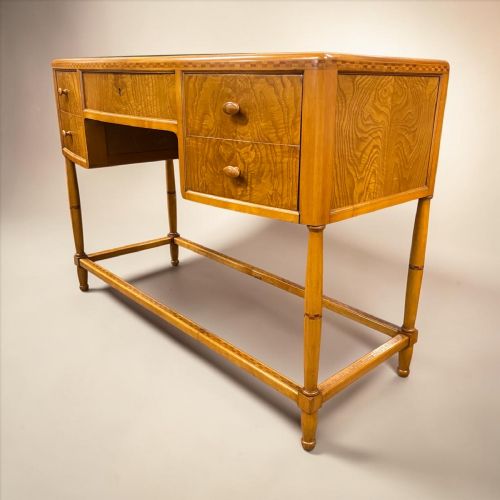
A swedish hall table encompasses console tables, side tables, occasional pieces and centre tables designed for narrow spaces and hallways. These forms emerge primarily in the eighteenth and nineteenth centuries, spanning Gustavian, Biedermeier, Empire and rustic country styles.
The version most commonly met on this page is the painted pine or birch console, often shaped as a demi-lune or rectangular board designed to sit flat against a wall. Examples range from simple folk-made pieces to formal neoclassical forms with marble tops.
How they were made
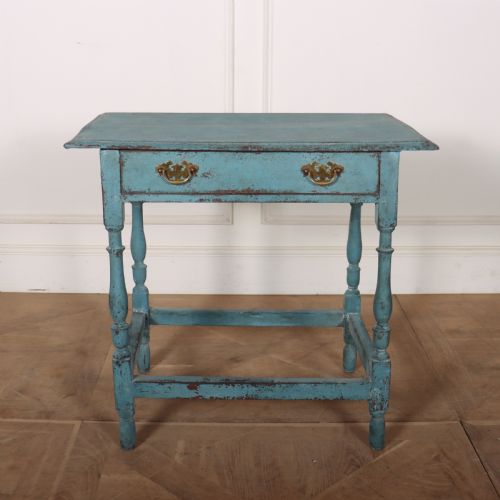
Construction relies heavily on native timbers such as pine, birch, elm and alder root, frequently finished with layered oil paint or gesso. Cabinetmakers shaped these woods into box stretchers, turned legs and inlaid surfaces.
Surfaces often show traditional painted finishes in pale or muted tones, sometimes combined with contrasting wood veneers like burr birch or decorative marble inserts on the top.
Several tables rely on box stretchers to keep their balance, proving that even a piece of furniture needs a good yoga session.
What varies in quality
Quality rests on the crispness of the carving, the choice of timber such as figured birch or dense elm, and the integrity of the original paint surface. Finer examples display balanced proportions and sophisticated neoclassical details rather than purely utilitarian construction.
The handling of the timber and the subtlety of the painted finish distinguish standard workshop pieces from exceptional examples produced within urban centres or high-status provincial commissions.
The Swedish Hall Table Glossary
- Gustavian
- The Swedish neoclassical style spanning the late eighteenth century, characterised by restraint, symmetry and pale painted finishes. It draws inspiration from French Louis XVI design but applies a simpler, lighter interpretation.
- Demi-lune
- A half-moon shape used for console and side tables designed to stand flush against a wall. This form saves floor space in narrow hallways.
- Biedermeier
- A central European and Scandinavian style from the early nineteenth century favouring clean lines and warm veneers over excessive ornamentation. It prioritises domestic utility and comfort.
- Box stretcher
- An interconnecting framework of wooden rails near the base of a table connecting the legs for added stability. It is frequently found on nineteenth-century vernacular pieces.
- Gesso
- A plaster-like mixture applied to wood surfaces to prepare them for painting or gilding. It provides a smooth ground for decorative finishes.
Swedish Hall Table: Frequently Asked Questions
Where should I place a swedish hall table?
These tables suit narrow entrance halls, landings and corridors where depth is limited. Their shallow profiles allow them to sit against walls without obstructing pathways.
Pinned beneath a mirror or paired with a small lamp, they provide a surface for post and keys while setting a refined tone at the threshold of a home.
How do I care for painted wood?
Painted surfaces require gentle dusting with a dry, soft cloth to prevent the accumulation of grit. Avoid harsh chemical cleaners or abrasive materials that can lift historic paint layers.
Keep the wood away from direct heat sources and strong sunlight to prevent the paint from drying out, cracking or fading over time.
What is the difference between Gustavian and Biedermeier?
Gustavian pieces belong to the late eighteenth century and typically feature pale painted finishes, fluted legs and neoclassical carvings. They lean towards light, airy proportions.
Biedermeier furniture dates from the nineteenth century and showcases polished wood grains like birch and elm with minimal ornamentation, focusing instead on architectural lines.
How can I tell if the paint is original?
Original painted surfaces show natural wear patterns, gentle softening around edges and fine craquelure consistent with age. Multiple microscopic layers often accumulate beneath the top coat.
Modern repainting tends to appear uniform and flat, lacking the subtle texture and depth found on nineteenth-century pine and birch furniture.