
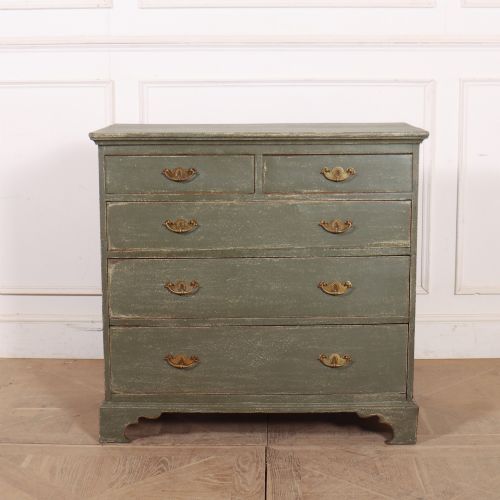

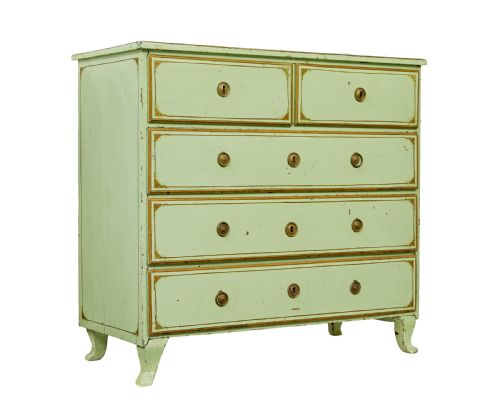
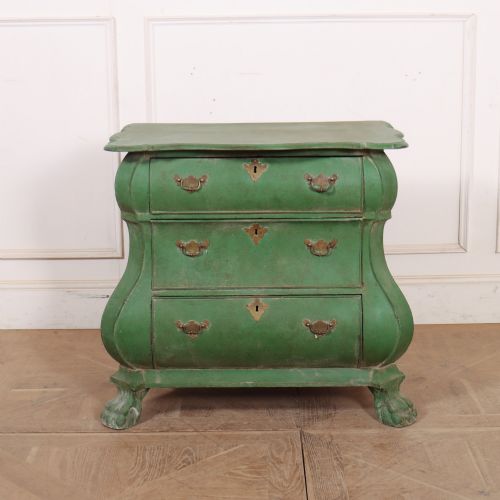
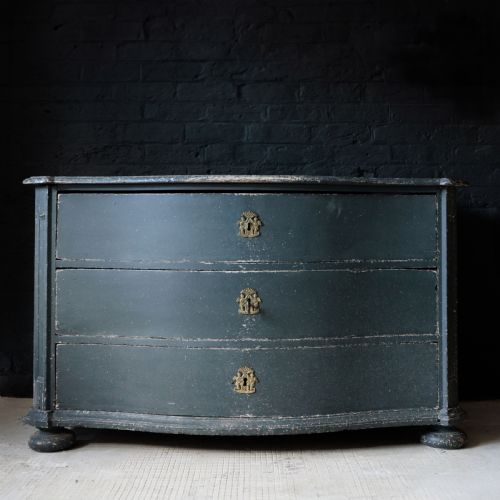
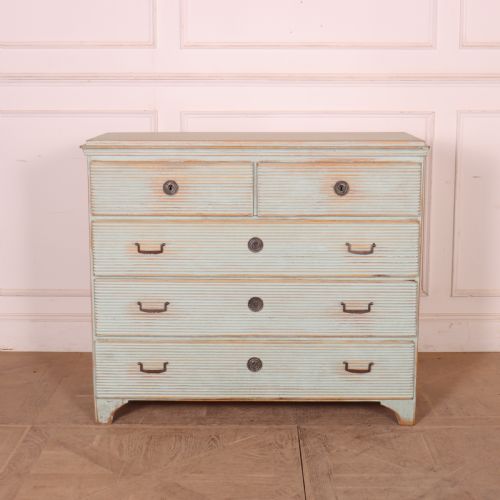
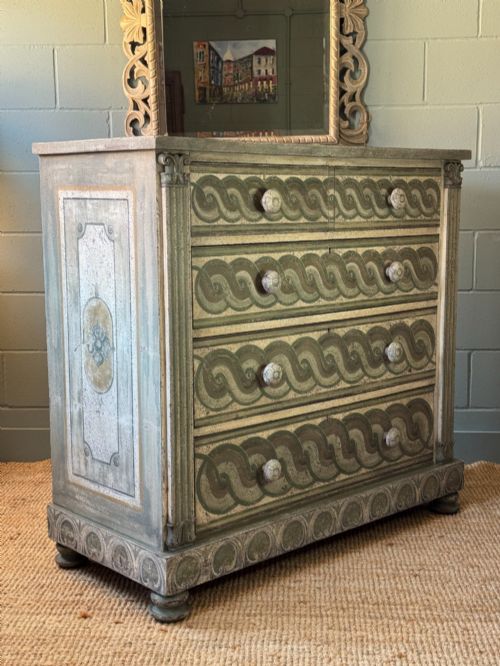


Green Painted Commode
These green painted commode examples offer functional storage dressed in centuries of European decorative tradition.
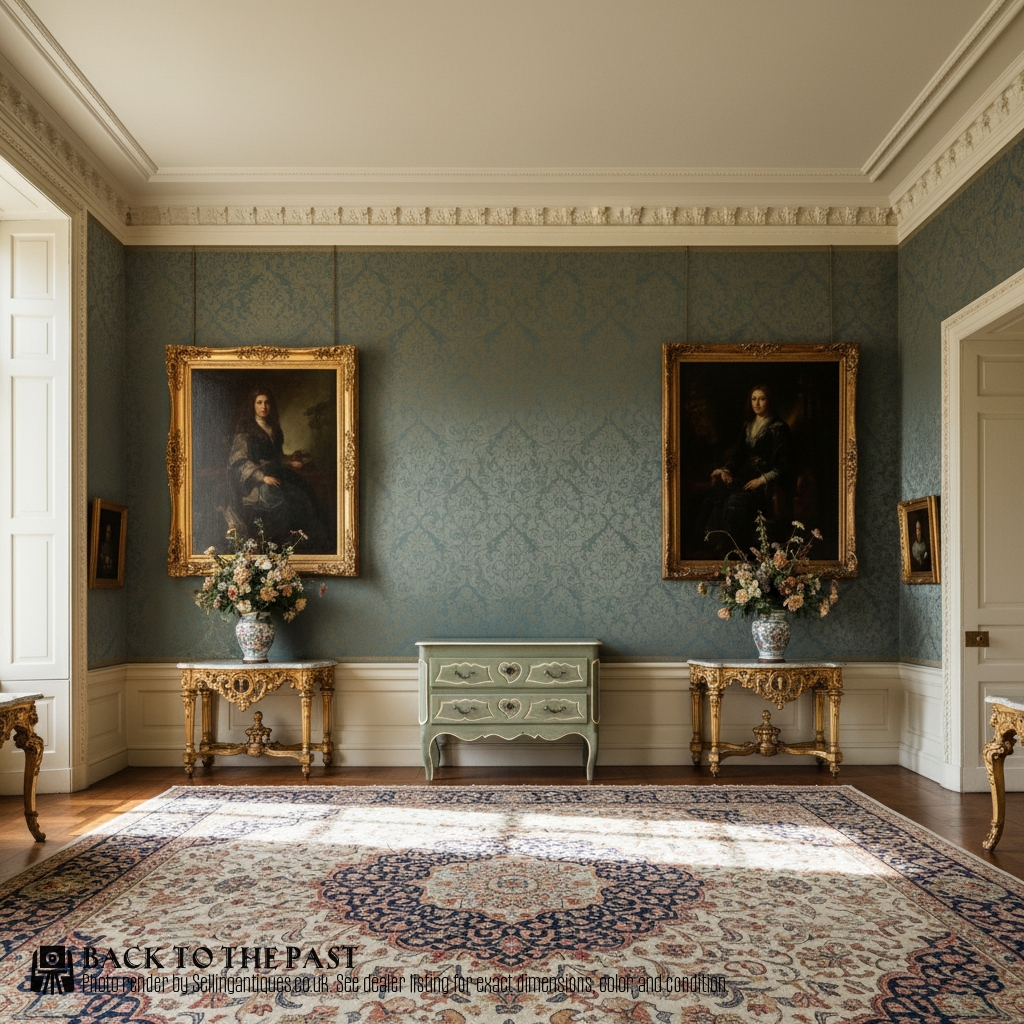
What these pieces are
A green painted commode is a chest of drawers finished with pigment, appearing across several distinct European regional styles. When browsing these listings, buyers encounter forms ranging from 18th century provincial French pieces to Swedish Gustavian and Dutch baroque variations.
The objects take the form of chests of drawers, utilising serpentine fronts, bombe profiles, and breakfront shapes for architectural presence. Origins span France, Italy, Sweden, and the Netherlands, with dates stretching from the 18th century through to the early 20th century.
Most pieces seen here reflect country house or provincial aesthetics rather than courtly formality. The surface colour unites disparate forms, whether applied as a solid distressed coat over pine or decorated with Venetian scenes.

How they were made
Construction relies primarily on pine and general wood carcases built by regional joiners. Surfaces receive layers of paint and polychrome pigment, sometimes accented with gold leaf details to highlight carved mouldings.
Hardware consists of brass handles and escutcheons fitted to drawer fronts. Finishes range from simple painted wood surfaces to intricate decorative schemes featuring specific regional motifs.
Retail Price Guide 2026
Typical UK retail prices for green painted commode, calculated from the Sellingantiques database of over a million retail prices indexed since 2003. This retail price guide relies exclusively on Sellingantiques data; no external sources or auction records are used, so the figures do not describe the wider market.
Current listings span the 18th century to 1920, featuring painted pine, brass fittings, and styles from French provincial to Swedish Gustavian.
What varies in quality
Quality separates along the lines of joinery sophistication and the integrity of the painted surface. Pieces displaying original polychrome paint or sophisticated decorative scenes sit apart from simpler utilitarian pine chests.
The refinement of the carcase shape, such as the sweeping curves of a serpentine front or the complex swells of a bombe commode, dictates the maker's skill. Finer examples maintain harmonious proportions alongside well-preserved surface patination.
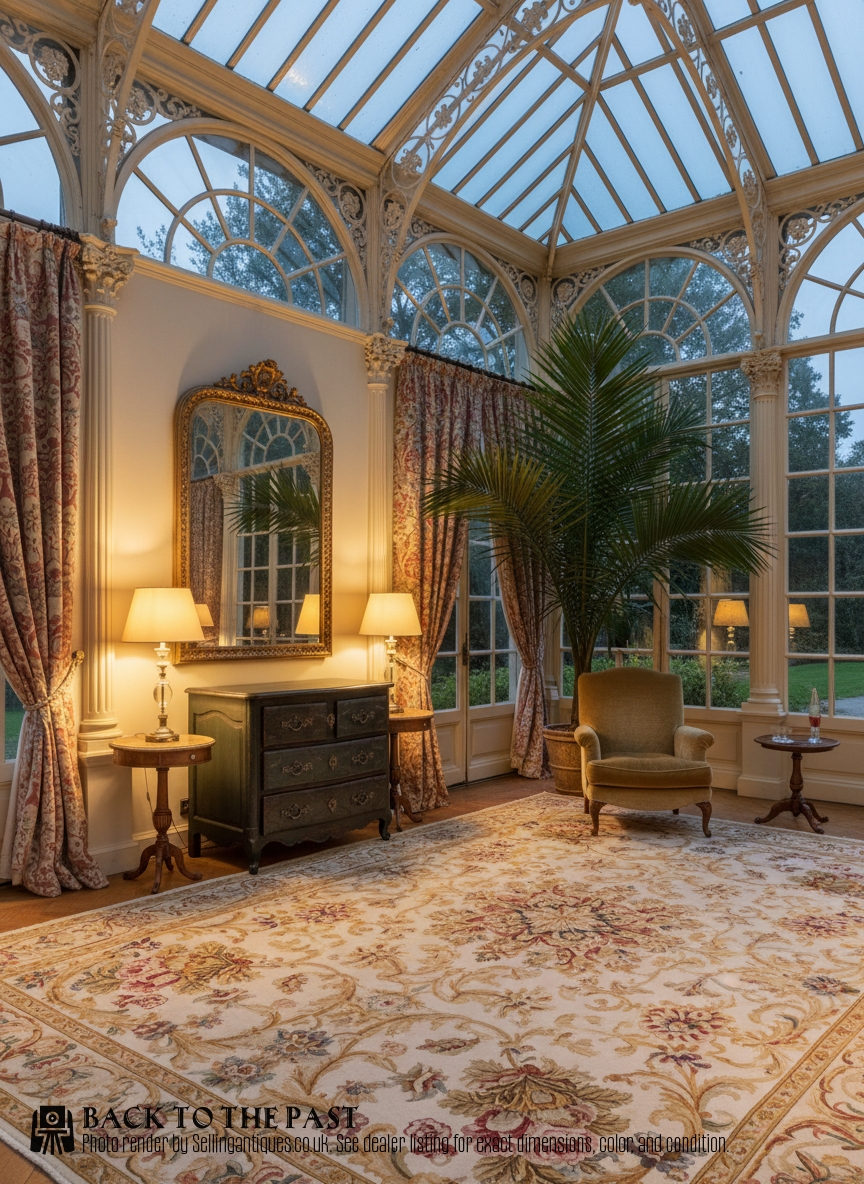
The Green Painted Commode Glossary
- Commode
- A low chest of drawers, originating in France during the late 17th century. It typically provides bedroom or parlour storage with a flat top surface.
- Serpentine
- A furniture front shape that curves outward at the centre and inward at the sides. This contour requires careful carpentry to execute on drawer fronts.
- Bombe
- A bulging, convex commode profile associated with baroque and rococo furniture. The sides and front swell outward before tapering near the base.
- Gustavian
- The Swedish interpretation of neoclassical style, characterised by lighter proportions and pale painted finishes. It developed during the reign of Gustav III.
- Breakfront
- A piece of furniture whose central section projects forward from the flanking sides. This adds architectural depth to the elevation.
Frequently Asked Questions
What is a green painted commode?
It is a chest of drawers finished with a green painted surface, originating from various European regions including France, Sweden, and Italy. These pieces serve as functional storage units while introducing historic colour and decorative character into a room.
Designs range from simple country pine chests to more elaborate baroque and neoclassical forms. The green pigment often shows age and wear, contributing to the decorative appeal of the furniture.
How do I date an old commode?
Dating relies on examining the construction methods, timber types, and stylistic indicators such as hardware and decorative motifs. Pieces from the 18th century often feature hand-cut joints and native timbers like pine, shaped into serpentine or bombe contours.
Later pieces from the 19th and early 20th centuries incorporate different decorative details, such as Venetian scenes or gilt highlights. Comparing the form against known regional styles helps narrow down the period of manufacture.
Where were these commodes made?
The pieces originate from workshops across continental Europe, with strong representations from France, Sweden, the Netherlands, and Italy. Each region developed distinct stylistic traits, such as Swedish Gustavian restraint or Dutch baroque curves.
Provincial makers adapted high-style court furniture into local vernacular versions using readily available woods like pine. This regional diversity creates the range of forms seen in these listings.
How do I care for painted wood?
Painted wood surfaces require stable environmental conditions away from direct sunlight and excessive moisture fluctuations. Dusting with a soft, dry cloth preserves the pigment and prevents surface abrasion.
Avoid harsh chemical cleaners or polishes that can lift or dull historic paint layers. Gentle maintenance protects the original patination accumulated over the centuries.