






Swedish Style Commode
A Swedish style commode brings architectural restraint and luminous painted finishes to an interior, offering practical drawer storage with distinct Scandinavian elegance.

Swedish Style Commode
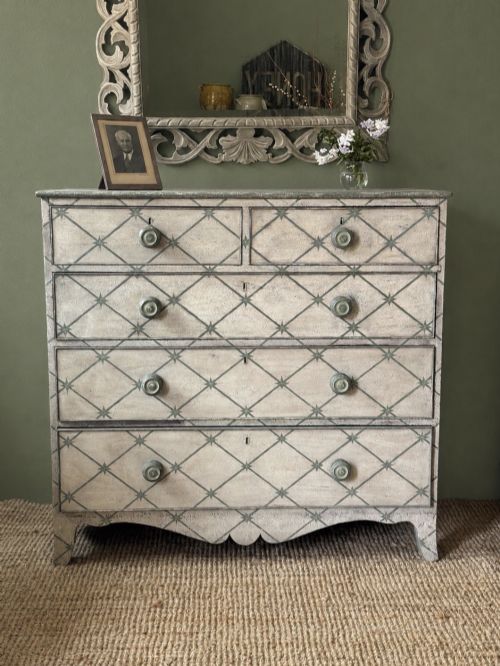
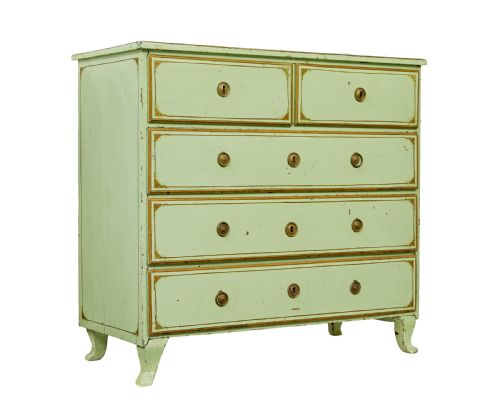
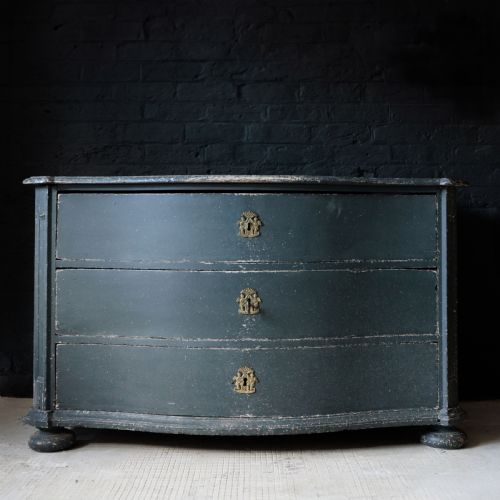
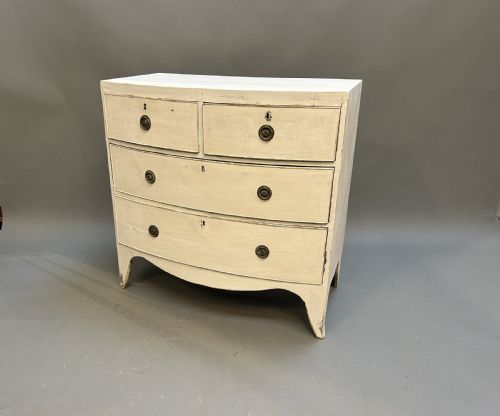
A swedish style commode typically takes the form of a chest of drawers or a serpentine cabinet originating from the eighteenth or nineteenth century. These pieces reflect regional adaptations of European movements, spanning Gustavian neoclassical design, baroque revival, and empire revival.
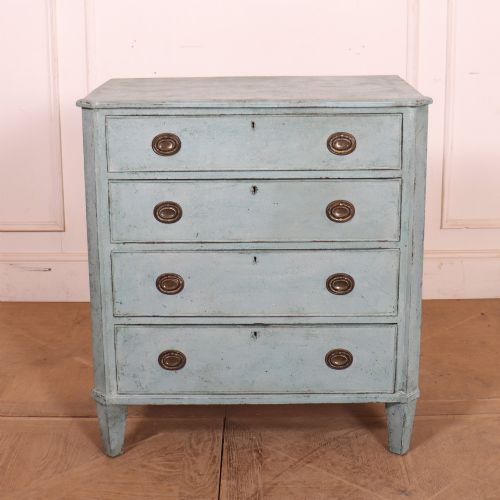
The most frequent examples encountered on this page are nineteenth-century painted pine or birch chests of drawers. Alongside these, buyers find earlier eighteenth-century pieces featuring serpentine fronts or original scraped paint surfaces.
Materials and Construction
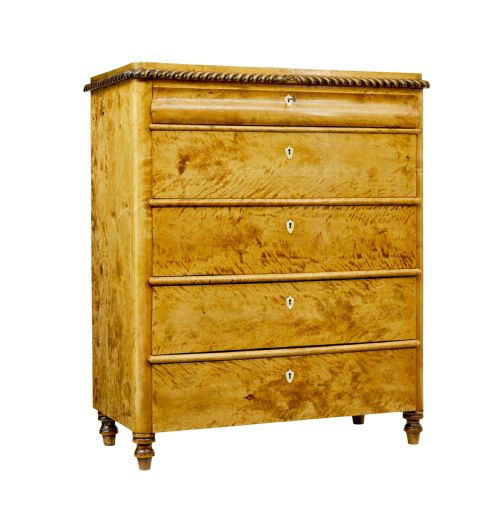
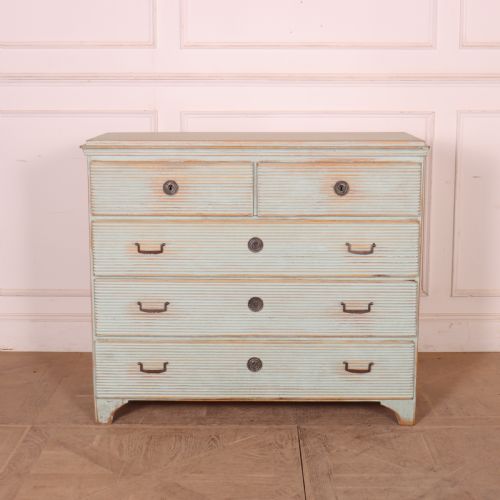
Local timbers such as pine, birch, and oak form the structural carcasses of these pieces, occasionally supplemented by tiger birch veneers or mahogany. Cabinetmakers shaped drawer fronts with fluting or serpentine curves, employing traditional joinery methods suited to domestic furniture production.
Surfaces frequently receive hand-painted treatments in muted grey or other traditional tones, sometimes paired with faux marble tops. Brass hardware provides functional accents against the timber and painted finishes.
Craftsmanship and Surface Preservation
Quality rests in the fidelity of the timber selection, such as figured tiger birch or substantial oak, alongside the crispness of carved details like fluted drawer fronts. The execution of serpentine curves requires precise carpentry to maintain structural integrity across changing seasons.
The state of the surface finish heavily influences character, distinguishing pieces with original or scraped paint from later redecorated examples. Surviving period hardware and well-preserved faux marble tops further elevate the distinction of individual chests.
The Swedish Style Commode Glossary
- Commode
- A low chest of drawers, typically standing on legs and designed for domestic storage. In Scandinavian traditions, these often feature decorative painted surfaces or serpentine fronts.
- Gustavian
- The Swedish neoclassical style spanning the late eighteenth century, characterised by restrained symmetry, fluted columns, and pale painted finishes. It draws inspiration from French Louis XVI design.
- Serpentine
- A furniture front characterised by a wavy contour, curving convexly at the centre and concavely at the sides. This shape demands high carpentry skill to construct cleanly.
- Birch
- A pale, hard timber native to northern Europe, frequently utilised in Swedish furniture for its fine grain. Tiger birch variants exhibit striking flame patterns prized by cabinetmakers.
- Caddy top
- A raised or stepped table or chest top with a moulded edge reminiscent of tea caddy lids from the period.
Swedish Style Commode: Frequently Asked Questions
What is a Swedish style commode?
A Swedish style commode is a chest of drawers or cabinet originating from Scandinavian traditions, particularly noted for pale painted finishes, neoclassical Gustavian lines, or richly figured birch timbers.
These pieces combine functional drawer storage with distinct regional interpretations of European furniture design, ranging from baroque revival to empire revival aesthetics.
How do I date an antique commode?
Dating relies on examining construction techniques, timber choices, and stylistic markers such as hardware and decorative motifs. Eighteenth-century examples often display baroque or early neoclassical forms.
Nineteenth-century pieces frequently utilise birch or pine with empire revival characteristics. Surface treatments like original scraped paint also provide clues to the age of the piece.
What timbers were used?
Cabinetmakers primarily employed accessible local softwoods and hardwoods such as pine, birch, and oak for the carcasses and drawer structures. Tiger birch and mahogany appear on select pieces as decorative veneers.
Surfaces were then frequently painted in muted tones or finished to highlight the natural grain of the wood.
Are painted finishes original?
Many listings feature original or historic scraped paint surfaces that have acquired a patinated texture over centuries of wear. Other pieces may have been redecorated by hand in traditional Swedish grey hues at a later date.
Examining the layers and wear patterns helps determine the history of the painted surface.
How do I style a commode at home?
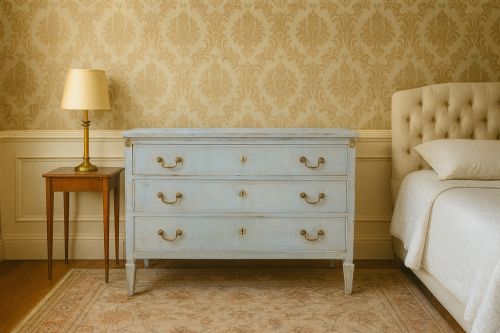
A commode serves as a functional storage piece in bedrooms, hallways, or living spaces while providing a surface for lamps, mirrors, or decorative objects. Their pale painted finishes and restrained silhouettes allow them to anchor neutral interiors or soften bolder colour schemes.
The balanced proportions of Gustavian and neoclassical chests make them versatile additions to both traditional and contemporary rooms.