


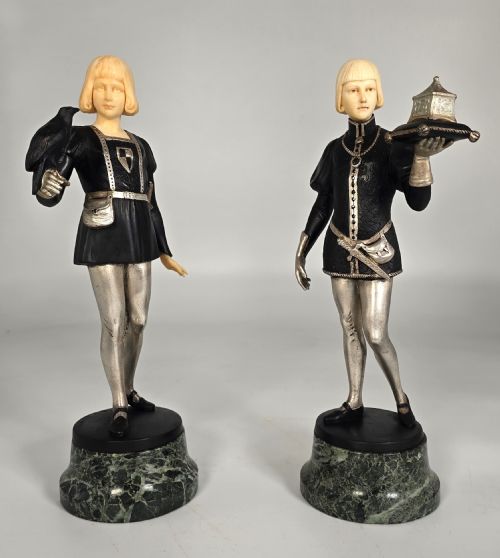


Green Marble Statuettes
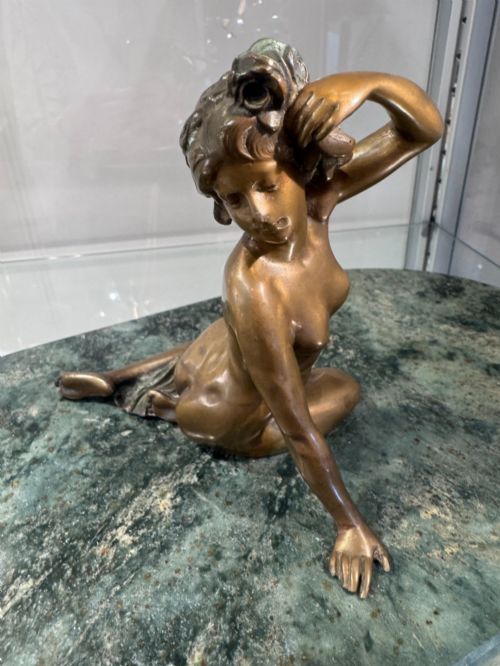
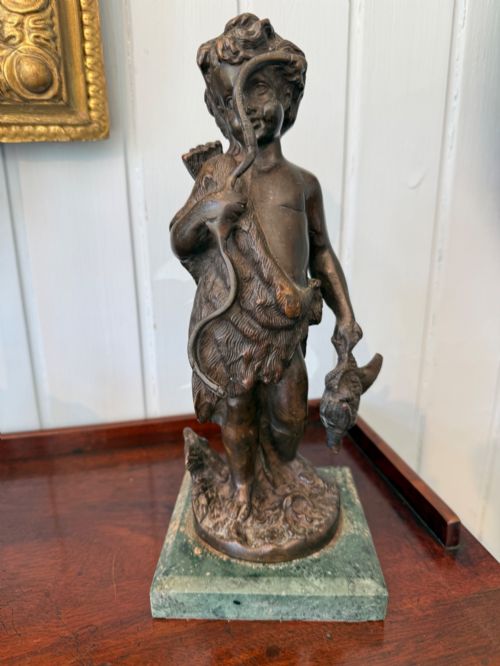
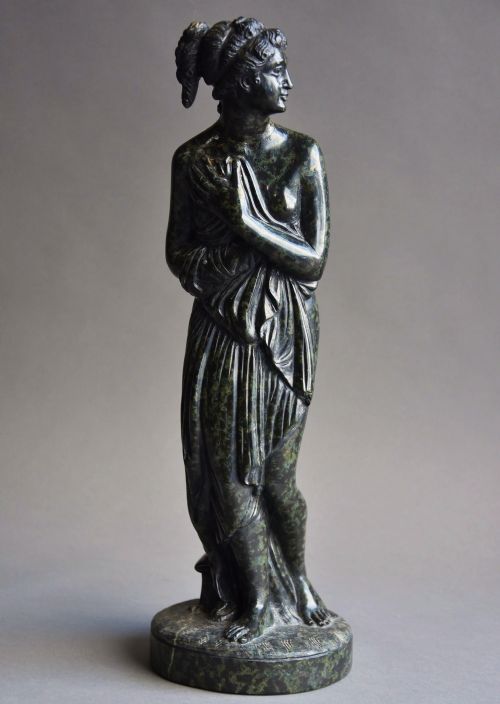
These green marble statuettes bring classical subjects and refined animal studies into the room, cast in bronze and carved from serpentine.
Green Marble Statuettes
Green marble statuettes combine cast bronze figures with heavy stone bases, bringing classical mythology and animal subjects into domestic spaces. When you search for green marble statuettes, you encounter works spanning the nineteenth century through the art deco period.
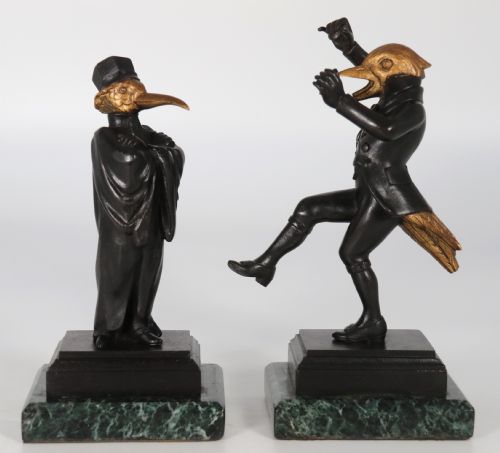
Italian grand tour souvenirs and French animalier studies dominate the selections on this page. Subjects range from classical figures like Venus Italica and the dogs of alcibiades to birds, dancers, and demon figures.
Most pieces pair a green serpentine or black marble plinth with patinated bronze, silvered bronze, or parcel-gilt components. These works originate primarily from French and Italian workshops across the nineteenth and early twentieth centuries.
How they were made
Foundries utilised the lost-wax technique to cast the bronze figures, capturing fine details in feathers, drapery, and facial expressions. Artisans applied patination, silvering, or cold painting to the metal surfaces after casting.
Stonemasons shaped green serpentine and marble into plinths and bases, polishing the stone to contrast with the dark or gilded bronze elements. Figures were then securely mounted to these stone foundations using threaded pins or adhesives.
Materials across the listings include bronze, serpentine, ivory, silvered bronze, and paint, spanning the nineteenth and twentieth centuries.
What varies in quality
The quality of the stone base dictates overall harmony, with dense green serpentine and finely polished marble providing a stable, lustrous platform. Maker signatures and foundry marks further distinguish works produced by prominent artists and established studios.
Antonio Canova·Gotthilf Jaeger·Antoine L Barye·Rene Andre Varnier·P Marec·Pierre le Faguays
The Green Marble Statuettes Glossary
- Serpentine
- A green silicate mineral often used for marble bases and grand tour models due to its mottled appearance.
- Grand Tour
- Souvenirs collected by travellers in Italy during the nineteenth century, typically replicating classical antiquities.
- Animalier
- A nineteenth-century artistic genre focusing on the realistic portrayal of animals, particularly in bronze.
- Patination
- The chemical treatment or natural ageing process that colours and protects the surface of bronze sculptures.
- Parcel-gilt
- A decoration technique where only specific portions of a bronze object receive a thin layer of gold.
Green Marble Statuettes: Frequently Asked Questions
What periods do these statuettes come from?
The pieces span the nineteenth century and the early decades of the twentieth century, including grand tour and art deco eras.
Dates range from the mid nineteenth century through to the nineteen thirties, covering distinct stylistic shifts.
Are the bases always made of green marble?
Bases utilise green serpentine, green marble, and black marble depending on the piece and its origin.
Stonemasons selected these dense materials to provide a heavy, stable foundation for the bronze figures mounted upon them.
What subjects are most common?
Subjects include classical figures, mythical deities, dancers, and various birds and animals.
Many pieces draw inspiration from ancient Roman and Greek antiquities collected during european travels.
How do I identify a grand tour piece?
Grand tour items typically replicate famous antique sculptures and were produced in Italy during the nineteenth century.
They served as souvenirs for travellers and usually feature bronze figures on marble or serpentine bases.