


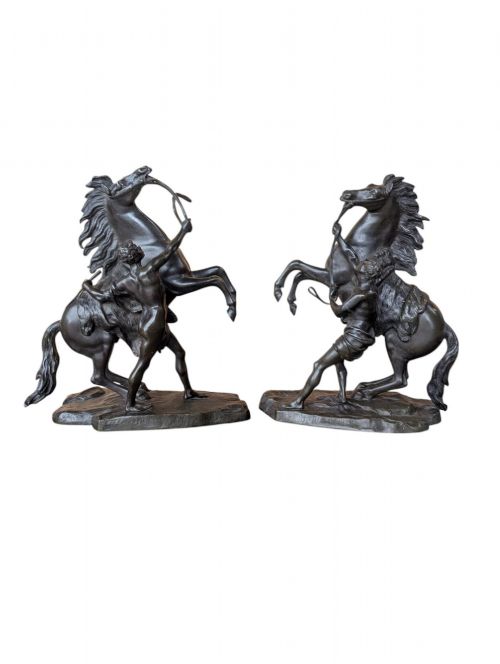
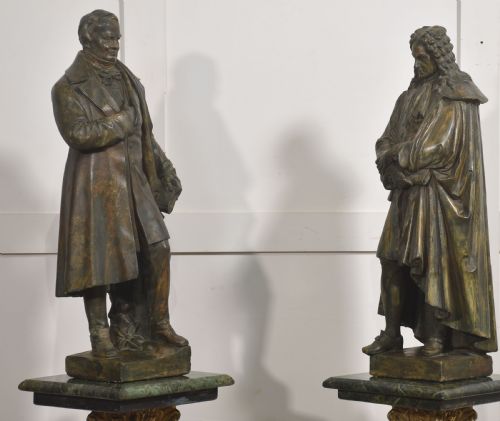

Paired Bronze Figurines
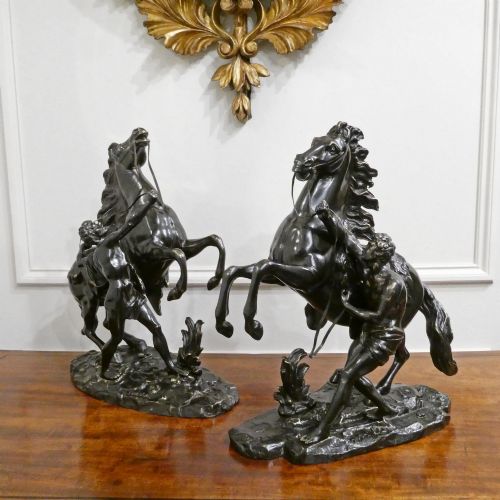
Paired bronze figurines bring symmetry and classical balance to a room, offering matched counterparts modelled as animals, classical heroes, or allegorical figures.
Paired Bronze Figurines
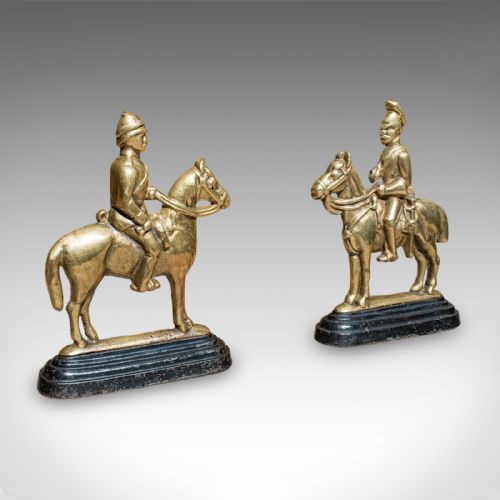
When searching for paired bronze figurines, buyers encounter matching sets designed to flank a mantelpiece, sideboard, or desk in symmetrical arrangements. The selections here span the nineteenth century and the early twentieth century, drawing heavily on French and Austrian workshops.
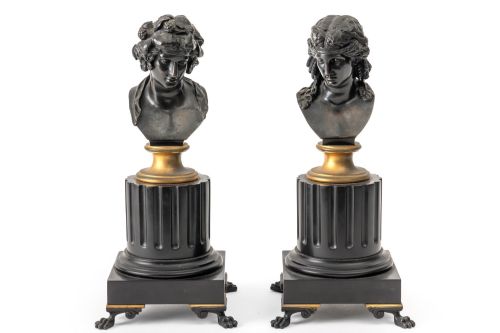
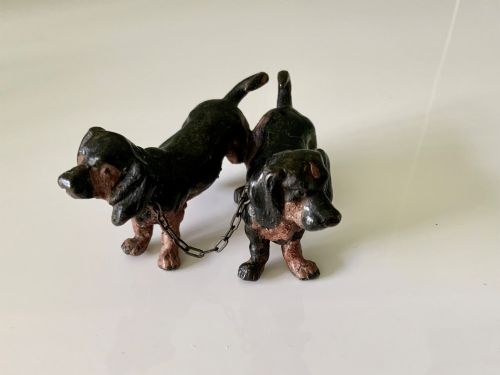
Most examples originate from the Victorian era up to the nineteen-twenties, incorporating subjects ranging from mythological characters and putti to domestic animals and theatrical birds. French neoclassical designs and Grand Tour souvenirs form a substantial portion of the available forms.
Makers produced these matching groups as decorative focal points, often mounting them on marble bases or incorporating them into functional items like bookends and candlesticks.
Materials and casting methods
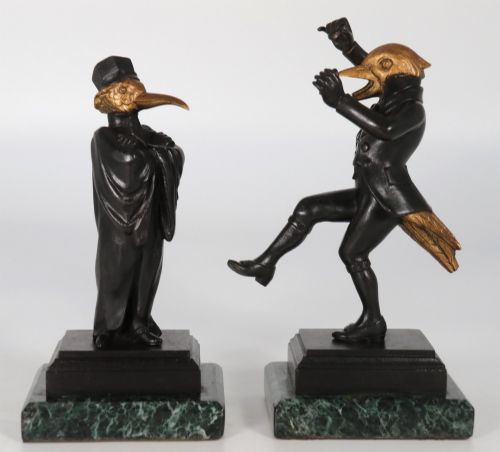
Foundries utilised traditional metal casting techniques, primarily working with bronze, gilt bronze, and patinated bronze, alongside alternative metals like spelter and electrotype compositions. Many pieces feature hand-applied cold painting, particularly in Austrian animal studies, adding coloured detail to the metal surfaces.
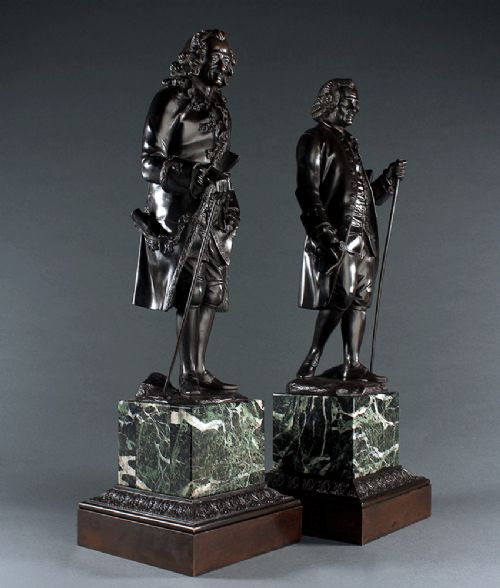
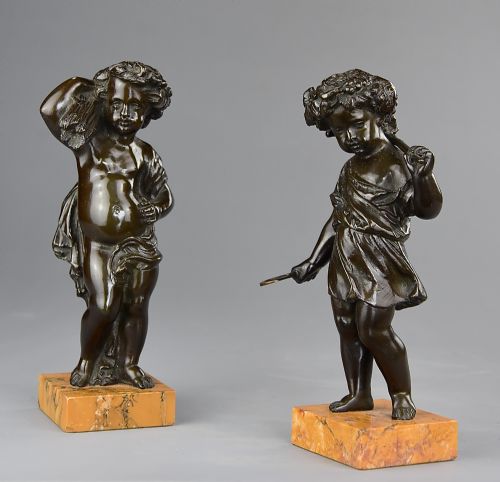
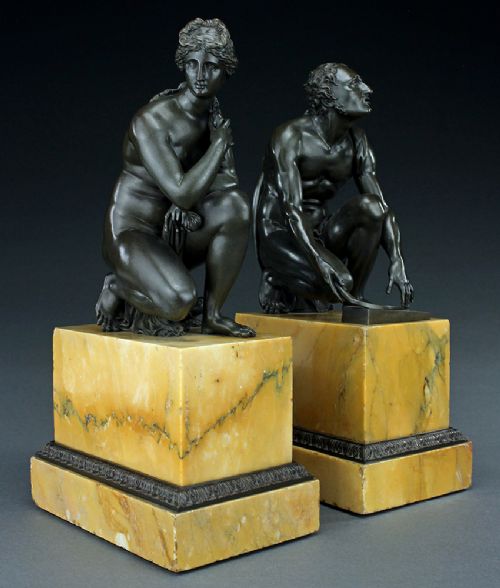
Foundries frequently mounted metal figures upon marble bases, such as Siena marble, to provide stability and visual contrast. Artisans also combined materials like ivory with bronze in specific early twentieth-century works to achieve varied textures.
Paired Bronze Figurines Retail Price Guide 2026
Typical asking prices for paired bronze figurines among the pieces listed under this phrase on Sellingantiques today, from the lower quarter to the upper quarter. They describe what is for sale here now, not the wider market.
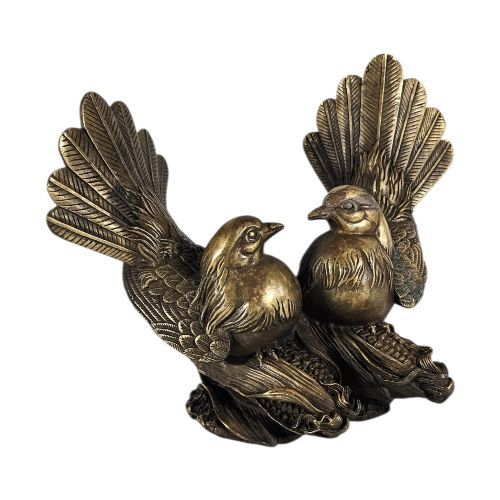
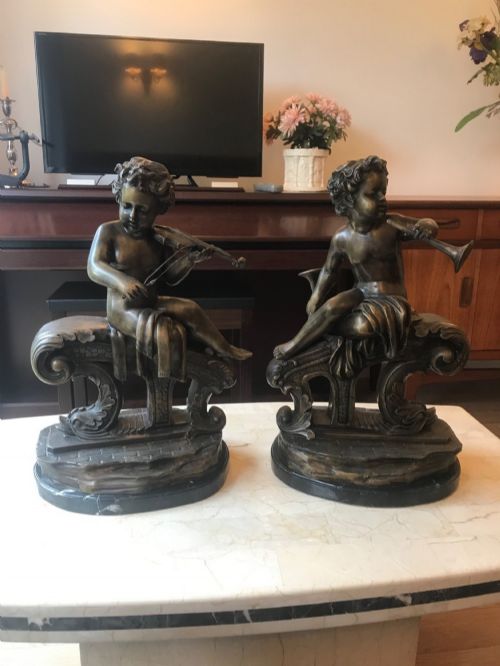
The selection includes theatrical birds and mischievous putti caught in the act of making music.
Evaluating craftsmanship and detail
The sophistication of the modelling separates standard decorative items from masterworks produced by established foundries and named sculptors. Original bases, integrated signatures, and preserved cold-painted surfaces significantly elevate the integrity of a set.
Barbedienne·Fabergé·Gotthilf Jaeger·Alfred Grevin·Louis Riche·P J Mene
The Paired Bronze Figurines Glossary
- Patinated bronze
- Bronze that has been treated with chemical solutions to produce a specific surface colour, ranging from deep brown to greenish tones. This finish protects the metal and defines the sculptural contours.
- Cold-painted bronze
- A technique where oil paint is applied to an unheated bronze casting, popular in Austrian workshops for depicting birds and animals with realistic colouration. The paint sits on the surface rather than being fired.
- Spelter
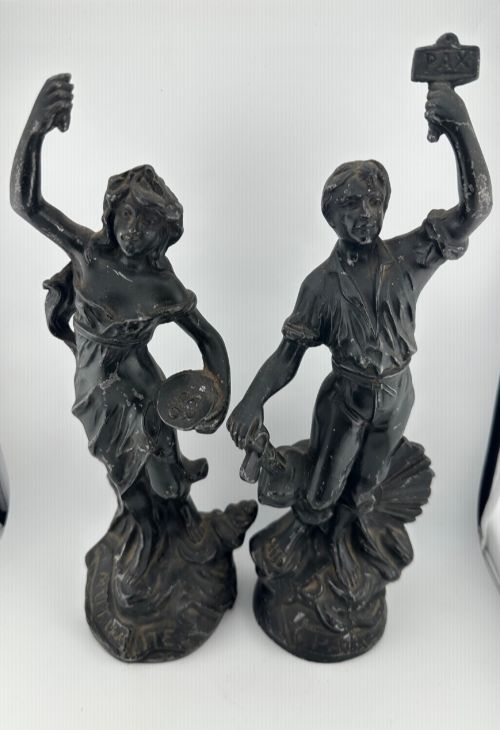
- An alloy of zinc and lead used as a less expensive substitute for bronze, frequently painted to imitate genuine bronze finishes. It appears commonly in nineteenth-century decorative figures.
- Grand Tour
- The nineteenth-century practice where wealthy travellers collected classical sculptures and small bronzes in Italy as mementos. These souvenir bronzes often replicate famous antiquities.
- Electrotype
- A replica metal object produced by electroplating copper or bronze onto a mould. This process creates lighter figures with detailed exterior surfaces.
Paired Bronze Figurines: Frequently Asked Questions
Where should I place paired bronze figurines?
These matching figures suit placement on either end of a mantelpiece, framing a central clock or mirror to create visual balance. They also anchor the ends of a long sideboard or sit atop pedestals in a hallway.
Because they were designed as sets, displaying them together maintains the symmetrical intent of the maker. Ensure the supporting surface is sturdy enough to hold the weight of metal and marble.
How do I care for antique bronze?
Dust the figures gently with a soft, dry brush to prevent dirt accumulation in the crevices of the metal. Avoid using liquid cleaners, polishes, or abrasive cloths that can strip the original patina or cold-painted surfaces.
Keep the pieces away from direct sunlight and damp environments to protect both the metal and any attached marble bases.
What is the difference between bronze and spelter?
Bronze is a durable alloy of copper and tin that takes a fine chisel mark and develops a stable patina over time. Spelter is a softer, zinc-based metal that feels lighter and often shows a painted surface finish rather than a true chemical patina.
Spelter figures from the nineteenth century offer an accessible alternative to bronze but require extra care due to the softer nature of the alloy.
How do I identify Grand Tour bronzes?
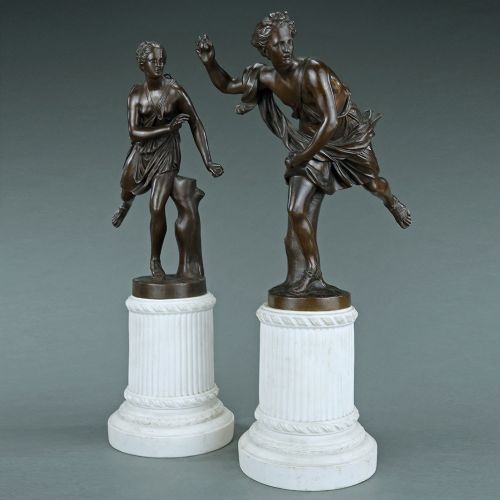
Grand Tour bronzes typically depict famous classical statues, mythological figures, or architectural elements encountered by travellers in Italy during the nineteenth century. They frequently feature deep patination and are mounted on coloured marble plinths.
These pieces were produced as souvenirs for collectors and often show high standards of nineteenth-century reduction casting.