



Green Marble Base Bronze
These pieces unite metal sculpture with weighty stone, offering a stable plinth that elevates figures and lamps.
Green Marble Base Bronze
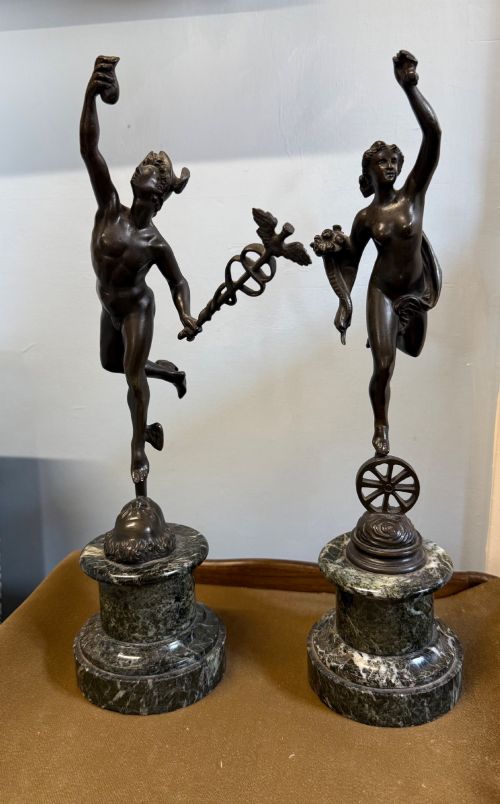
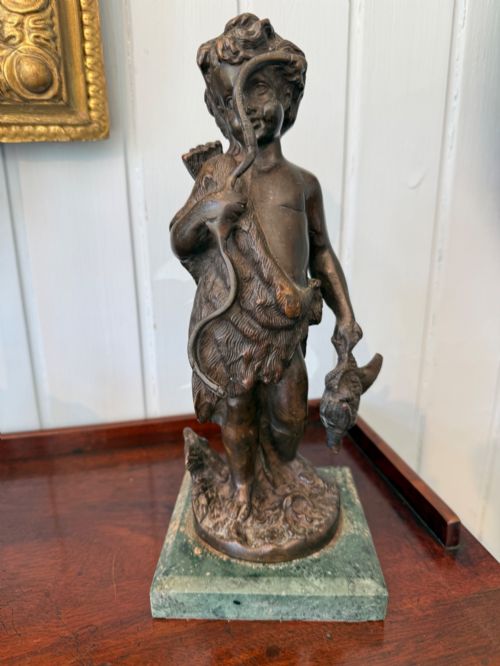
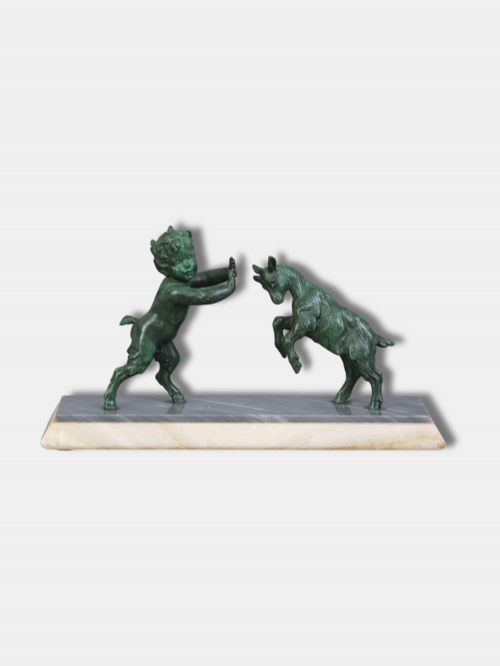
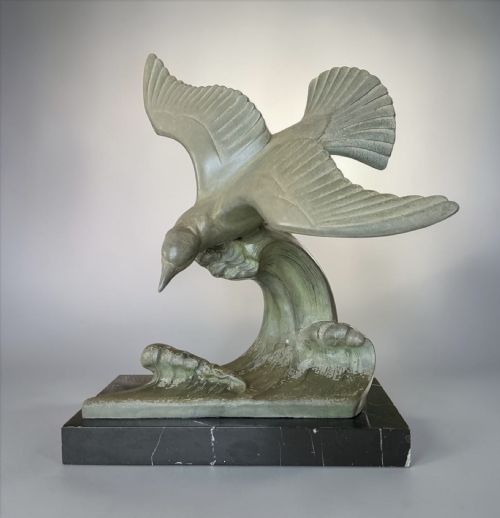
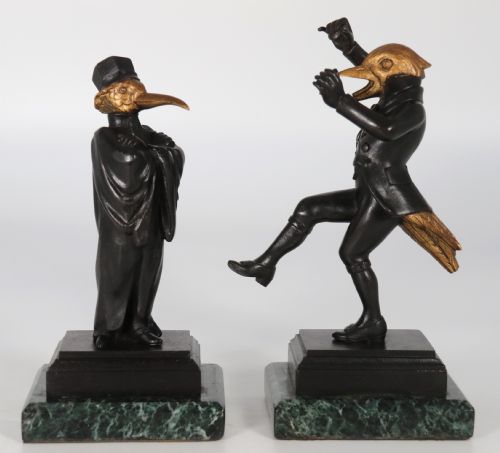
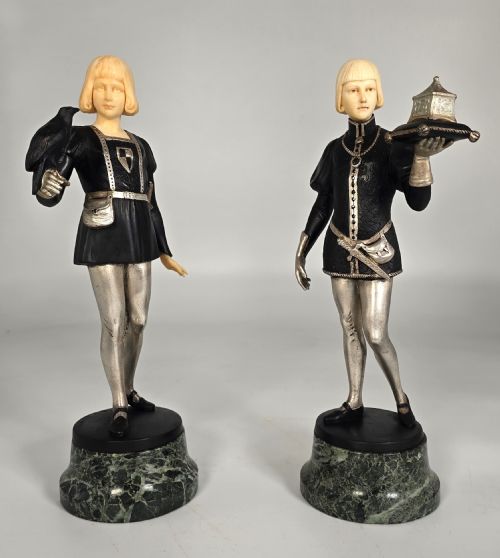
A green marble base bronze combines cast metal figures, animals or utility objects with a polished stone plinth. These works span the nineteenth century through the Art Deco era, encompassing Grand Tour souvenirs, animalier studies and classical figures.
The most common examples on this page are nineteenth century French and Italian bronzes alongside Art Deco animal and human studies raised on marble or onyx plinths. Subjects range from mythological figures and historical busts to birds, gundogs and dancers.
Materials and construction methods
Makers cast the upper subjects in bronze, spelter or brass, sometimes applying cold-painted colours, silvering or gilding to the surface. Figures were then secured to turned or slab-cut bases of green marble, black marble or onyx using threaded pins or bolts.
The stone bases were sawn, ground and polished to square blocks, stepped plinths or architectural columns, providing sufficient weight to anchor dynamic or cantilevered metal compositions.
Listings span the nineteenth century through the Art Deco era, pairing cast bronze and spelter figures with polished green marble, black marble and onyx.
Factors determining quality
Quality rests in the crispness of the metal chasing and the depth of the casting, where sharper feather, fur or facial details distinguish superior studios from commercial production pieces. The selection and finish of the marble base also matter, with dense, unblemished green varieties showing greater material cost.
Artistic attribution and signature placement elevate certain sculptures, while the harmony between the proportions of the metal subject and the supporting stone plinth dictates overall visual balance.
Emile Carlier·E. Drouot·Delabrierre·Gotthilf Jaeger·P. Sega·C Masson·Josef Lorenzl·Franz Bergman·P. Marec
The Green Marble Base Bronze Glossary
- Bronze
- An alloy of copper and tin used for casting sculpture. It takes fine detail and develops a natural patina over time.
- Spelter
- A zinc alloy commonly utilised as a less expensive alternative to bronze in nineteenth and early twentieth century figures. It is softer and often finished with bronze-effect paint.
- Grand Tour
- Nineteenth century souvenirs purchased by travellers in Italy. These miniature bronzes and marbles replicated classical antiquities.
- Cold painted
- A method where enamel paints are applied to cold bronze without subsequent firing. This technique is typical of Viennese animal bronzes.
- Garniture
- A set of matching decorative objects for a mantelpiece, typically comprising a clock flanked by urns or candelabra.
Green Marble Base Bronze: Frequently Asked Questions
Are these bases always green marble?
While many pieces feature green marble, others utilise black marble, variegated onyx or multi-coloured stone plinths depending on the period and style. Art Deco works often combine contrasting marble colours to accentuate geometric designs.
Originating quarries and regional stone preferences shifted across the nineteenth and early twentieth centuries, leading to diverse mineral patterns.
How can I tell bronze from spelter?
Bronze feels heavier, rings with a clearer tone when tapped gently, and shows a warm brown or patinated metallic surface beneath wear. Spelter is lighter, more brittle, and often reveals a greyish-white metal beneath chipped paint.
Magnification can also reveal the sharper chasing lines characteristic of bronze casting compared to the softer edges of spelter.
Where were these sculptures displayed?
In period interiors, these sculptures stood upon mantelpieces, library desks, console tables and architectural cabinets as focal decorative elements. Larger figures and lamp bases anchored entrance halls or grand reception rooms.
Their substantial stone bases ensured stability when placed on high furniture or in busy domestic spaces.