





Green Man Carved Furniture
Green man carved furniture brings the foliage-crowned face of the forest into nineteenth-century halls and libraries through heavy timber woodwork.
Green Man Carved Furniture
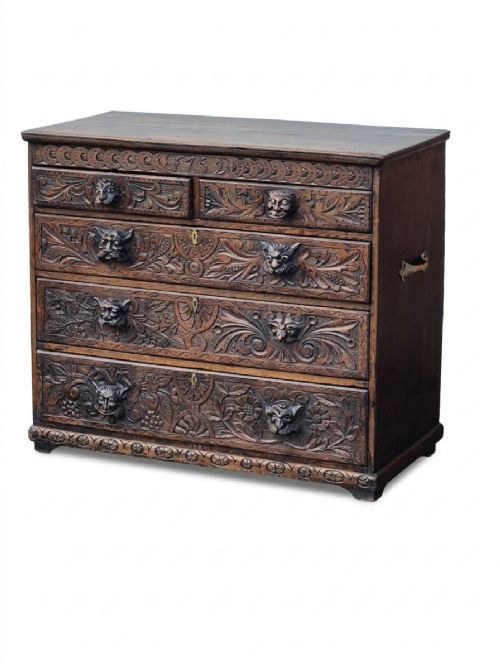
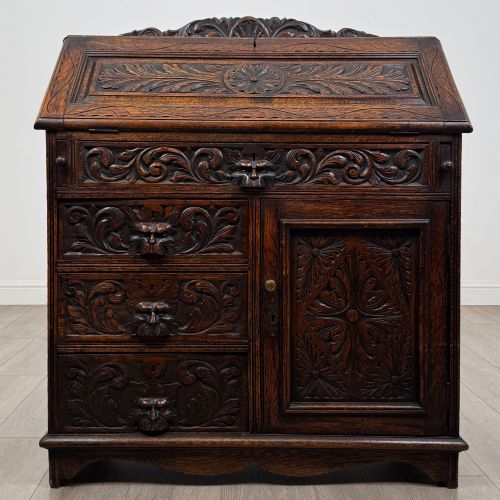
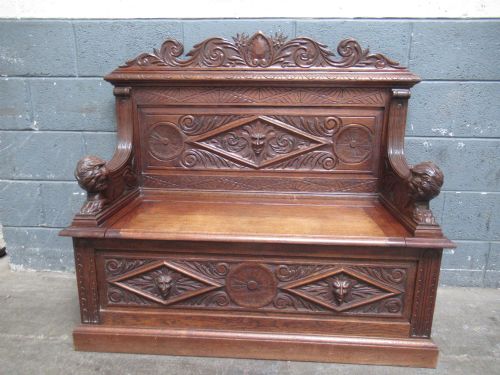
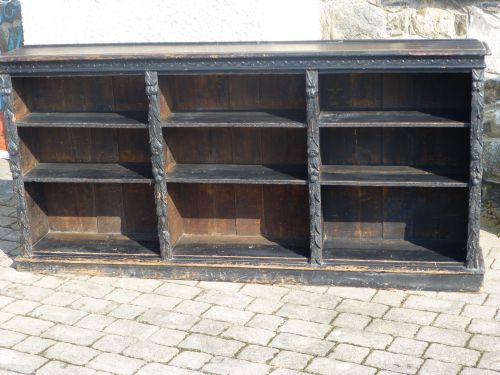
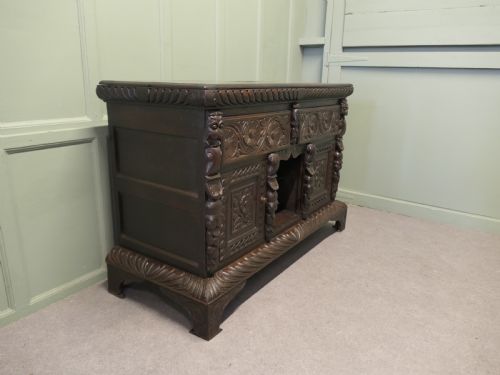
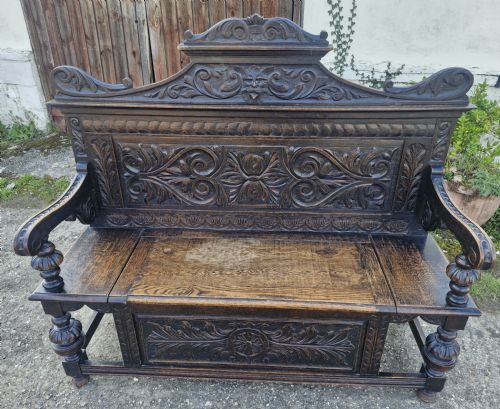
Green man carved furniture encompasses substantial nineteenth-century and early twentieth-century oak seating, storage, and display pieces adorned with foliate mask motifs. The items appearing most frequently on this page are hall stands, sideboards, bookcases, and benches originating from the Victorian era and the Gothic Revival movement.
Makers of this period drew heavily on earlier Jacobean and Renaissance styles, applying high-relief carvings of leafy visages to practical household furniture. Buyers encounter everything from compact dwarf bookcases and bureau desks to expansive hall benches and dining tables fitted with mirrors and brass hardware.
What varies in quality
Lesser items rely on shallow, mechanical surface incisions applied to standard carcases without the same architectural integration. The selection of timber also dictates grade, with dense solid oak and well-matched golden oak standing apart from plain utilitarian boards.
Listings feature oak furniture from the Victorian era alongside nineteenth-century Flemish designs and mid-twentieth-century studio work.
David Oakleafman Langstaff
The Green Man Carved Furniture Glossary
- Green man
- A sculptural mask of a human face surrounded by or sprouting foliage, vines, or branches from the mouth and ears. This motif symbolises rebirth and spring in architectural and furniture decoration.
- Gothic Revival
- An architectural and decorative style spanning the nineteenth century that revived medieval forms, pointed arches, and heavy carved woodwork. It heavily influenced Victorian interior design and cabinet making.
- Hall stand
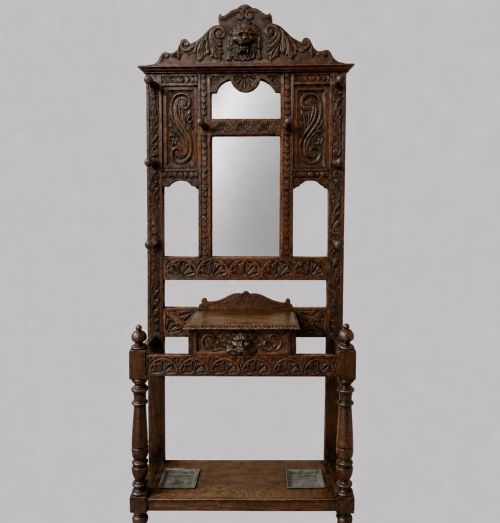
- A tall hallway furniture piece incorporating coat hooks, an umbrella stand with drip trays, and frequently a central mirror. These items greeted visitors immediately upon entering a nineteenth-century home.
- Dwarf bookcase
- A low-standing bookcase designed to sit beneath dado height, allowing books to be accessed easily from above. Many feature adjustable wooden shelves.
- Buffet
- A sideboard or serving table used in dining rooms for displaying plate and serving food. They often incorporate heavy carved cupboards and drawers below a flat top.
Green Man Carved Furniture: Frequently Asked Questions
Where did green man furniture go in a Victorian home?
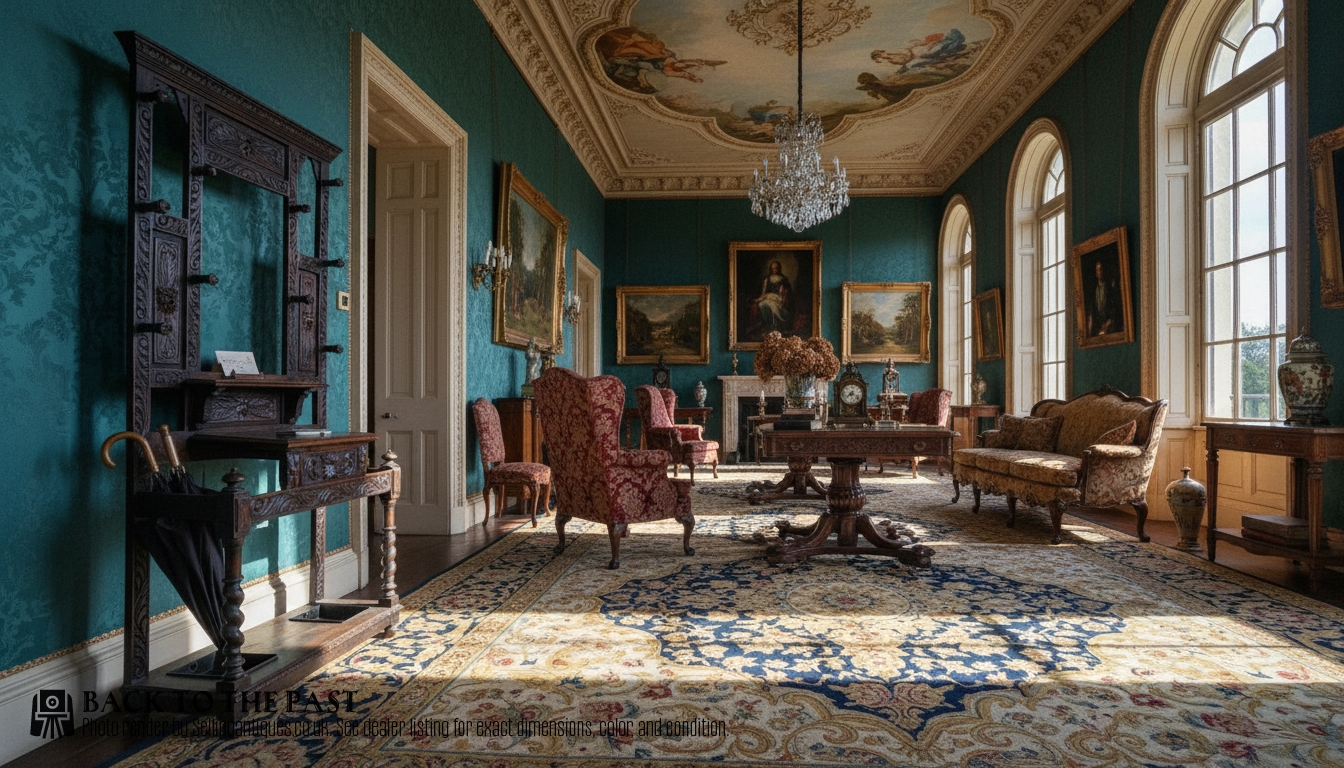
These imposing items stood predominantly in entrance halls, libraries, and formal dining rooms where guests and visitors would immediately encounter the carved imagery.
Hall stands and benches welcomed people at the front door, while bookcases and sideboards anchored the darker, wood-panelled public rooms of the house.
How do I care for carved oak furniture?
Solid oak benefits from regular dusting with a dry, soft cloth to prevent particulate matter from settling into the deep recesses of the leaf carvings.
Apply a microcrystalline wax sparingly once or twice a year to nourish the timber without building up a sticky residue in the carved details.
How can I tell Victorian Gothic revival from Jacobean revival?
Victorian Gothic revival pieces utilise medieval pointed arches, quatrefoils, and heavy structural framing combined with naturalistic green man foliage.
Jacobean revival items lean towards geometric panel moulding, strapwork, turned baluster legs, and a stiffer, seventeenth-century vocabulary of ornament.