
Green Leather Top Table
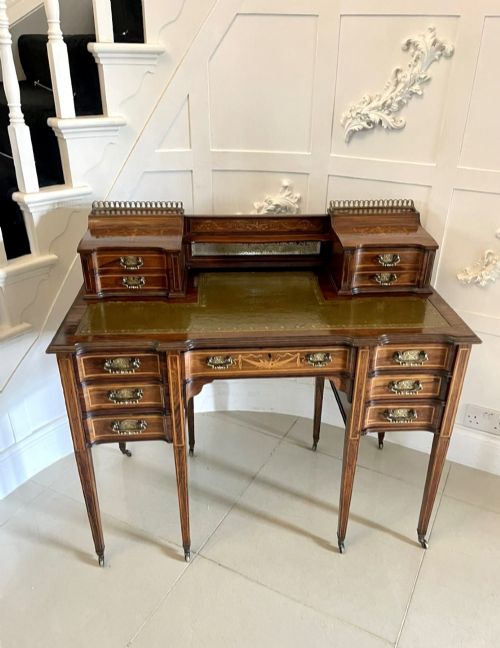
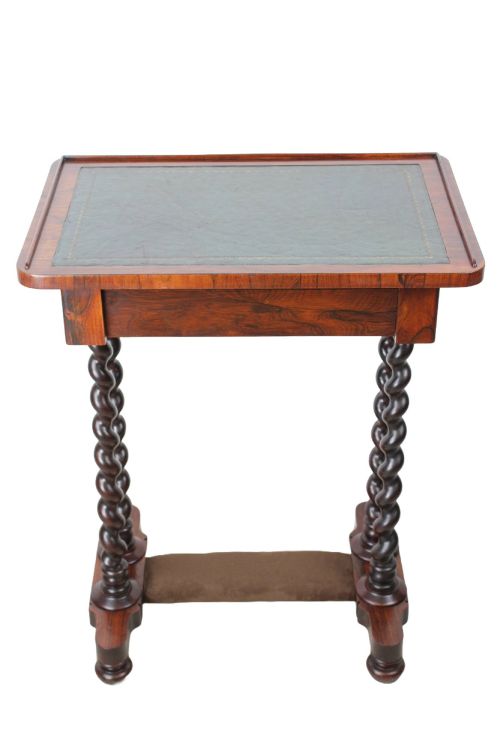
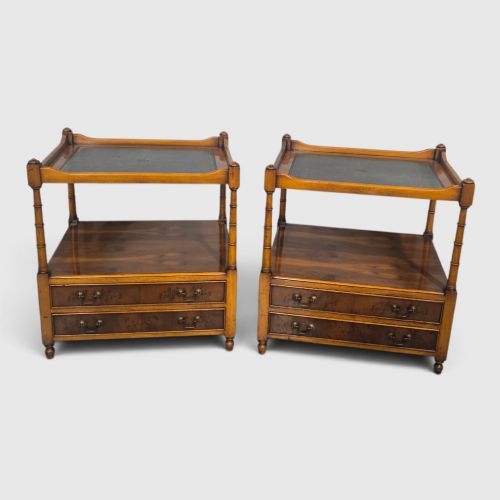
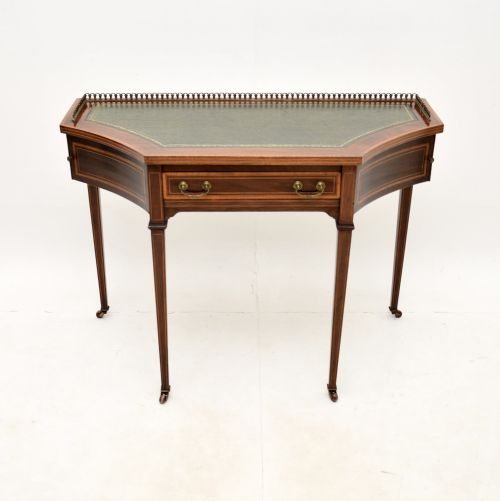
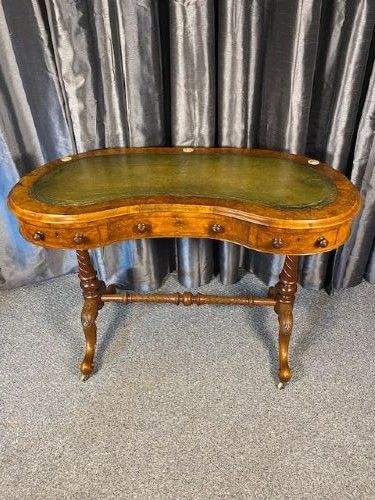
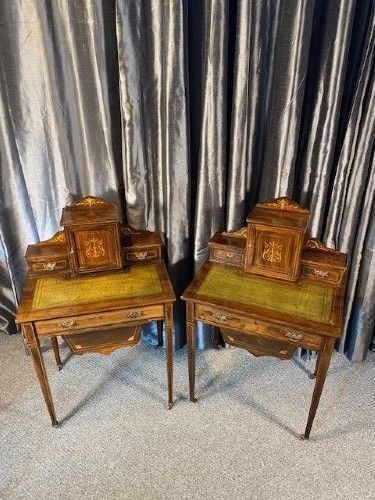
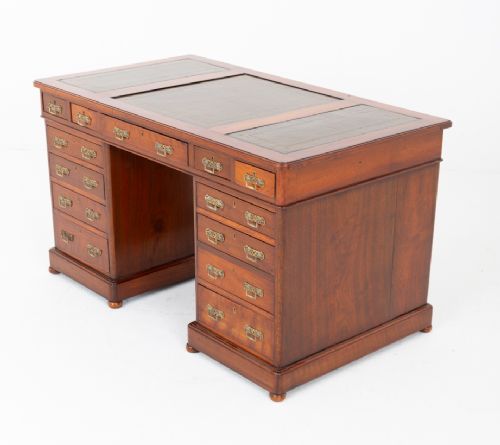
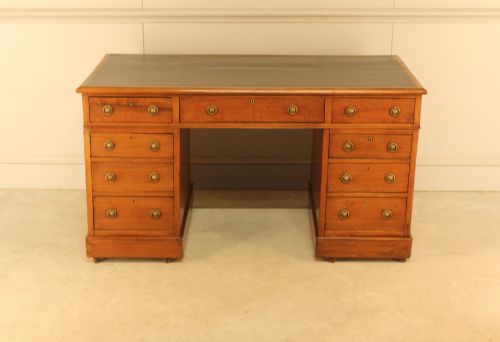
A green leather top table brings traditional writing desks and library tables together with a fitted surface of gold-tooled hide.
Green Leather Top Table
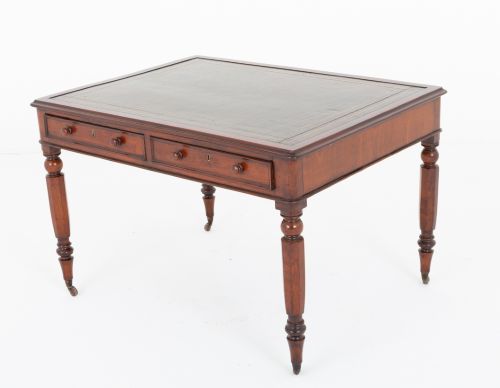
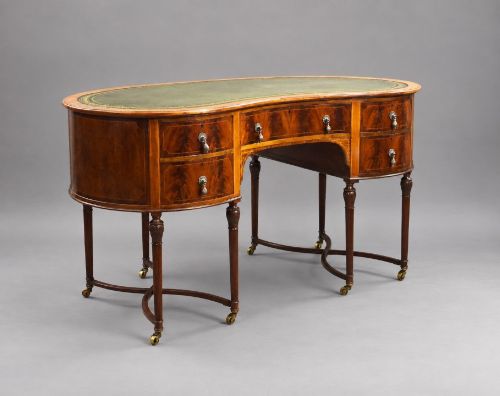
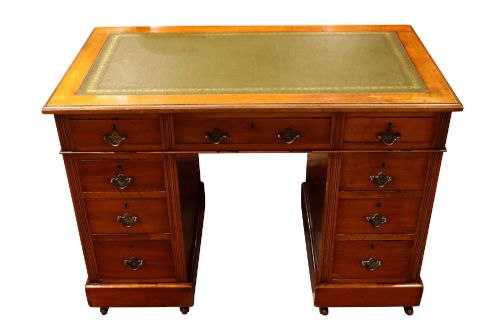
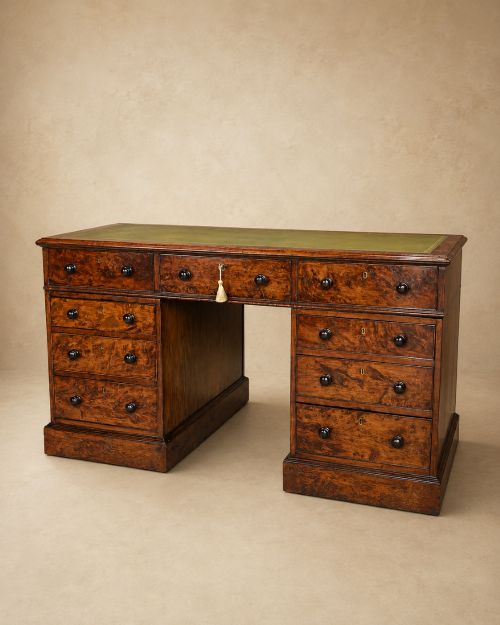
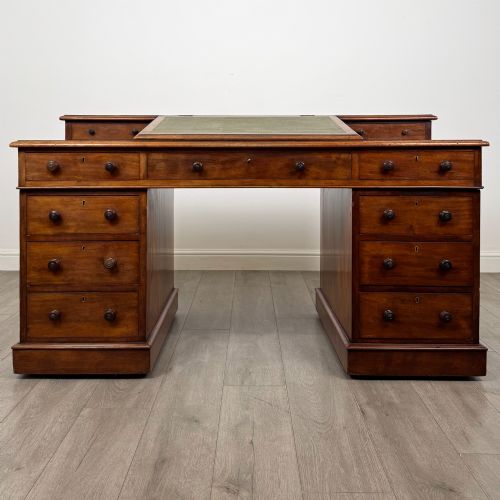
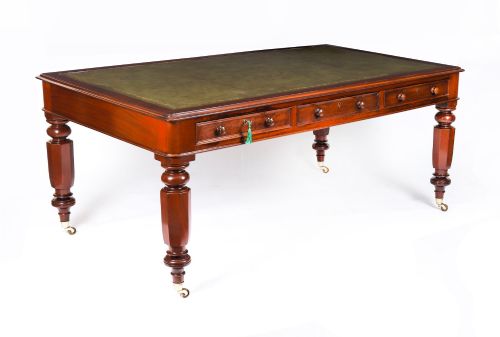
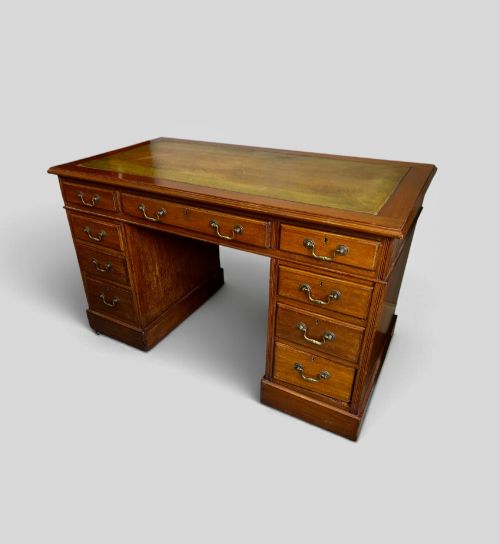
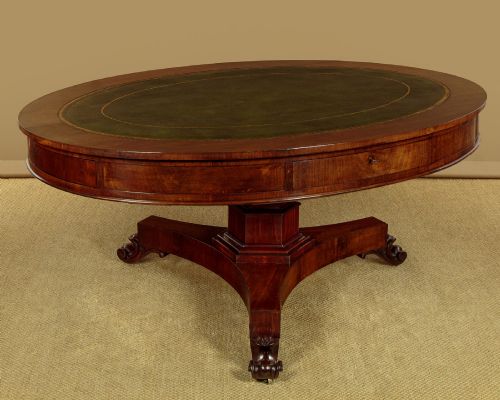
A green leather top table primarily spans the nineteenth century, taking the form of pedestal desks, partners desks, writing tables, and drum tables. Victorian examples appear frequently, alongside Regency, William IV, and Edwardian pieces.
Makers such as Maple & Co., Holland & Sons, and James Shoolbred & Co. produced freestanding library tables and kneehole desks in mahogany, walnut, and burr walnut. These functional pieces served for correspondence and administration in studies and libraries.
Materials and construction
Cabinetmakers utilised solid timbers and veneers of mahogany, walnut, oak, and rosewood, incorporating brass hardware for handles and castors. Leather inserts were glued to wooden writing surfaces, often finished with gilt tooling around the perimeter.
Pedestal desks utilise twin banks of drawers supporting a top, while writing tables employ slender legs with stretcher bases or drawer configurations. Inlaid satinwood, flame mahogany, and maple added decorative contrast to structural carcases.
Listings feature nineteenth-century woods including mahogany, walnut, burr walnut, oak, rosewood, and satinwood across various desk formats.
Evaluating workmanship
Quality rests upon timber selection, such as figured flame mahogany or burr walnut, and the precision of drawer dovetailing. Secondary timbers like oak or pine inside drawer linings indicate the standard of construction.
The integration of the leather top, crispness of brass mounts, and the presence of maker stamps or paper labels separate standard production pieces from high-workshop examples.
Maple & Co.·Holland & Sons·James Shoolbred & Co.
The Green Leather Top Table Glossary
- Partners desk
- A large pedestal desk designed with drawers on both long sides, allowing two people to sit opposite each other.
- Drum table
- A circular library table with a deep frieze containing drawers, rotating on a central pillar and four splayed legs.
- Kneehole desk
- A compact desk with a central recess for the user's legs, flanked by single or double banks of small drawers.
- Escritoire
- A writing cabinet featuring a fall-front flap that drops down to reveal a fitted interior of small drawers and pigeonholes.
- Frieze
- The horizontal band situated directly beneath the tabletop, frequently housing one or more small writing drawers.
Green Leather Top Table: Frequently Asked Questions
What is a partners desk?
A partners desk is a large pedestal writing table built with drawers and cupboards accessible from both sides. This symmetrical arrangement allowed two individuals to work facing each other.
These pieces typically date from the Victorian period and were constructed in mahogany or walnut with inset leather writing surfaces.
How do I date a leather top desk?
Dating relies upon timber choice, construction methods, and hardware styles observed across the piece. Regency and William IV pieces display distinct leg turnings, while Victorian examples often feature pedestal drawer configurations.
Secondary woods inside the drawers and the presence of maker stamps or stamps on locks provide further chronological clues.
Are these tables freestanding?
Many library tables, drum tables, and partners desks are finished on all four sides to stand in the middle of a room. Pedestal desks were occasionally designed to sit against a wall but frequently feature polished backs.
Examining the rear of the carcase reveals whether the piece was intended to be viewed from every angle.
What timber was used most?
Mahogany served as the predominant timber for writing tables and desks throughout the nineteenth century. Walnut and burr walnut gained popularity during the mid-Victorian era, while oak appeared in utility and pedestal formats.
Rosewood, satinwood, and maple were utilised for finer decorative tables and inlaid borders.