


Large Walnut Desk
A large walnut desk brings substantial presence to a room, combining warm timber figures with the practical space demanded by serious writing or working.
Large Walnut Desk
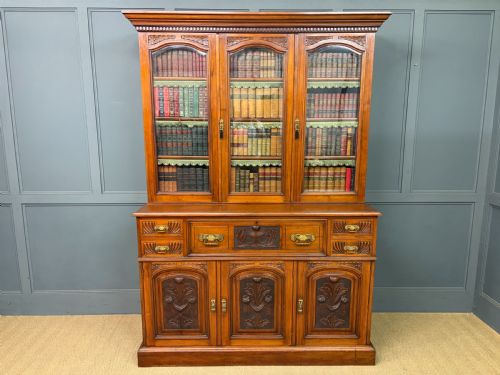
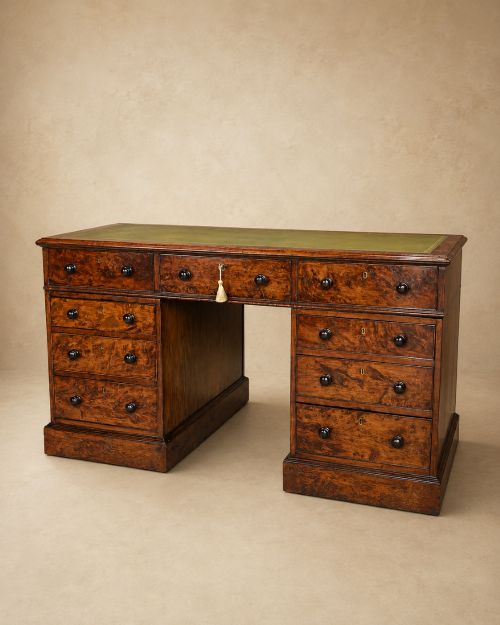
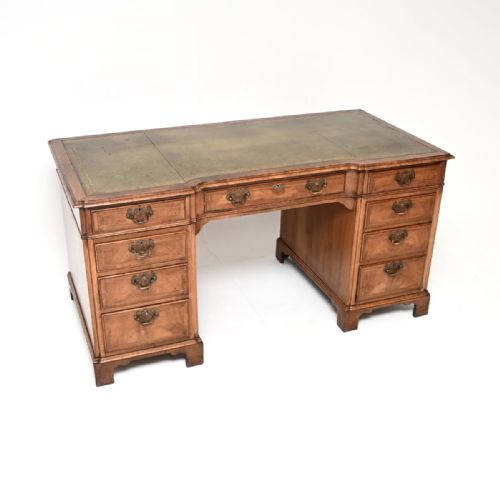
When searching for a large walnut desk, buyers encounter robust nineteenth-century partners desks, pedestal formats, and bureau bookcases spanning periods from the seventeenth century to the art deco era. Victorian and Edwardian examples dominate the available selection, often featuring double-sided pedestals designed to allow two people to work opposite one another.
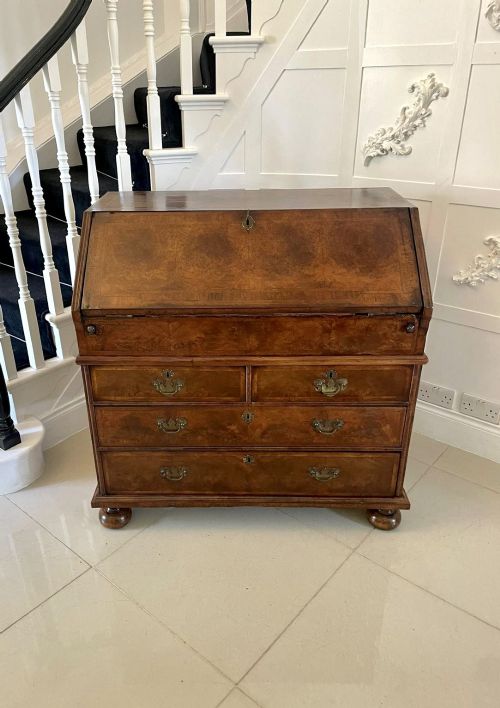
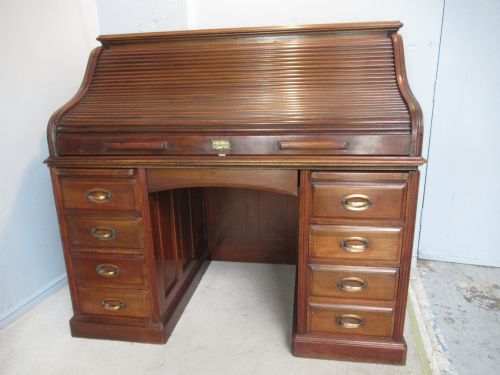
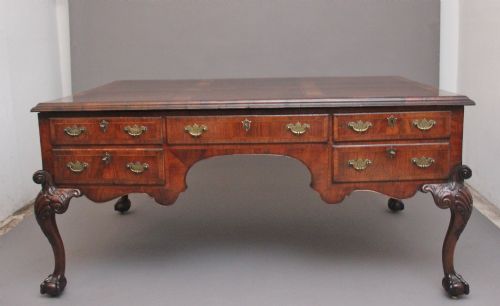
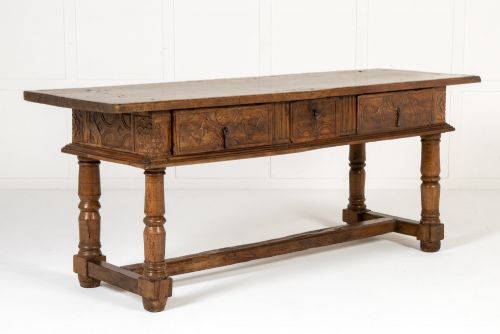
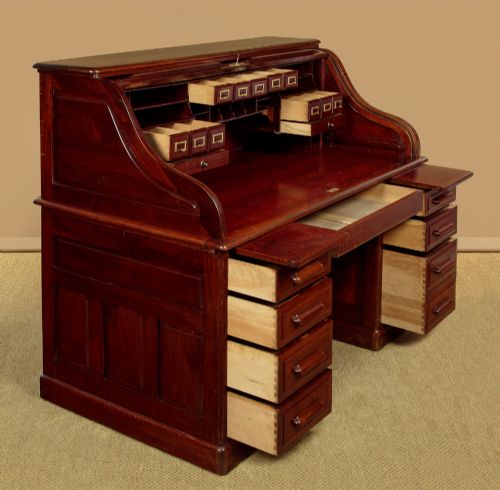
The material vocabulary ranges from solid Spanish walnut and figured veneers to burr walnut and intricate marquetry inlays. Alongside traditional pedestal and kneehole writing desks, the category encompasses bureau formats, roll-top variants, and library tables suited to expansive studies.
Materials and Construction
Cabinetmakers constructed these pieces using solid walnut carcasses or pine frames heavily faced with figured walnut and burr walnut veneers. The rich grain patterns were carefully selected and book-matched across larger surfaces such as top panels and drawer fronts.
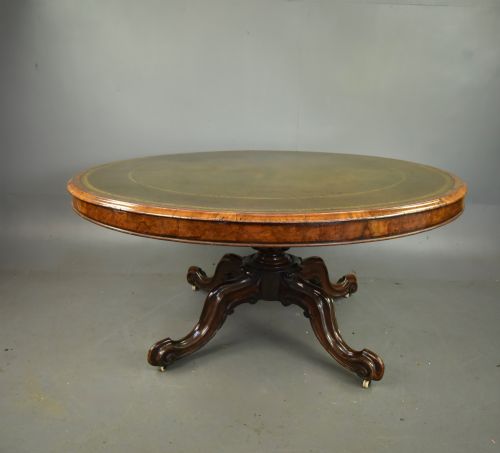
Leather inserts, frequently gilt-tooled, provide the writing surfaces on pedestal and partners desks, while brass handles, escutcheons, and occasional chrome accents furnish the functional hardware. Internal drawers often conceal secret compartments, and marquetry details utilise contrasting fruitwoods and herringbone inlay.
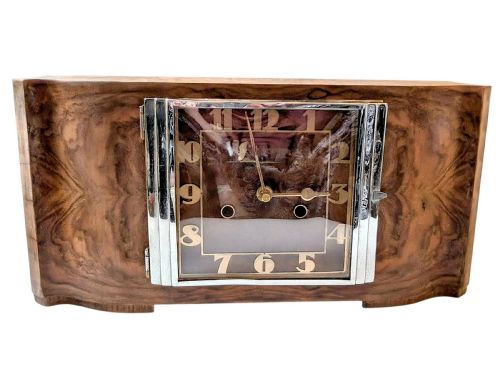
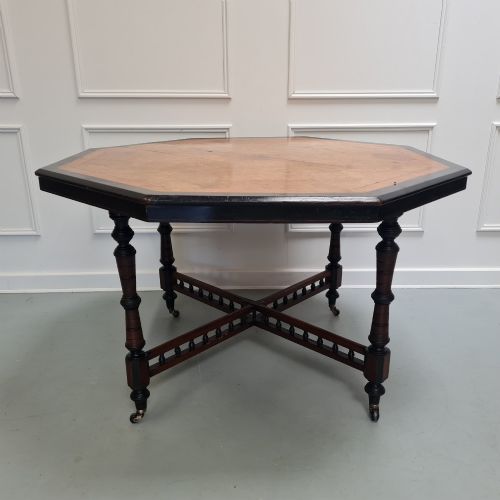
Listings feature walnut desks spanning the seventeenth century through to the art deco period, incorporating brass, leather, and fruitwood.
Distinctions in Craftsmanship
Quality rests upon the selection and matching of the veneer, where symmetrical figures and flawless burr walnut separate superior examples from plain timber carcasses. The crispness of carved details, such as those found on Victorian or Black Forest pieces, indicates the skill of the original hand.
Internal construction, including solid drawer linings with dovetailed joints and the preservation of original brass hardware or leather inserts, defines the standing of a desk. Well-executed secondary timbers and intact secret compartments further elevate a piece above standard utilitarian office furniture.
Edwards & Roberts·Whytock and Reid·Maple & Co.
The Large Walnut Desk Glossary
- Partners desk
- A large double-sided pedestal desk designed with drawers and cupboards on both faces to accommodate two people sitting opposite each other.
- Burr walnut
- A prized timber veneer taken from the knotted growth of a walnut tree, exhibiting swirling, highly decorative grain patterns.
- Marquetry
- The art of applying decorative pieces of veneer to a structure to form intricate geometric or pictorial designs.
- Kneehole desk
- A freestanding desk featuring a central recess for the user's legs, flanked by pedestals of smaller drawers.
- Secret drawers
- Concealed compartments built within a desk interior, accessed through hidden springs, sliding panels, or removable partitions.
Large Walnut Desk: Frequently Asked Questions
How do I care for a leather desk top?
Leather writing surfaces require gentle cleaning with a slightly damp cloth followed by a suitable leather cream to maintain suppleness and prevent cracking.
Avoid using harsh chemical polishes or placing hot items directly onto the hide to preserve the gilt tooling and the leather's natural finish.
How do I identify burr walnut?
Burr walnut is immediately recognizable by its dense, swirling patterns and small circular knots known as eyes, created by abnormal tree growth.
Cabinetmakers sliced these burls into thin veneers to display the complex, highly decorative grain across large flat surfaces.
Can these large desks be dismantled for moving?
Many large pedestal and partners desks are constructed in multiple sections, typically separating into two pedestals and a heavy top.
This modular construction allows the furniture to be transported and manoeuvred through doorways before being reassembled in place.