

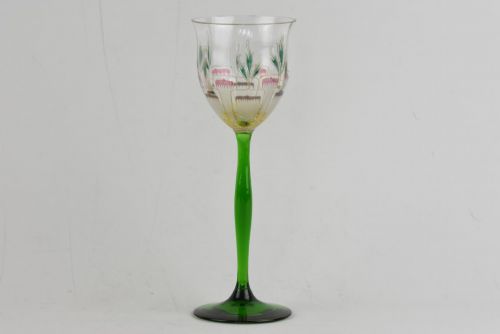


Green Hock Glass
Green hock glass brings colour and distinction to the table, and these pieces span the Victorian, Edwardian, and Art Deco periods.
Green Hock Glass
When you search for green hock glass, you encounter tall wine glasses, glassware, and decanters made primarily during the nineteenth and twentieth centuries. These vessels served traditional dining tables, adding rich colour to the formal serving of hock and other white wines.
The selections on this page demonstrate origins across Britain, France, and Bohemia, showcasing forms from early Victorian tall wine glasses to Art Deco Baccarat examples and Bohemian roemers.
Pairs, sets of six, and sets of eight appear frequently, alongside individual decanters and enamelled glassware.
Materials and methods of manufacture
Makers utilised glass, lead glass, and lead crystal as the base material, often shaping it into cased or colour over crystal formats where clear glass receives an outer layer of green colour.
Many examples incorporate decorative details such as enamel, floral enamelled work, and gold leaf applied to the surface.
Cutting techniques appear on lead crystal pieces, producing faceted designs that catch the light through the green tint.
Raise a tall green glass and toast the Victorians who insisted that white wine required its own distinct shade of verdant splendour.
Differences in quality across the range
Quality rests upon the depth of the material and the precision of the form, distinguishing standard production glassware from heavy lead crystal and cut crystal pieces.
The refinement of the surface decoration separates simpler vessels from those with detailed enamel decoration and gold leaf work applied by skilled hands.
Completeness alters the character of a group, as matched sets and pairs retain greater visual impact on the table than assembled collections of various pieces.
Baccarat·Theresienthal·St Louis Massenet·Faberge·Val St Lambert
The Green Hock Glass Glossary
- Hock glass
- A tall-stemmed wine glass traditionally used for hock and other Germanic white wines. These glasses often feature coloured bowls to enhance the appearance of the table.
- Roemer
- A traditional Germanic style of drinking vessel featuring a wide bowl and a decorative stem with applied prunts. Bohemian makers produced these in pale green glass during the nineteenth century.
- Cased glass
- A method where a layer of coloured glass is fused over a clear body. This technique allows craftsmen to cut through the outer green layer to reveal the clear crystal underneath.
- Lead crystal
- Glass containing metal oxides that increase weight, brilliance, and clarity. This material permits sharper cutting and deeper facets on decorative tableware.
Green Hock Glass: Frequently Asked Questions
What is a green hock glass?
A green hock glass is a tall-stemmed vessel designed for serving white wine, recognised by its distinctive green hue. These glasses were produced in various styles across the Victorian and twentieth-century periods.
They bring bright colour to dining settings and form matched sets or decorative pairs.
How do I date an antique hock glass?
Dating relies on stylistic clues, manufacturing techniques, and the weight of the material. Victorian pieces often display heavier proportions and hand-cut facets.
Later twentieth-century examples reflect Art Nouveau or Art Deco design influences in their lines and surface decoration.
Are these glasses safe to use?
Antique glassware requires careful handling and hand washing to preserve surface decoration like enamel and gold leaf. These pieces function well for occasional dining use.
Storing them securely protects the delicate stems and thin rims from accidental knocks.
What is cased glass?
Cased glass involves fusing a layer of coloured glass over a clear crystal body. Craftsmen cut through the outer layer to create contrasting patterns.
This technique produces rich depth in green hock glasses and decanters.