



Green Hill Artwork
Green hill artwork captures elevated terrain and rural expanses through oil and watercolour, bringing historic landscapes straight into a modern interior.
Green Hill Artwork
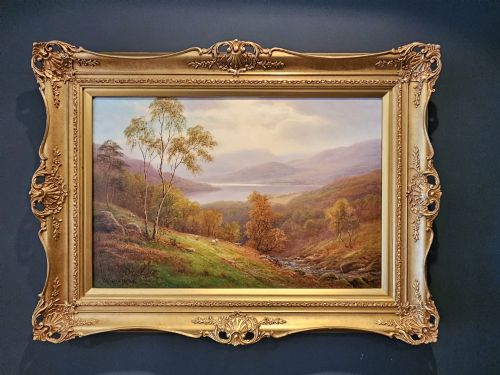
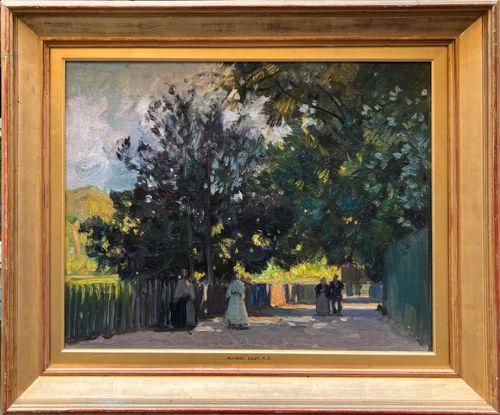
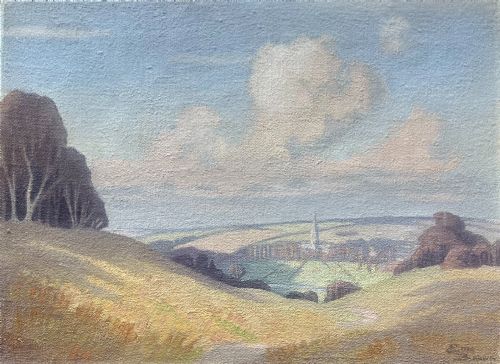
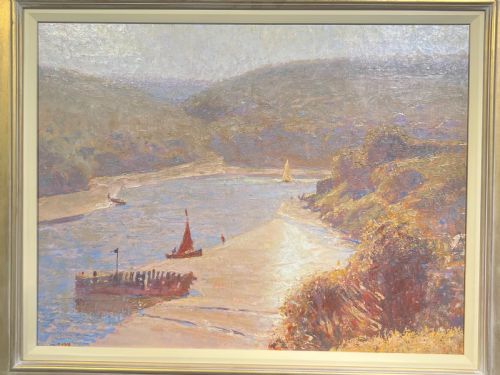
When you search for green hill artwork, you encounter framed paintings and watercolours depicting rolling terrain, river paths, and elevated views. These pieces span multiple eras, connecting 19th Century and Victorian topographical traditions with 20th Century modernist landscapes.
The selections on this page most commonly present pastoral vistas from the Victorian period through the mid-20th century. Painters capture specific locations ranging from Dorset and Purbeck to county Wicklow and French rural scenes.
The compositions vary from traditional oil on canvas to delicate paper watercolours. Artists deploy these varied formats to record both British countryside topography and broader European scenery.
Materials and methods
Painters utilise oil paint on canvas or board, alongside watercolour applied to paper. Canvas pieces frequently employ rich impasto layers to build texture within the depicted hills and foliage.
Many works retain their period framing, utilising wood and gilt surrounds to house the paper or canvas. Glass frequently protects the delicate watercolour works on paper against environmental wear.
Green Hill Artwork Retail Price Guide 2026
Typical asking prices for green hill artwork among the pieces listed under this phrase on Sellingantiques today, from the lower quarter to the upper quarter. They describe what is for sale here now, not the wider market.
Geese frequently inhabit the rivers beneath these painted hills, occasionally joining cows and sheep to supervise the pastoral scenery.
Distinguishing quality
Superior examples demonstrate confident brushwork and a clear command of light, successfully conveying atmospheric depth across distant hills and river valleys. Lesser works lean towards formulaic composition without atmospheric engagement.
The strength of provenance and clear attribution to recorded artists elevate certain pieces above anonymous school works. Surviving original frames in good condition also contribute positively to the overall integrity of a piece.
Eric Brown·Sir Alfred East·Cecil Allan Mould·Joseph Edward Hennah·James Fry·Sidney James Beer·Bernard Walter Evans·Rowland Henry Hill·James L Brooke·Clarence Woodburn·Charles Walter Radclyffe·Martin Lamotte·Edmund John Niemann
The Green Hill Artwork Glossary
- Impasto
- Paint applied thickly to a canvas, standing out from the surface to create tactile texture. This technique gives physical weight to foliage and earthen hillsides.
- Gilt
- A thin layer of gold or gold-coloured material applied to wood frames. This finish enhances the visual boundary of the painting.
- Watercolour
- Paint consisting of colour pigments suspended in a water-soluble vehicle, typically applied to paper. This medium produces translucent washes often seen in landscape studies.
- Post-Impressionism
- An art movement extending beyond impressionism while retaining its use of vivid colours and distinct brushstrokes. Works in this style reinterpret natural hill scenes through expressive palettes.
Green Hill Artwork: Frequently Asked Questions
What periods do these hill paintings cover?
The available selection spans from the nineteenth century through the mid-twentieth century. This includes Victorian, Edwardian, and mid-century modern eras.
Individual pieces reflect the shifting artistic movements of their respective decades, transitioning from traditional topographic recording to post-impressionist and modernist interpretations of the landscape.
How should I care for oil versus watercolour?
Oil paintings on canvas require stable indoor humidity and protection from direct sunlight to preserve the integrity of the paint layers. They benefit from occasional gentle dusting.
Watercolours on paper demand stricter conservation standards, including UV-filtering glass and hanging away from direct sunlight to prevent the fading of pigments.
Are these landscapes based on real locations?
Many titles and descriptions tie the paintings to specific geographic points such as Chesil Beach, Purbeck Hills, Cardigan Bay, and Downton Woods. Artists often inscribed these locations directly onto the work or frame.
Other compositions represent broader European or generalized rural scenes without naming a specific hill or river valley.
How do I identify a mid-century piece?
Mid-century works often utilise simplified forms, brighter palettes, and expressive brushwork that depart from strict Victorian realism. Dates associated with the artists or framing styles frequently confirm this era.
Signatures and exhibition labels from the nineteen-thirties to the nineteen-fifties further establish the timeframe of creation.