




British Beach Painting
A British beach painting captures the shifting light and coastal life of the shore across centuries of artistic tradition.
British Beach Painting
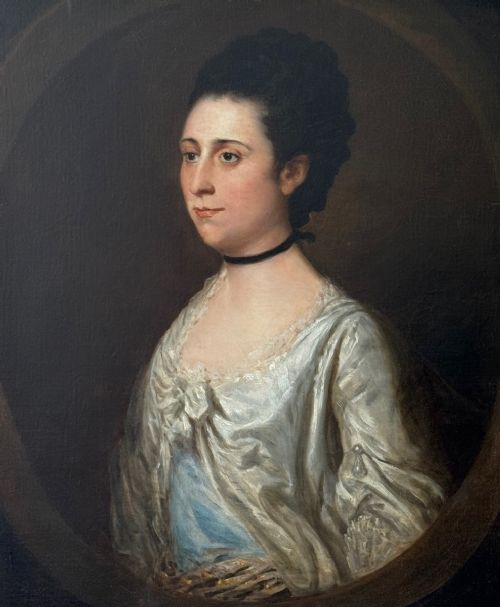
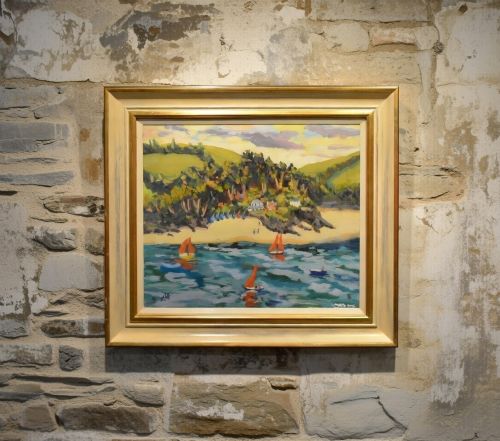
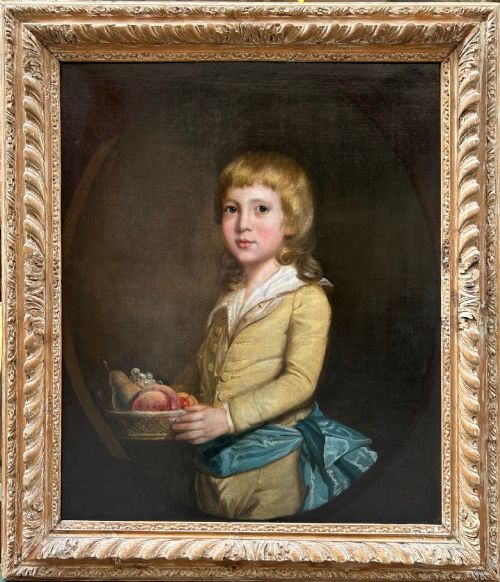
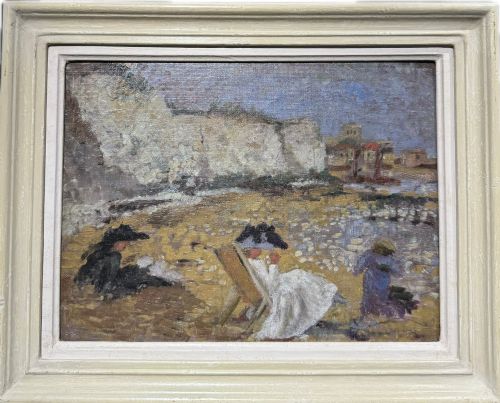
When you search for a British beach painting, you encounter coastal scenes ranging from eighteenth-century portraits and nineteenth-century maritime works to twentieth-century impressionist views. These artworks record harbours, cliffs, and tidal sands through the eyes of artists working along the coasts of England, Scotland, Wales, and surrounding waters.
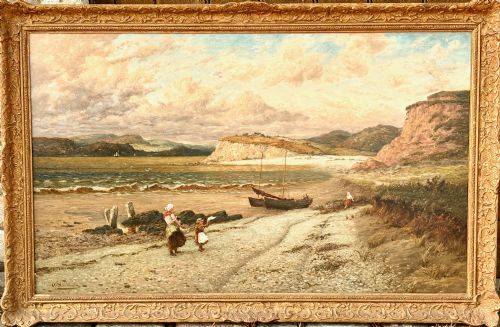
The pieces on this page are most commonly Victorian and early twentieth-century watercolours or oil paintings on canvas and paper. They depict local fishing boats, seaweed gatherers, and children playing by the water, reflecting the growing appeal of the seaside during the nineteenth and twentieth centuries.
Makers and regional schools represented here include the Newlyn School and various named British artists who travelled to coastal spots like St Ives, Whitby, and Hastings. These works capture specific shorelines and harbours, providing a record of maritime activity and coastal communities from the Georgian era through to the mid-twentieth century.
Materials and Techniques
Artists creating these coastal scenes relied primarily on oil paint applied to canvas or wood panels, and watercolour pigments brushed onto paper. Oil paint allowed for thick, textured applications that could render the turbulent motion of waves and the heavy skies of the British coast.
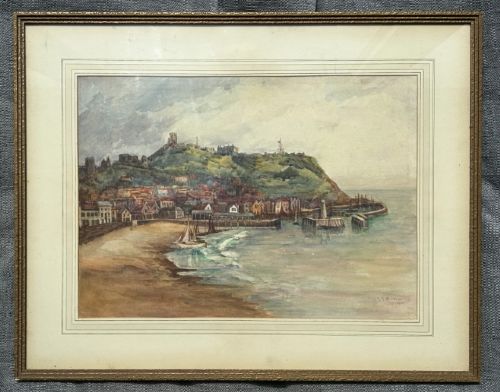
Watercolour paintings utilised fine pigments suspended in water, often applied in transparent washes to capture the luminous quality of coastal light and wet sand. These works on paper were frequently mounted and framed to protect the delicate medium from moisture and light damage.
Several artists recorded the laborious side of coastal life, capturing locals knee-deep in seaweed carts long before anyone went to the beach for fun.
What Varies in Quality
The distinction between ordinary and exceptional works often lies in the artist's handling of natural light and atmospheric conditions. Superior examples demonstrate a confident command of tone and colour to convey the specific dampness of sea air or the glare of low tide.
Compositional strength and the lively depiction of human figures at work or play also elevate a piece. Paintings that integrate coastal workers and vessels naturally into the wider landscape tend to command greater interest than static or formulaic topographical views.
James Orrock·William Banks Fortescue·Thomas Beach·Lucy Pratt·Ethel Sands·F A Roylance·Joseph Edward Hennah·Robert Leslie Howey·George Hamilton Constantine·Donald McIntyre·Sir William Russell Flint·Frederick William Hattersley·John Mitchell·Kate E Booth·Ernest F Hill·Jeffrey Pratt·William Shayer·Julian Drummond·Owen Bowen·G B Cullen·William Greaves·William Edward Webb·George Smith·GM de L'Aubiniere·Daniel Sherrin
The British Beach Painting Glossary
- Watercolour
- A painting method where fine pigment is mixed with water-soluble binders and applied to paper. This medium allows for delicate, luminous washes of colour.
- Canvas
- A heavy woven fabric stretched across a wooden frame to form a taut surface for oil painting. It provides texture and durability for works created outdoors or in the studio.
- Seascape
- A work of art depicting the sea, coastal views, or marine subjects. These pieces focus on the interaction between land, water, and sky.
- Gouache
- An opaque water-based paint that includes a white pigment to create denser, heavier colour areas. It is frequently combined with traditional watercolour in coastal works.
- Impressionism
- A style of painting emphasising spontaneous brushwork and the accurate depiction of shifting light. In British coastal art, this approach captures the transient effects of weather on the shore.
British Beach Painting: Frequently Asked Questions
What periods do these paintings cover?
The works span from the eighteenth century through the Victorian period and into the mid-twentieth century.
Most pieces date from the nineteenth and early twentieth centuries, reflecting the rise of British marine painting and coastal tourism.
How should I display a watercolour painting?
Watercolours on paper require framing behind glass with acid-free mounts to protect the pigments from fading.
Keep them away from direct sunlight and damp environments to preserve the integrity of the paper and pigments.
What subjects appear most frequently?
Common subjects include fishing boats hauled onto beaches, harbour activities, and families enjoying the shoreline.
Artists often focused on working communities, such as seaweed gatherers and net menders, alongside recreational beachgoers.
How can I identify the location of a coastal scene?
Many paintings include specific regional details in their titles, such as St Ives, Whitby, or Scarborough.
Landmarks like local cliffs, piers, and harbour walls often provide clear clues to the exact stretch of British coastline depicted.