

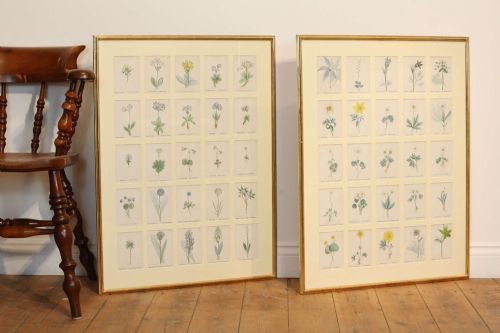
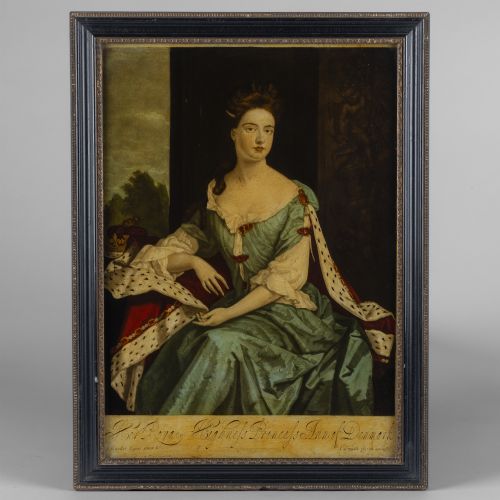
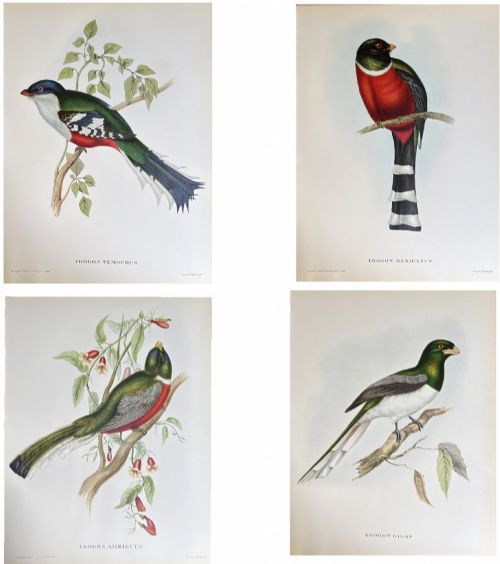
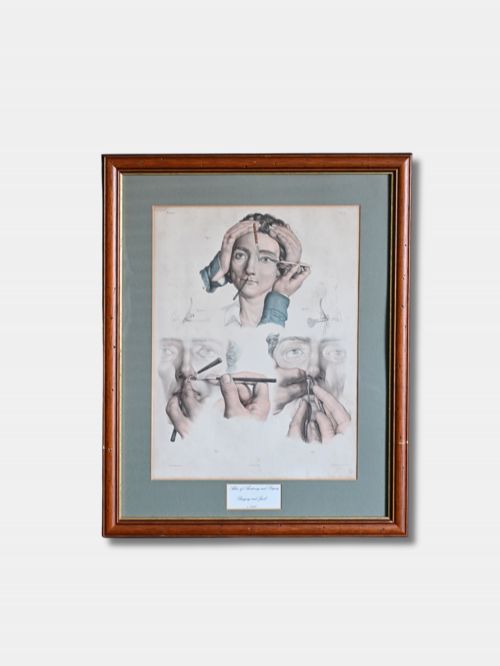


Green Hand Coloured Engravings
Green hand coloured engravings bring vibrant botanical, ornithological and natural history subjects directly into your home.
Green Hand Coloured Engravings
Green hand coloured engravings combine precision line work with applied pigment, capturing the natural world through detailed botanical and zoological subjects. These works frequently appear as framed prints depicting birds, plants, and historical maps from various historical eras.
Buyers encountering this selection will frequently meet framed botanical prints and natural history plates alongside maps and portraits. The pieces range across the eighteenth and nineteenth centuries, displaying distinct period aesthetics from Georgian botanicals to Victorian bird studies.
Subjects stretch from tropical bird prints to medicinal diagrams and cartography, reflecting the diverse applications of hand tinting on paper and glass. Each piece relies on ink lines finished with individual pigment applications to create distinct visual depth.
Materials and technique
Makers produced these works on paper using ink for the foundational lines, complemented by watercolour or pigment applied by hand. Certain examples incorporate gold leaf and gilt wood frames to elevate the presentation of the printed subject.
Alternative items utilise glass for reverse glass painting techniques, fusing the visual elements onto a translucent surface. Pigments applied across these paper and glass supports rely on steady brushwork to deliver precise colour within the engraved boundaries.
Green Hand Coloured Engravings Retail Price Guide 2026
Typical asking prices for green hand coloured engravings among the pieces listed under this phrase on Sellingantiques today, from the lower quarter to the upper quarter. They describe what is for sale here now, not the wider market.
Skittles makes a surprising appearance among the botanical plates, proving that Regency pastimes deserved coloured ink just as much as ferns.
Assessing quality
Quality rests upon the precision of the initial engraving and the skill involved in the subsequent hand application of pigment. Finer examples maintain crisp line definition beneath the colour, ensuring the ink details remain prominent rather than obscured by heavy wash.
The sophistication of the palette and the preservation of the paper or glass support distinguish superior works from standard decorative pieces. Original framing elements, such as period gilt wood, further influence the overall integrity of the finished object.
John Cary·Georg Wolfgang Knorr·William Swainson·George Dionysius Ehret
The Green Hand Coloured Engravings Glossary
- Engraving
- A printmaking method where an artist cuts lines into a metal plate to hold ink for transfer onto paper. This technique yields sharp, enduring details ideal for subsequent hand colouring.
- Lithograph
- A planographic printing process using a flat stone or metal plate to reproduce images. Artists apply ink to the design areas before pressing the image onto paper.
- Reverse glass painting
- An artistic technique where the painting is executed on the back of a piece of glass and viewed from the front. This method imparts a glossy finish and distinct depth to the composition.
- Botanical print
- A printed illustration dedicated to the accurate depiction of plant species. These works often receive careful pigment application to match natural specimens.
Green Hand Coloured Engravings: Frequently Asked Questions
What are green hand coloured engravings?
These works are printed illustrations enhanced with pigment by hand, focusing predominantly on natural history, botanical, and cartographic subjects from past centuries.
They combine engraved line work with applied colour to produce decorative and scientific records.
How were these prints used originally?
Original owners displayed these pieces in studies, libraries, and parlours as both scientific reference material and elegant wall decoration.
Natural history plates educated observers while maps and portraits served domestic display purposes.
How should I display them at home?
Mount these framed prints away from direct sunlight to protect the pigments on the paper and glass supports over time.
Pairing matching sets together in rooms with controlled humidity helps maintain their historical framing and materials.
How do I identify the period?
Examine the paper quality, framing style, and printing technique alongside any named artists or publication dates within the plate margins.
Georgian and Victorian examples each carry distinct typographic and stylistic conventions characteristic of their eras.