

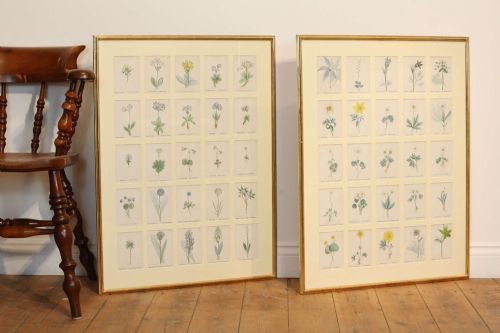


Botanical Illustration Pair
A botanical illustration pair brings the quiet observation of the natural world directly onto the wall, offering balanced symmetry through matching botanical subjects.
Botanical Illustration Pair
A botanical illustration pair presents matched studies of plants, flowers, or natural subjects, often framed together to create a balanced display on a wall. When searching for a botanical illustration pair, buyers encounter framed works originating primarily from the eighteenth and nineteenth centuries, alongside early twentieth-century examples.
The selections available range from hand-coloured engravings and prints to delicate watercolour paintings. These pieces often feature subjects derived from natural history publications and portfolios, preserving scientific observation within decorative frames.
Materials and construction
The construction of these pieces relies on paper supports marked with ink, watercolour, and hand-colouring techniques. Artisans applied pigments by hand to printed outlines, creating vibrant botanical details on period paper.
Frames utilise wood, giltwood, and glass to protect the delicate works on paper. These traditional enclosures preserve the watercolours and engravings while providing a finished presentation suitable for display.
Botanical Illustration Pair Retail Price Guide 2026
Typical asking prices for botanical illustration pair among the pieces listed under this phrase on Sellingantiques today, from the lower quarter to the upper quarter. They describe what is for sale here now, not the wider market.
Listings feature paper, glass, wood, and watercolour works spanning the eighteenth century through to the 1920s.
Assessing quality
Quality rests upon the precision of the hand-colouring and the clarity of the underlying engraving or watercolour brushwork. Skilled application of pigment enhances the naturalism of the foliage and ornithological subjects.
The integrity of the framing materials, such as period wood and giltwood surrounds under glass, contributes significantly to the overall merit of the pair. Uniformity between the two framed items dictates the visual balance expected in a matched set.
Georg Wolfgang Knorr·M.K Rhodes
The Botanical Illustration Pair Glossary
- Engraving
- A printmaking technique where an image is incised into a metal plate, holding ink to transfer fine lines onto paper. This method allowed botanical publications to reproduce intricate plant structures accurately.
- Hand-coloured
- A process where colour is applied by hand to a monochrome print or engraving using watercolours or washes. This technique added lifelike hues to botanical and ornithological studies.
- Watercolour
- A painting method using water-soluble pigments on paper to create translucent colour effects. These finely painted works capture subtle tonal variations in natural subjects.
- Giltwood
- Wood carved and coated with gold leaf or metallic paint to create a decorative, reflective surface. This material appears frequently on traditional picture frames.
Botanical Illustration Pair: Frequently Asked Questions
What is a botanical illustration pair?
A botanical illustration pair consists of two matching framed pictures depicting plants, flowers, or natural history subjects. They are designed to be hung together to provide visual symmetry.
These matched sets often originate from historical publications, scientific folios, or dedicated watercolour studies created during the eighteenth, nineteenth, and early twentieth centuries.
How were these prints coloured?
Many historical prints started as monochrome engravings or etchings produced from metal plates. Artisans then applied watercolours by hand to each individual sheet.
This careful hand-colouring brought botanical and ornithological subjects to life, ensuring each plate displayed accurate natural tones and fine decorative detail.
Where should I hang them?
Pairs look best displayed at eye level where their matching composition creates a sense of balance. They work well in studies, hallways, or living rooms alongside traditional furniture.
Because paper and watercolour can fade, it is wise to avoid hanging them in rooms with direct, harsh sunlight to protect the pigments.
How do I care for framed watercolours?
Protecting watercolours and paper works involves keeping them away from direct sunlight and maintaining stable indoor humidity levels. Glass fronts shield the delicate pigments from dust and moisture.
When cleaning the frame, use a dry cloth and avoid spraying liquids near the edge of the glass where moisture could seep inside.