


Green Glass Centrepiece
A green glass centrepiece brings vivid colour and striking form to a table, combining bold tinted glass with mounting metals like silver plate and bronze.
Green Glass Centrepiece
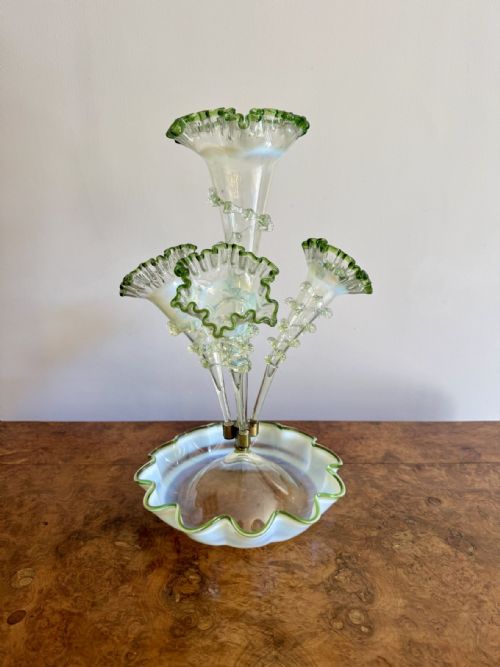
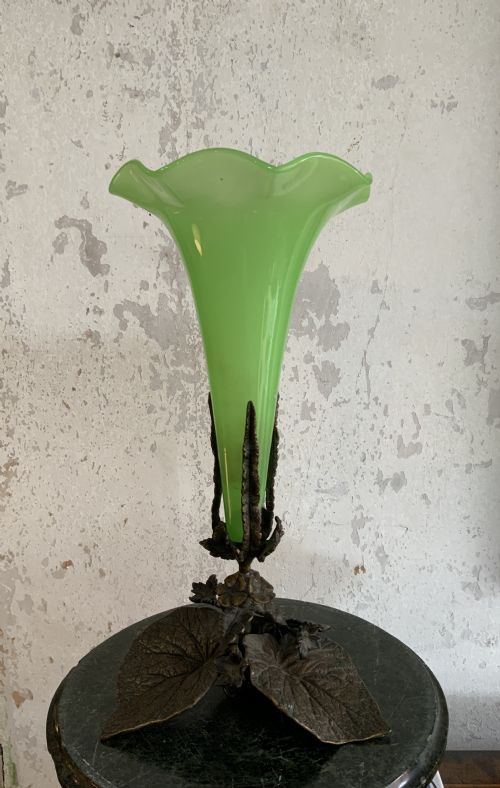
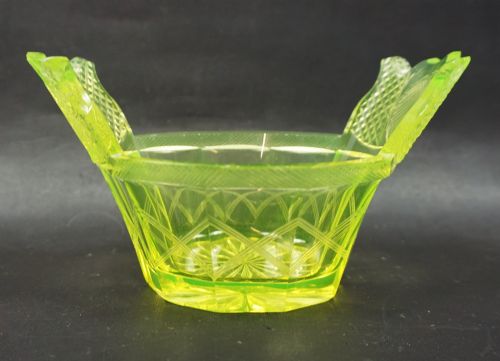
A green glass centrepiece acts as a focal point for a room, taking forms such as decorative bowls, multi-trumpet epergnes, and pedestal dishes. These pieces originate from periods spanning the nineteenth century through the 1930s, encompassing Victorian, Edwardian, and Art Deco eras.
Makers and manufacturers across Europe produced these works, including Bohemian glassworks, French studios, and English makers. Buyers frequently encounter moulded crystal, hand-blown vessels, and combinations of green glass inserts held within silver-plated mounts.
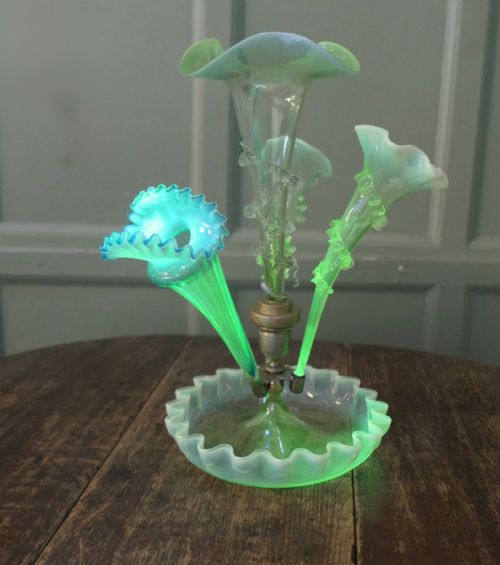
The objects range from simple utilitarian dessert dishes with glass liners to elaborate epergnes featuring uranium or vaseline glass. Each variation reflects the shifting tastes in interior decoration across successive decades.
Materials and methods
Craftsmen utilised various glass types, including lead crystal, iridescent glass, and reactive materials such as uranium or vaseline glass that respond to light. Techniques involved hand-blowing, moulding, and casing layers of coloured glass over crystal to achieve depth.
Metalwork formed an integral part of production, with silver plate, sterling silver, brass, and bronze used for mounts, swing handles, and epergne frames. Makers also employed applied cane decoration and acid-etching to enrich the surface texture of the glass.
Listings feature items from the 19th Century, Victorian, Edwardian, and Art Deco periods made from glass, silver plate, and bronze.
Assessing craftsmanship and design
Quality depends on the complexity of the glass manipulation, such as the precision of multi-coloured peacock eyes or overlaid cased glass. Heavier lead crystal and complex free-blown forms distinguish finer vessels from standard moulded production.
The integration between the glass insert and its metal mount indicates tier of manufacture, particularly in weighted silver-plated frames by established firms. Original matching components and preserved factory marks elevate the standing of a piece.
Loetz Witwe·Val St Lambert·René Lalique·Monart Glass·WMF
The Green Glass Centrepiece Glossary
- Epergne
- A tiered table centrepiece featuring a central bowl with multiple detachable trumpets or vases. These items were designed to hold flowers or fruit during formal meals.
- Uranium glass
- Glass coloured with uranium oxide that exhibits a distinct green glow under ultraviolet light. This material appeared frequently in nineteenth-century and early twentieth-century decorative items.
- Vaseline glass
- A transparent or translucent yellowish-green glass type with a greasy lustre. It shares characteristics with uranium glass and gained popularity in Victorian tableware.
- Cased glass
- Glass composed of multiple distinct layers of different colours fused together. Artisans cut through the outer layer to reveal the contrasting colour underneath.
- Phänomen
- An iridescent surface treatment developed by Loetz featuring wavy, combed lines across the glass body. This technique defines many Art Nouveau pieces.
Green Glass Centrepiece: Frequently Asked Questions
What is a green glass centrepiece used for?
These items served as decorative table ornaments for displaying fruit, flowers, or sweetmeats during formal dining.
Today, collectors use them as standalone display objects or functional display bowls within period interiors.
How do I identify uranium glass?
Uranium glass displays a characteristic bright green fluorescence when exposed to ultraviolet light due to the oxide content.
Many pieces also show a distinct yellow-green tint in natural light without requiring a UV light source.
How should I clean a glass epergne?
Wash the glass components gently in lukewarm water with mild soap, avoiding harsh abrasives that could damage the surface.
Keep metal mounts dry and polish them separately according to the specific metal composition.
How can I tell Victorian from Art Deco pieces?
Victorian examples often feature ornate brass or silver-plated frames, frilled rims, and vibrant vaseline glass epergne trumpets.
Art Deco items typically display geometric silhouettes, streamlined Monart bowls, or heavy cased crystal without elaborate metal framing.