


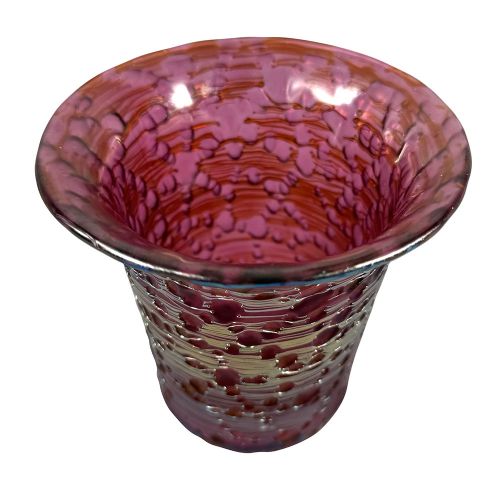


Iridescent Glass Urn
An iridescent glass urn catches light with metallic sheens, bringing fluid colour and organic curves into a room.
Iridescent Glass Urn
When you search for an iridescent glass urn, you encounter vessels produced primarily around the turn of the twentieth century. These objects include vases designed with bulbous bodies, lobed shapes, and slender necks, reflecting the dominant tastes of their time.
The pieces listed here span the Victorian era into the early twentieth century, showing a strong concentration of Art Nouveau aesthetics. You are most likely to meet hand-blown examples that utilise metallic oxide treatments to achieve their characteristic shimmer.
Originating from European and American makers, these vessels range from simple cabinet pieces to substantial mounted works. Their primary purpose is decorative, designed to display floral arrangements or stand alone as sculptural objects.
Materials and techniques
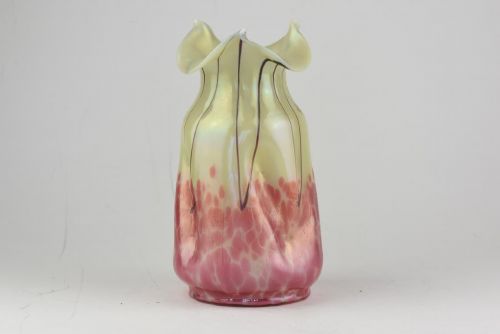
These vessels are formed from hand-blown glass treated while hot with metallic salts and vapours to create an iridescent surface sheen. Makers manipulated the molten material to incorporate complex optical effects and organic surface patterns directly into the body.
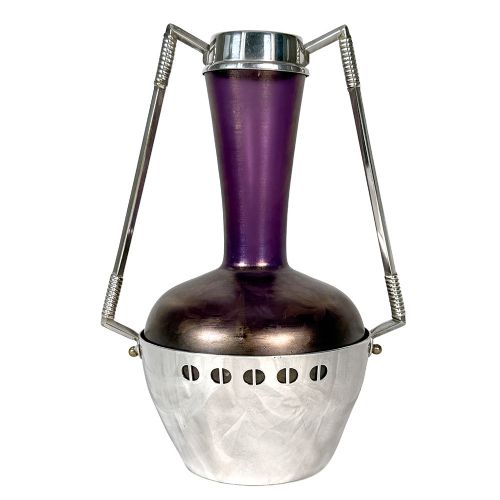
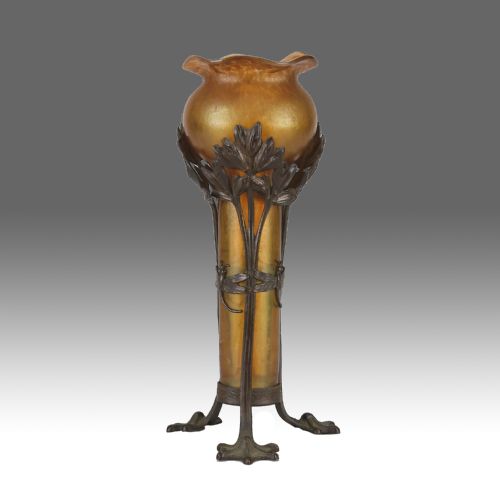
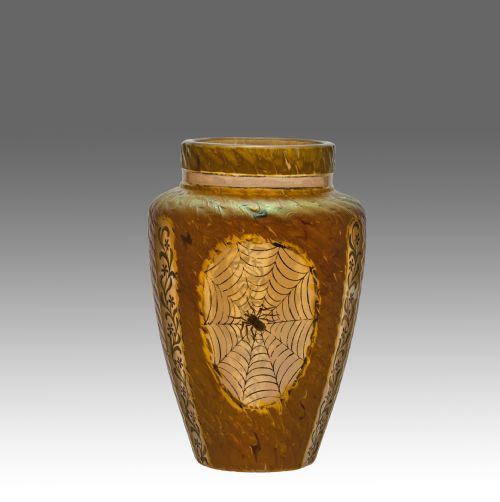
Many examples incorporate metal mounts made from bronze or sterling silver, often applied as collars, bases, or intricate openwork overlays. Some pieces utilise enamel decoration or silver overlay techniques to add further textural contrast to the lustrous glass.
Listings feature works from the nineteenth century up through the nineteen-twenties, showcasing period materials like sterling silver and bronze.
Assessing quality and execution
Quality rests in the depth and complexity of the optical sheen, alongside the skill required to manipulate the hot glass into distinct decors and forms. Superior examples show a vibrant play of colour that shifts across the surface without muddiness.
The integration of metal mounts, such as bronze fittings or silver overlay, separates standard production from exceptional pieces. Finer works display meticulous craftsmanship in both the glassblowing and the secondary metalwork.
Pallme Konig·Loetz·Kralik Glass·Loetz Witwe·Richardson's·LCT Tiffany
The Iridescent Glass Urn Glossary
- Iridescent glass
- Glass treated with metallic oxides during or after blowing to produce a rainbow-like sheen on the surface. This technique was revived and perfected by late nineteenth-century glassmakers.
- Art Nouveau
- An international style of art, architecture, and applied art characterised by sinuous lines and motifs inspired by nature. It heavily influenced the design of glassware during the period.
- Favrile glass
- A type of iridescent art glass patented and produced by Louis Comfort Tiffany. The term derives from an old English word for handcrafted.
- Phänomen décor
- A specific surface pattern of undulating, combed glass threads fused into the hot body. It is most famously associated with the Loetz factory.
- Silver overlay
- Sterling silver decoration applied directly onto the surface of a glass vessel. The metal is etched and worked before being permanently bonded to the object.
Iridescent Glass Urn: Frequently Asked Questions
What is iridescent glass?
Iridescent glass is a type of art glass treated with metallic salts to produce a shimmering, rainbow-like surface effect. The technique captures light to create shifting colours that mimic natural phenomena like mother-of-pearl.
Makers achieved this look by exposing the hot glass to metallic vapours during the blowing process. This created a permanent chemical bond rather than a superficial coating.
How do I identify Art Nouveau glass?
Art Nouveau glass is characterised by organic forms, flowing lines, and motifs drawn from plants and insects. These vessels often feature asymmetrical shapes and naturalistic colour palettes inspired by the growing stem or flower.
The style emerged around the turn of the twentieth century as a rejection of rigid Victorian historicism. Pieces from this era frequently showcase iridescent surfaces that complement their fluid silhouettes.
What are bronze mounts?
Bronze mounts are decorative metal additions fitted to the rims, bases, or bodies of glass vessels. They provide structural support while enhancing the sculptural presence of the object.
Found frequently on high-end European art glass, these metal elements reflect the collaborative skills of glasshouses and metalworkers. They often incorporate naturalistic motifs that match the curves of the glass below.