
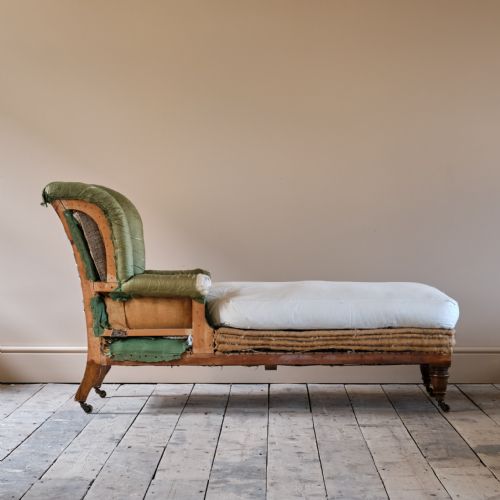


Green Fabric Couch
These green fabric couch options bring period seating into modern rooms, offering deep comfort paired with historic upholstery.

Green Fabric Couch
A green fabric couch encompasses diverse historical forms ranging from Victorian chaises longues and Edwardian Chesterfields to Regency library sofas and early twentieth century Howard and Sons seating. These pieces bring period character into living spaces through traditional upholstered forms.
The most common examples encountered on this page date from the nineteenth and early twentieth centuries, featuring classic timber frames paired with upholstered finishes. Buyers find everything from intimate two-seater sofas to large daybeds and deep wingback settees.
Origins span English country house styles alongside continental pieces, utilising classic silhouettes like the Howard style, Queen Anne shapes, and lyre-form Regency frames. Each object combines structural woodwork with textile upholstery suited to period interiors.
How they were made
Upholstery methods utilised traditional fillings enclosed in Hessian, finished with durable fabric outer layers including embroidered silk velvet and ticking. Brass details and exposed wooden elements often accented the structured textile surfaces.
Listings feature eighteenth to twentieth century forms including Regency library sofas, Edwardian Chesterfields, and Victorian chaises longues framed in mahogany and walnut.
What varies in quality
Quality differences manifest in the integrity of the underlying timber frame and the sophistication of the joinery, distinguishing finely carved mahogany or walnut skeletons from simpler wooden structures. The distinction also lies in the pedigree of the maker, with established workshops achieving superior proportions and structural longevity.
The refinement of the upholstery work separates standard pieces from exceptional examples, particularly where specialist textiles like silk velvet or specific maker-stamped ticking are employed. Proportions, decorative carving detail, and the preservation of original frame lines dictate the standing of each piece.
Howard and Sons·Colefax and Fowler·Portman
The Green Fabric Couch Glossary
- Chaise Longue
- An upholstered long chair designed for reclining, combining elements of a chair and a daybed. These pieces frequently feature a single raised end for head support.
- Chesterfield
- A traditional style of upholstered sofa characterised by deep buttoning and rolled arms of equal height. It remains a staple of nineteenth century English seating design.
- Ticking
- A tightly woven, durable cotton or linen textile historically used to contain feather or hair fillings in upholstery. It prevents internal stuffing materials from working their way through the seat.
- Daybed
- A versatile piece serving as both a seat and a bed, often featuring an elevated headrest. Nineteenth century examples frequently incorporate decorative wooden frames.
Green Fabric Couch: Frequently Asked Questions
How do I date a period sofa?
Dating relies upon examining structural timber, leg styles, and framing techniques alongside stylistic cues unique to periods like the Victorian era or the Edwardian years. Upholstery materials and underlying webbing methods also offer clear indicators of original manufacture.
Comparison with documented examples from known makers helps narrow down the decade of production. Examining secondary woods and fastening methods provides further chronological certainty.
What defines Howard style seating?
Howard style pieces are characterised by deep, comfortable proportions, low rolled arms, and substantial cushioning designed for relaxed lounging. They typically sit on low turned wooden legs fitted with brass castors.
Original pieces often feature specific maker stamps on the castors or frame webbing. Their enduring appeal stems from exceptional ergonomic comfort paired with understated English upholstery traditions.
Are these sofas practical for daily use?
Period sofas and settees were constructed using robust hardwoods and traditional joining methods designed for generational utility. Their sturdy frames readily accommodate modern daily living when paired with sound internal support.
Placing them in appropriate home environments ensures the historic woodwork and fabrics remain protected from excessive wear. Regular gentle maintenance preserves both the structural integrity and the textile finish.
How do I care for antique upholstery?
Preserving historic fabrics requires regular gentle vacuuming with a soft attachment to remove dust without stressing the fibres. Direct sunlight should be avoided to prevent fading on delicate textiles like silk velvet or ticking.
Professional textile conservators should handle deep cleaning or structural repairs to delicate coverings. Maintaining stable room humidity protects both the wooden frames and the surrounding fabric integrity.