



Green Enamel Decorative Dish
A green enamel decorative dish brings rich colour and meticulous craftsmanship into a room, spanning Victorian and Meiji periods.
Green Enamel Decorative Dish
A green enamel decorative dish encompasses wide chargers, bowls and plates produced across the nineteenth and early twentieth centuries. These vessels originate predominantly from Japanese and Chinese workshops, alongside European porcelain and glass production.
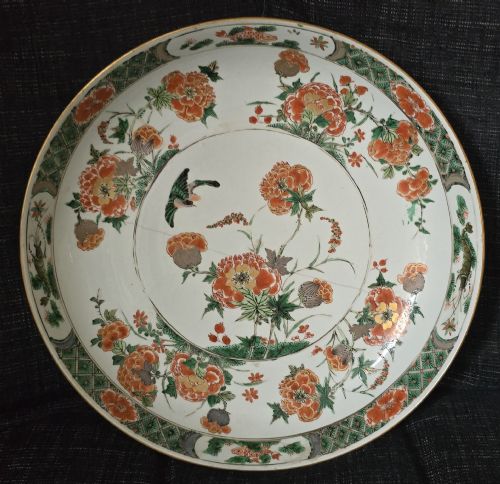
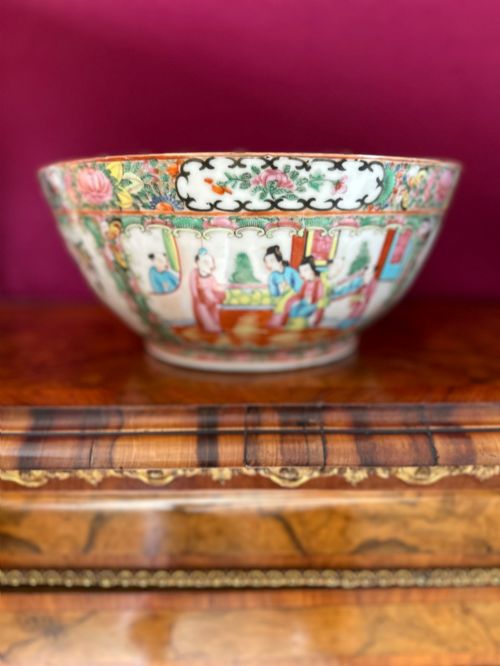
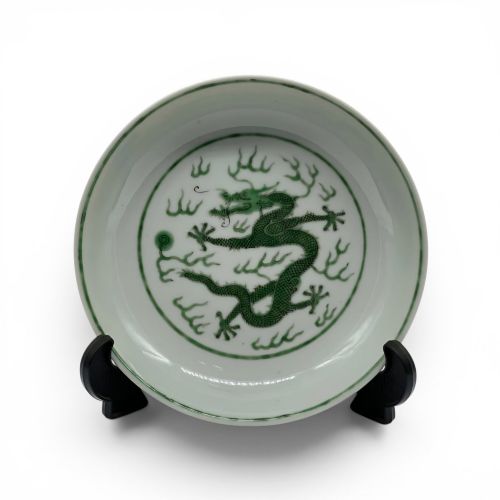
Collectors encounter large cloisonne enamel chargers and porcelain dishes featuring hand-painted motifs such as dragons, phoenixes, and natural scenes. The green enamel provides a vibrant ground or primary accent across these varied ceramic and metal forms.
Dating ranges from Victorian eras through the Meiji period, reflecting international trade and the widespread appreciation of Asian decorative arts in Britain. Pieces vary from deep lidded bowls to expansive wall-hanging chargers.
Materials and construction methods
Metalwork pieces utilise copper or brass bases decorated with cloisonne enamel, where thin wire compartments outline the intricate design cells. Artisans then pack these sections with vitreous enamel pastes before firing and polishing the surface to a smooth finish.
Ceramic examples employ porcelain and ceramic bodies shaped into plates and bowls, painted with mineral pigments and gilt. The green glazes and enamels are fused to the clay body under high kiln temperatures to achieve lasting brilliance.
Green Enamel Decorative Dish Retail Price Guide 2026
Typical asking prices for green enamel decorative dish among the pieces listed under this phrase on Sellingantiques today, from the lower quarter to the upper quarter. They describe what is for sale here now, not the wider market.
Owning a dish depicting a mythical phoenix or an owl gazing at Mount Fuji brings Victorian fascination with distant lands straight to the mantelpiece.
Assessing craftsmanship and execution
Quality rests upon the precision of the enamel work and the complexity of the pictorial composition. Finer examples display immaculate wirework without pitting, alongside deeply detailed hand-painted narratives of birds, foliage, or figures.
The weight of the metal base and the evenness of the glaze application distinguish superior items from standard commercial wares. Master artisans achieve remarkable shading within the green enamel fields, creating depth and movement across the surface.
The Green Enamel Decorative Dish Glossary
- Cloisonne enamel
- A metalworking technique where thin flat metal wires are soldered to a base to create cells filled with enamel paste. This method produces intricate geometric and pictorial designs.
- Charger
- A large ornamental plate or dish intended for display on a wall or sideboard rather than for dining use. These pieces often measure over thirty centimetres across.
- Totai shippo
- A Japanese variant of cloisonne enamel utilising a ceramic or porcelain body instead of metal. The technique creates translucent effects over a textured core.
- Kutani
- A style of Japanese coloured porcelain characterised by bold pictorial designs and rich overglaze palettes. Green and gold hues frequently dominate these traditional wares.
- Meiji period
- The era of Japanese history lasting from eighteen sixty-eight to nineteen twelve, marked by an opening to Western trade. Production during this time excelled in decorative metalwork and ceramics.
Green Enamel Decorative Dish: Frequently Asked Questions
How were decorative chargers used?
These large plates served primarily as ornamental centrepieces on sideboards or were mounted directly onto walls for visual impact.
Their substantial scale allowed workshops to showcase complex pictorial narratives in vibrant enamel and porcelain.
What is cloisonne enamel?
Cloisonne is a technique involving metal wires soldered to a copper base to form small compartments that hold coloured glass paste.
Fired in a kiln and polished smooth, these wire boundaries keep distinct enamel colours from running together.
How do I date a green dish?
Dating relies on stylistic markers, material composition, and any maker signatures found on the base or reverse.
Nineteenth-century pieces often exhibit traditional Japanese Meiji motifs or Victorian export styles with distinct copper wire formations.
Where were these pieces made?
The listings show origins spanning Japanese Meiji and Edo periods, Chinese export workshops, and British glasshouses.
Each region applied distinct technical traditions, from wire-inlaid metalwork to hand-painted porcelain glazes.