




Green Earthenware Pitcher
A green earthenware pitcher brings tactile warmth to a room, offering both utilitarian heritage and rich lead-glazed colour.
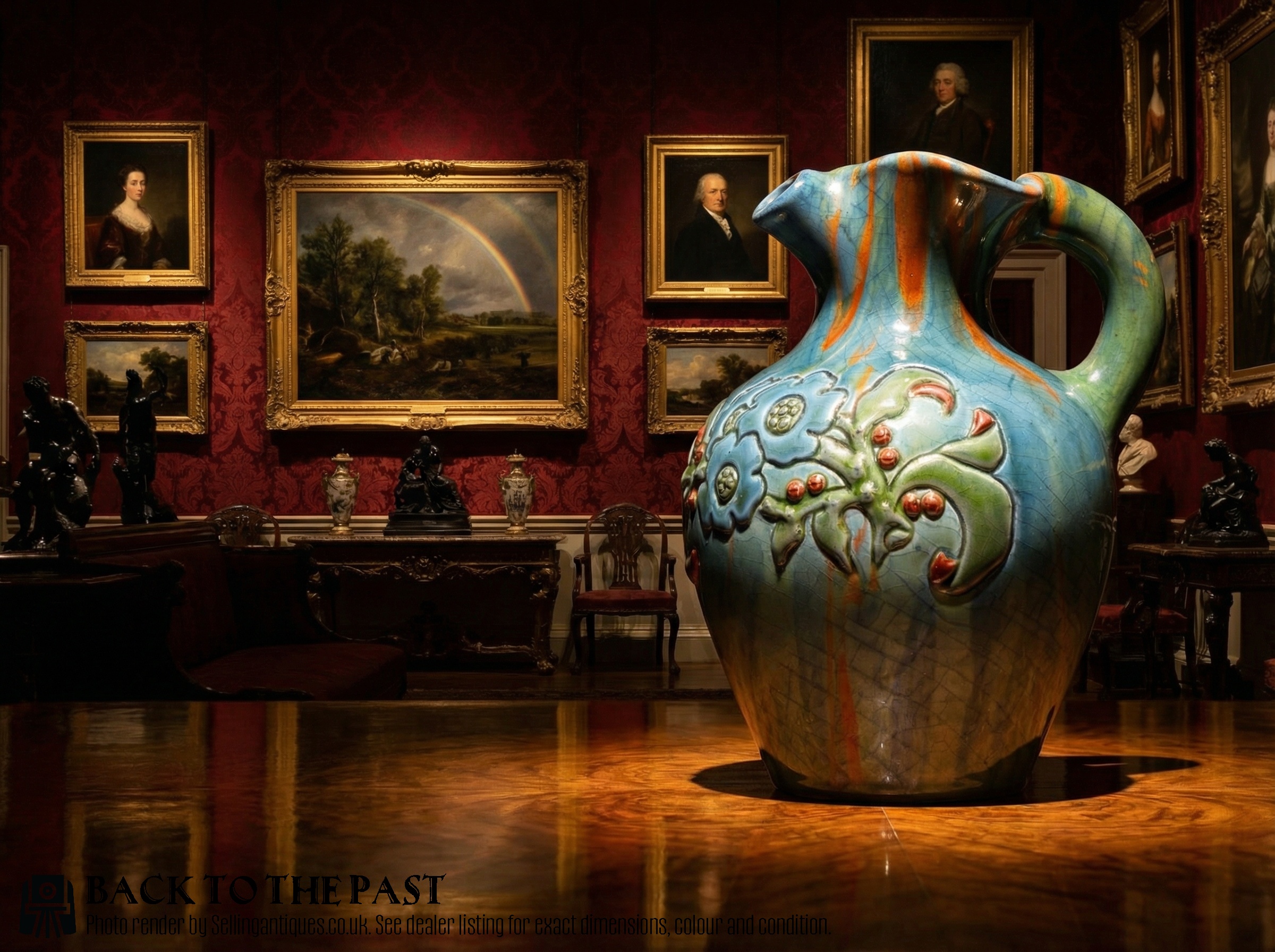
Green Earthenware Pitcher
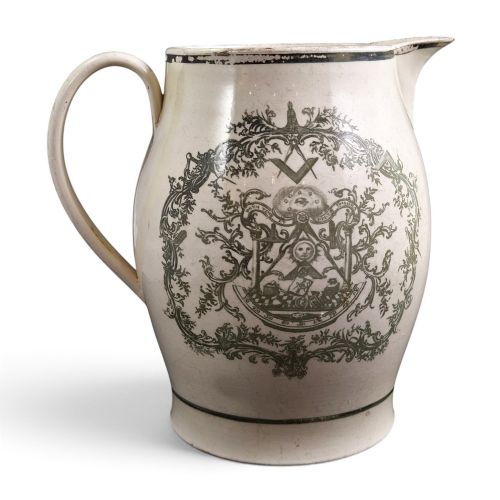
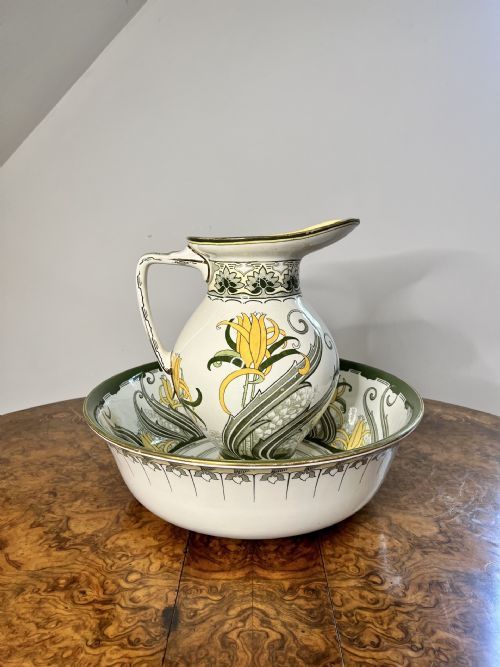
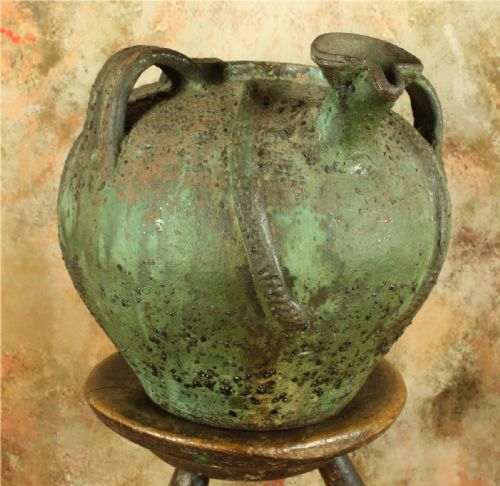
A green earthenware pitcher encompasses functional vessels shaped from porous clay and finished with lustrous green or olive glazes. These pieces span centuries, appearing in forms from modest cream jugs to large multi-handled oil pots and elaborate wash basin sets.
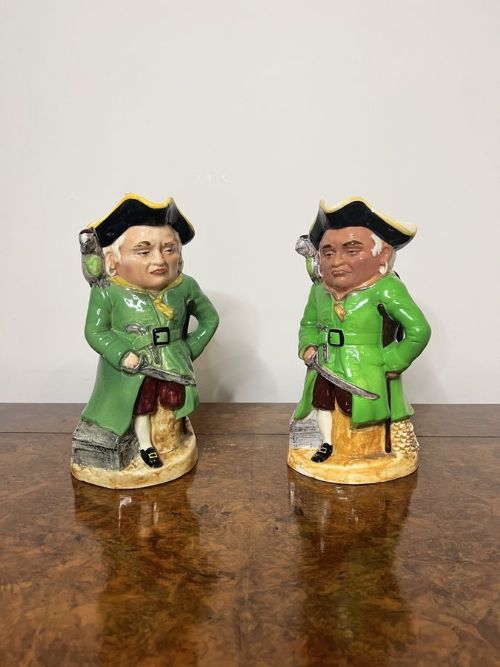
The selections here range from Georgian creamware and Regency Staffordshire to Victorian majolica, Art Nouveau studio pottery, and early twentieth century French wares. Collectors encounter various iterations, including decorative jugs with bullrush motifs, botanical sunflower designs, and matching bowl sets.
Makers and periods recorded in these wares demonstrate considerable breadth, incorporating English studio pottery alongside French provincial vessels. Buyers typically find sturdy earthenware bodies formed for daily service yet celebrated for their distinctive botanical and figurative ornamentation.
Materials and construction
Potters shaped these vessels primarily from earthenware and creamware clays, often building larger forms by hand or throwing them upon a wheel before applying rich mineral glazes. Terracotta and ironstone also appear, providing robust foundations suited to utilitarian service.
The characteristic green surfaces rely on specialised lead or metallic glazes that pool in the recesses of moulded details, accentuating motifs such as bullrushes, leaves, and sunflower petals. Firing temperatures determined the depth of the glaze and the durability of the underlying porous ceramic body.
One cheerful Victorian pitcher apparently took inspiration from a bullrush, ensuring your morning water service comes with aquatic reeds.
Quality and execution
Superior examples of a green earthenware pitcher demonstrate crispness in moulded relief work, where botanical or figurative details remain sharp beneath an even, unblemished glaze coat. Lesser pieces suffer from muddy colour pooling, uneven firing marks, or dull surface definition.
Artistic ambition distinguishes standard utilitarian vessels from studio pottery and named factory productions, where individual hand-painting or thoughtful glaze formulation elevates the object. The harmony between the clay body, the weight of the handle, and the richness of the green tone governs the overall merit of the piece.
Sir Edmund Elton·Doulton Burslem·Doulton Lambeth·George Jones·Keith Murray
The Green Earthenware Pitcher Glossary
- Earthenware
- A porous ceramic body fired at relatively low temperatures, requiring a vitreous glaze to achieve water retention. It forms the foundation for the majority of historical pitchers.
- Majolica
- A type of earthenware decorated with opaque coloured lead glazes over an absorbent body, popular during the Victorian era for botanical and animal designs. The technique allows for vibrant greens and browns.
- Creamware
- A refined, pale-coloured earthenware perfected in eighteenth-century England, valued for its smooth surface and light weight. It often served as a canvas for delicate green enamels and transfer printing.
- Studio pottery
- Ceramics produced by individual artists working independently or in small workshops, focusing on unique forms and experimental glazes. These pieces depart from mass-produced factory standards.
- Transfer printing
- A decoration method where an engraved metal plate transfers a design onto paper, which is then applied to the ceramic surface before glazing. This technique enabled intricate patterns on utilitarian jugs.
Green Earthenware Pitcher: Frequently Asked Questions
Can I use these pitchers for serving liquids?
Many historical jugs remain structurally sound for holding liquids, provided the interior glaze is intact and free from major hairline fractures.
It is wise to inspect the interior walls for crazing or staining before using any antique vessel for serving beverages at the table.
What is majolica pottery?
Majolica is a nineteenth-century ceramic style defined by colourful lead glazes applied directly over a white enamel or moulded earthenware base.
Peculiar to this style are vibrant naturalistic greens, browns, and yellows used to depict plants, animals, and mythological subjects.
How do I date an old ceramic pitcher?
Dating relies on examining the clay body, the characteristics of the glaze, the presence of maker marks, and the stylistic conventions of the period.
Comparing the weight, handle attachment, and footring to documented examples from eras like the Regency or Victorian periods helps establish an approximate age.