


Green Coastal Watercolour
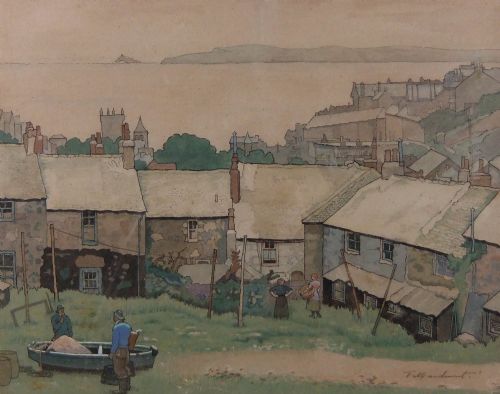
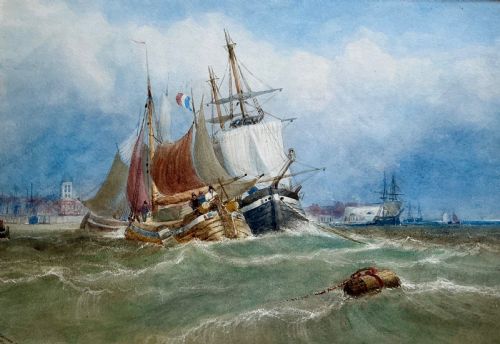
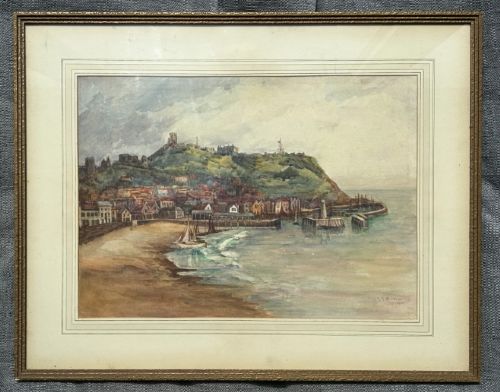
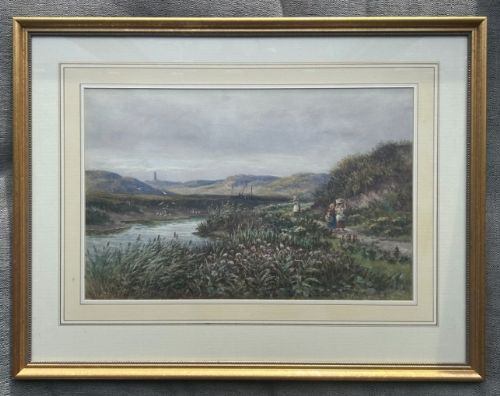
A green coastal watercolour captures maritime light and shoreline weather, offering a direct window into nineteenth and twentieth-century seaside views.
Green Coastal Watercolour
When you search for a green coastal watercolour, you are looking at original paintings that depict marine subjects, harbour scenes, and cliff landscapes using pigment suspended in water. These works record British coastal topography from the Victorian era through the mid twentieth century.
The pieces on this page span styles from Victorian Marine Art and British Impressionism to the Newlyn and St Ives Schools. You will encounter framed original paintings and wall art rendered by named artists working across England, Wales, Ireland, and the Isle of Man.
Most examples date from the nineteenth century up to the nineteen sixties, capturing regional locations such as Scarborough, Whitby, and Runswick Bay. They serve as historical records of fishing communities, harbours, and coastal architecture.
How they were made
These works rely on watercolour pigment applied to paper, sometimes housed behind glass within wooden frames. Artists built up transparent washes of colour to render coastal light, sea spray, and green headlands.
The physical support consists primarily of paper, which receives the water-based pigment to create delicate atmospheric effects. Framing materials typically involve wood and glass to protect the paper surface from environmental damage.
The listings show watercolours on paper spanning from the Victorian period through to nineteen sixty, utilising wood and glass framing.
What varies in quality
Quality in a green coastal watercolour rests on the artist's handling of light, atmospheric perspective, and pigment control. Superior works capture the specific salt air and coastal luminosity of locations like Cornwall or Yorkshire with assured brushwork.
Condition also distinguishes the pieces, particularly the preservation of the paper support and the vibrancy of the watercolour pigment against fading. Stronger works retain their original tonal contrast and sit within sympathetic period framing.
Thomas Maidment·Henry Barlow Carter·Frank Wood·H.E. Tidmarsh·John Hobson Nicholson·Frederick Williamson·William Tatton Winter·Ralph Todd·John Abernethy Lynas-Gray·William Moore Junior·Walter Henry Sweet·Clarence Woodburn·Frank Rousse·GM de L'Aubiniere·John J. Hamer·Edwin Bagshaw·Joseph William Carey·George Marks
The Green Coastal Watercolour Glossary
- Watercolour paint
- A medium consisting of colour pigments mixed with a water-soluble binder, applied to paper to create translucent washes.
- Victorian Marine Art
- A genre focusing on ships, coastal landscapes, and maritime scenes produced during the reign of Queen Victoria.
- St Ives School
- An association of artists inspired by the coastal light and landscape of Cornwall, particularly active in the twentieth century.
- Newlyn School
- An artist colony based in a Cornish fishing village that specialised in plein air painting of local coastal life.
- British Impressionism
- A movement adopting looser brushwork and a focus on natural light, visible in many landscape watercolours.
Green Coastal Watercolour: Frequently Asked Questions
What periods do these watercolours come from?
The listings span the Victorian era, Edwardian period, and mid twentieth century. Artists worked across these decades to record changing British coastal scenes.
You will find pieces dated from the late nineteenth century through the nineteen sixties, reflecting evolving regional art movements.
Where were these coastal scenes painted?
The paintings document various coastal locations across Britain and Ireland. Common settings include Yorkshire harbours, Devon villages, Welsh bays, and the Isle of Man.
Artists frequently set up their easels in established creative communities such as Newlyn, St Ives, and Scarborough.
How should I frame and display a watercolour?
Watercolours require protection behind glass to shield the paper and pigment from dust, moisture, and handling. Acid-free mounts prevent the paper from discolouring over time.
Keep framed pieces away from direct sunlight to prevent the green pigments and washes from fading on the paper.
How do I identify the artist?
Many works feature signatures, monograms, or inscriptions written directly on the front of the paper by the painter. Titles of specific locations often appear alongside the signature.
Examine the reverse of the frame or paper as well, where previous owners, galleries, or artists sometimes left additional handwritten notes.