


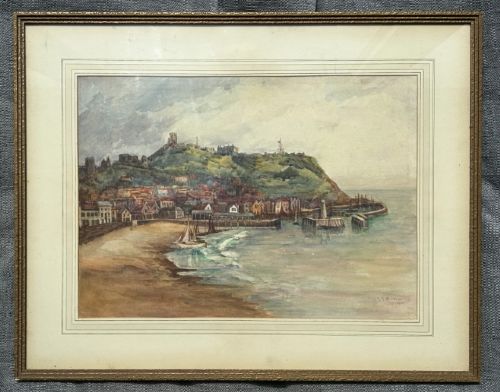


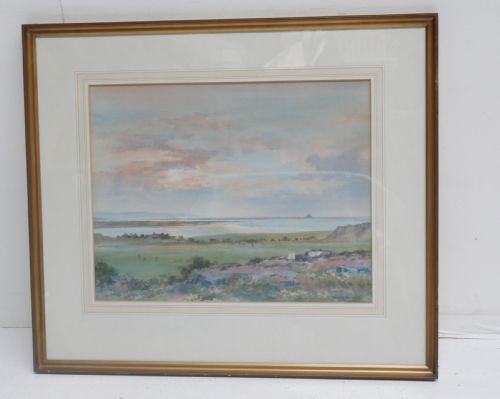
Antique Seaside Landscape Art
Antique seaside landscape art captures coastal harbours and sandy shores through oil and watercolour, bringing historic maritime light directly into your room.
Antique Seaside Landscape Art
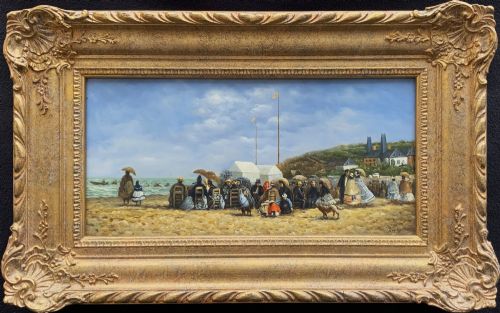
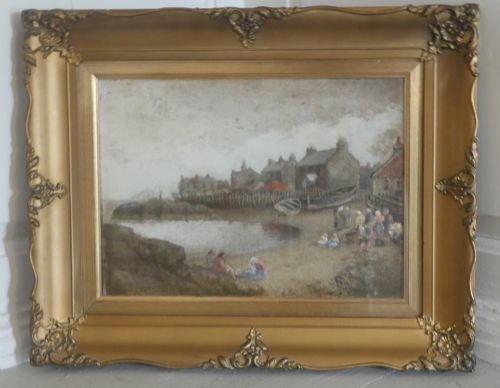
Antique seaside landscape art encompasses framed oil paintings and watercolours depicting coastal views, sandy beaches, and busy fishing harbours. These works span from the Victorian period through to the mid-twentieth century, recording shores from Cornwall and Yorkshire to the Normandy coast.
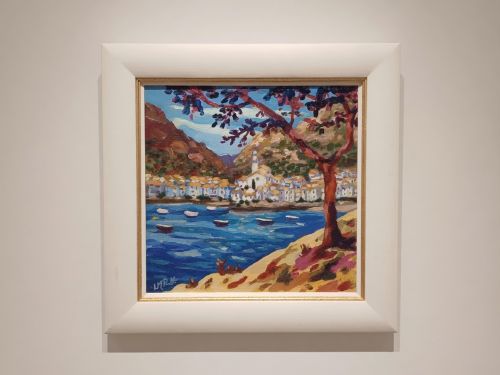
Buyers frequently encounter detailed nineteenth-century watercolours alongside broader impressionist and post-impressionist oils on canvas and board. Cornwall, Dorset, and Yorkshire locations appear often, reflecting the appeal of British and French coastal communities to artists of those eras.
How they were made
Artists painted these coastal scenes using oil paint on canvas or board, and watercolour on paper, framed traditionally in wood and gilt wood. Watercolours relied on fine washes and pencil underdrawings to capture the pale light of cliffs and bays, while oils offered heavier texture for waves and shorelines.
Support materials range from stretched canvas to heavy paper sheets and wooden boards, often protected beneath glass for works on paper. Original frames frequently incorporate gilt mouldings that match the period of the painting.
Surviving coastal watercolours occasionally trap grains of actual Victorian sand beneath their early glass mounts.
What varies in quality
Quality rests upon the artist's handling of coastal light, atmosphere, and local topography, distinguishing skilled plein-air observation from formulaic studio production. Stronger pieces convey the specific weather and movement of the sea rather than generic coastal scenery.
The precision of the medium matters, whether in the crisp detail of a Victorian watercolour or the confident brushwork of a later impressionist oil. Preservation of the original paper, canvas, and frame also shapes the standing of each piece.
Edward Mills·William Banks Fortescue·F A Roylance·John Bedloe Goddard·Norman Lloyd·Sir Thomas Newenham Dean·William Raymond Dommersen·H E Tidmarsh·Percy Brooke·Alfred Robert Quinton·James George Bingley·John Sanderson Wells·Robert Macaulay Stevenson·John Abernethy Lynas-Gray·William Greaves·James Watson·Edwin Bagshaw·James Kinnear·Yves Brayer·William Shayer·George Marks·Henry Valter·John Duvall
The Antique Seaside Landscape Art Glossary
- Watercolour
- A painting method where fine pigment is suspended in a water-based solution and applied to paper. This medium was favoured by nineteenth-century artists working outdoors along cliffs and harbours.
- Oil on Canvas
- A technique using pigments bound in drying oil applied to a woven fabric surface stretched over a wooden frame. It allowed artists to build heavy textures for turbulent seas and sandy shores.
- Gilt Wood
- Timber mouldings coated in a thin layer of gold leaf or metallic paint. These frames enclose many nineteenth-century paintings.
- Post-Impressionism
- An art movement extending beyond impressionism to emphasise symbolic content and heavier brushwork. Pieces from this tradition use vivid colour to interpret coastal scenes.
- Topographical
- Representing a specific actual location accurately. Many nineteenth-century works record identifiable bays, piers, and villages along the British coast.
Antique Seaside Landscape Art: Frequently Asked Questions
How do I date an antique seaside watercolour?
Dates rely upon artist signatures, exhibition records, framing styles, and paper watermarks. Costume details on figures depicted walking on the beach also help narrow the decade.
Comparison with documented works by the same hand provides further chronological certainty.
Where were these coastal scenes typically painted?
Artists gathered in known fishing ports and coastal holiday resorts across Britain and France. St Ives, Scarborough, Whitby, and Cromer appear frequently in the titles.
Normandy locations also feature prominently among the continental works.
How should I frame and display watercolours?
Watercolours require conservation mounting beneath glass to protect the paper from ultraviolet light and atmospheric moisture. Direct sunlight causes fading in historic pigments.
Keeping them away from damp exterior walls ensures the paper remains stable.
What is the difference between oils and watercolours here?
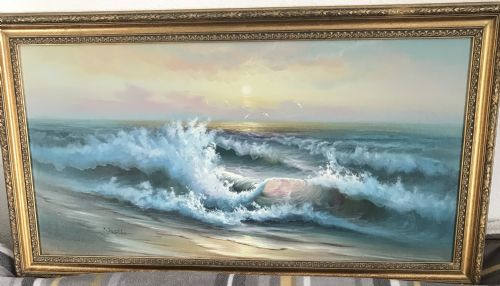
Oils use thick pigmented paint on canvas or board, offering robust textures suitable for crashing waves and dramatic skies. Watercolours use translucent washes on paper for lighter coastal atmospheres.
Both mediums captured the changing light of the nineteenth and twentieth-century shore.