


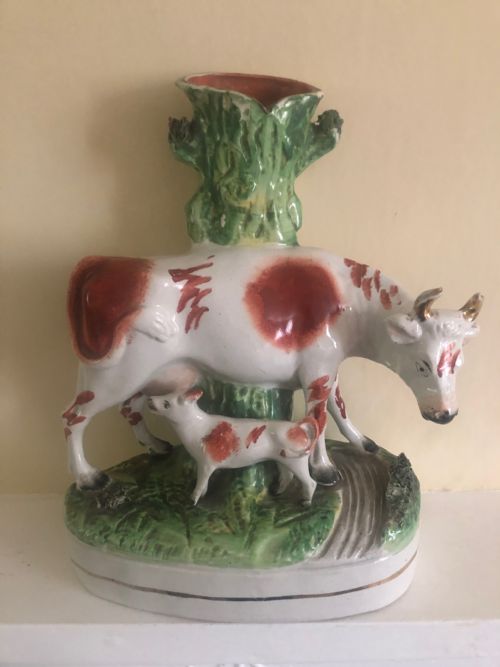
Green Ceramic Spill Vase
These green ceramic spill vase examples are Staffordshire figures and earthenware vessels designed to hold wooden matches, combining utility with Victorian folk charm.
Green Ceramic Spill Vase
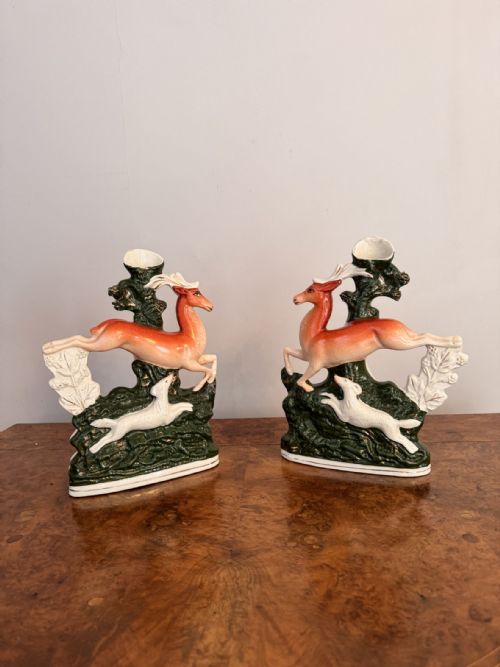
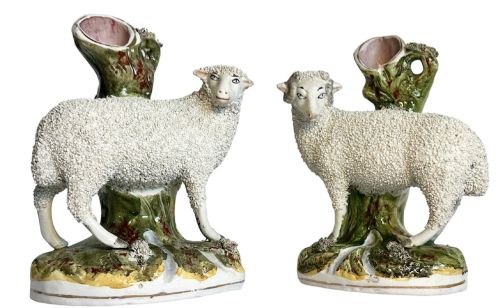
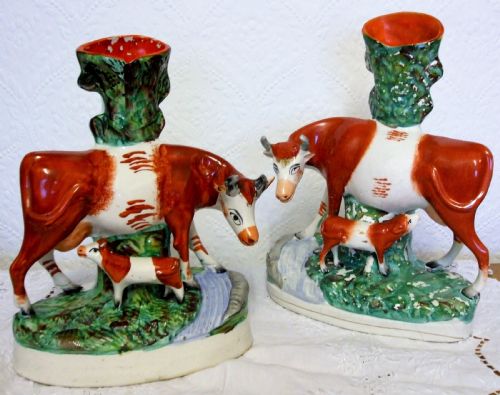
When you search for a green ceramic spill vase, you encounter Victorian earthenware and pearlware pieces made in Staffordshire alongside early twentieth-century continental pottery. The selection leans heavily towards pairs of animal figures, particularly sheep, cows, and deer, flanked by cylindrical holders.
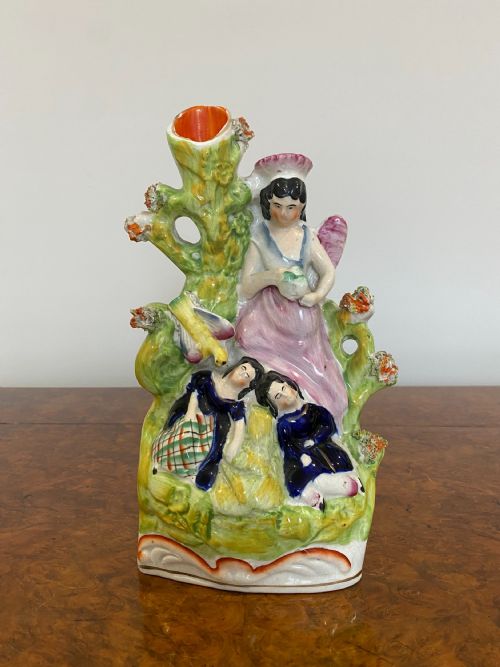
Most items belong to the nineteenth century, spanning the Regency and Victorian eras, with occasional Art Nouveau examples from makers such as Ernst Wahliss. Forms range from simple spill holders to elaborate figural groups like turret bridges and the Band of Hope.
Materials and construction methods
These pieces utilise earthenware and pearlware bodies, shaped into figural and vessel forms before receiving hand-applied enamel pigments. The characteristic green tones and surface sheens come from lead glazes fired over the painted and moulded clay.
Makers formed the figures using traditional ceramic moulds, resulting in hollow flat-back constructions designed for display against mantelpiece walls. Fine details on the animals and architectural elements were hand-painted over the glaze before a final firing.
The listings span the nineteenth and early twentieth centuries, featuring earthenware and pearlware bodies finished with lead glazes and enamel pigments.
Judging the quality of a green ceramic spill vase
Quality rests upon the crispness of the original moulding and the precision of the hand-painting across the enamel pigments. Superior examples retain bright, unblemished pearlware or lead glazes without excessive crazing or loss of pigment.
Walton·Ernst Wahliss
The Green Ceramic Spill Vase Glossary
- Spill vase
- A hollow vessel designed to hold slender wooden spills used for lighting fires or candles. These containers sit alongside decorative animal or architectural figures.
- Pearlware
- A refined type of earthenware developed in the eighteenth century, featuring a thin glaze with a faint bluish tint that pools in crevices. It provides a pale ground for enamel colours.
- Flat back
- A method of moulding ceramic figures where the rear remains unpainted and flat, intended for placement against a wall. This technique economised on material and kiln space during production.
- Lead glaze
- A glossy coating containing lead oxide applied to pottery to create a shiny waterproof surface. It enhances the vibrancy of the underlying enamel pigments.
Green Ceramic Spill Vase: Frequently Asked Questions
What is a spill vase used for?
These vessels held wooden spill sticks, which people used to transfer flames from a fireplace to candles or lamps before matches became common.
Over time, they evolved into decorative mantelpiece ornaments that combined practical storage with popular animal and figural themes.
How do I date a Staffordshire spill vase?
Dating relies on stylistic clues, glaze types, and manufacturing characteristics associated with the nineteenth century. Pearlware glazes and specific backstamp traditions often point towards the Regency and early Victorian periods.
Later Victorian and early twentieth-century pieces show shifts in earthenware composition and art styles like Art Nouveau.
Why are animals common on these vases?
Victorian potters drew inspiration from rural life, domestic animals, and popular pastoral scenes. Sheep, cows, and deer appeared frequently because buyers favoured comforting domestic imagery for their homes.
Pairs of animals framing a central spill holder were especially popular for symmetrical mantelpiece display.
How do I care for antique earthenware?
Keep these ceramic pieces away from direct sunlight and areas prone to extreme temperature fluctuations. Dust them gently with a dry, soft cloth rather than using liquid cleaners.
Avoid immersing antique lead-glazed earthenware in water, as old glazes can develop hairline cracks if exposed to moisture.