
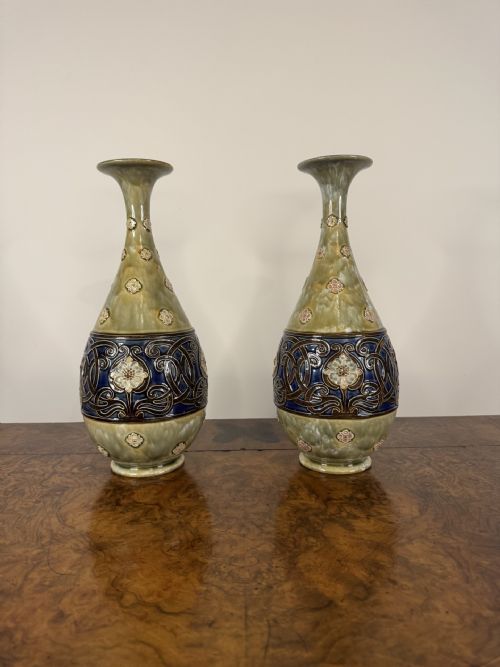


Green Art Pottery Vase
A green art pottery vase brings organic form and rich, expressive glaze into a room through the distinct hand of late nineteenth and early twentieth century makers.
Green Art Pottery Vase
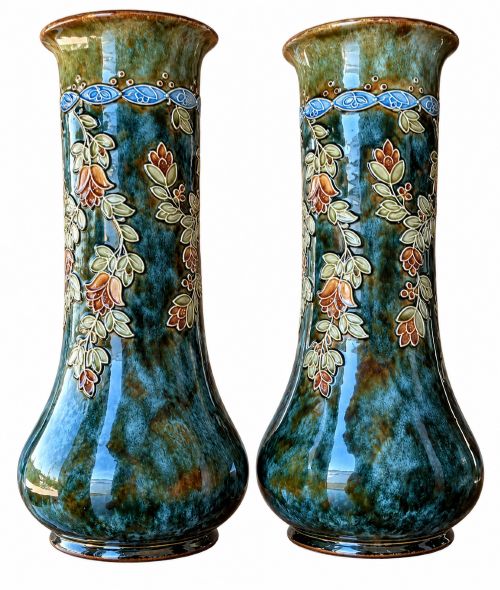
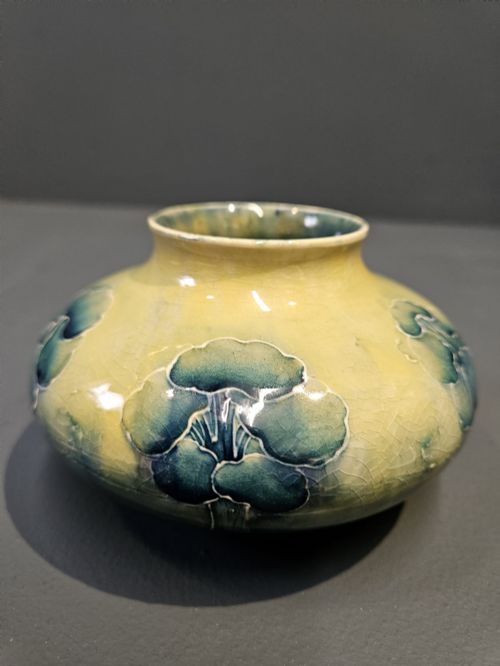
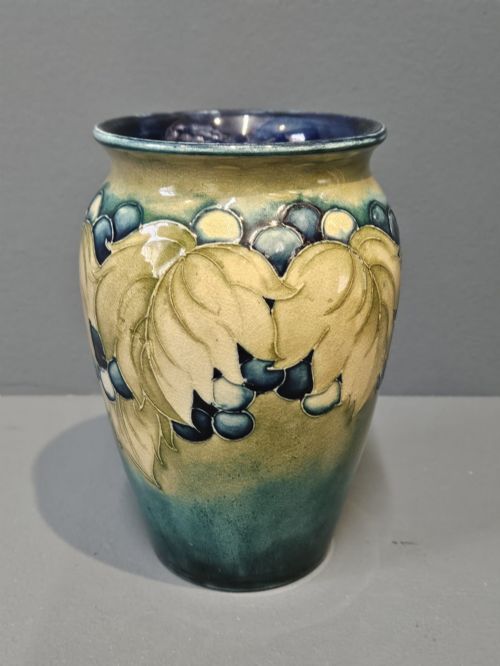
A green art pottery vase represents a period of intense experimentation in British and European ceramics, spanning from the Victorian and Edwardian eras through the Art Nouveau, Arts and Crafts, and Art Deco movements. When you search for this phrase, you meet items produced by major potteries and independent studios working in earthenware, stoneware, and faience.
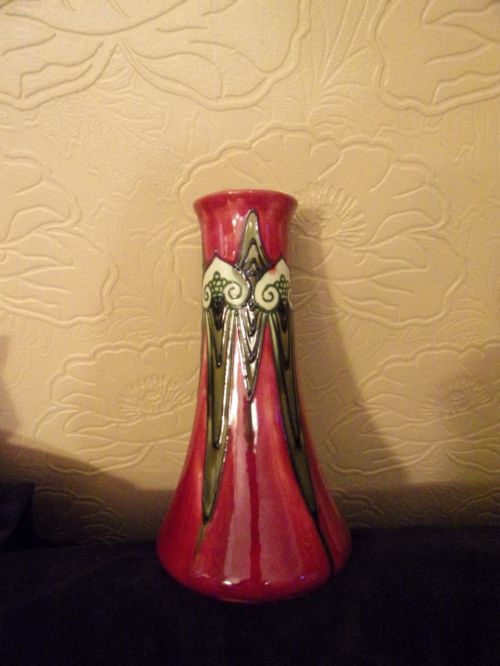
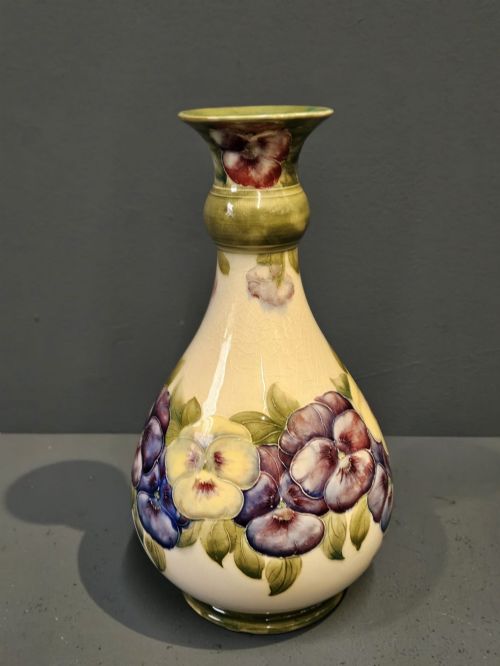
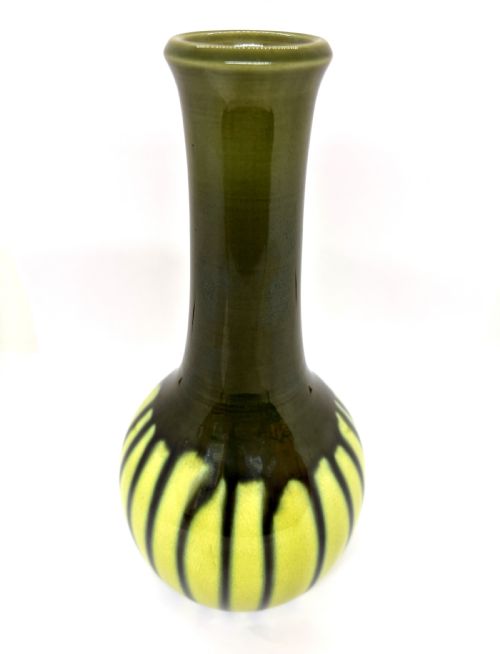
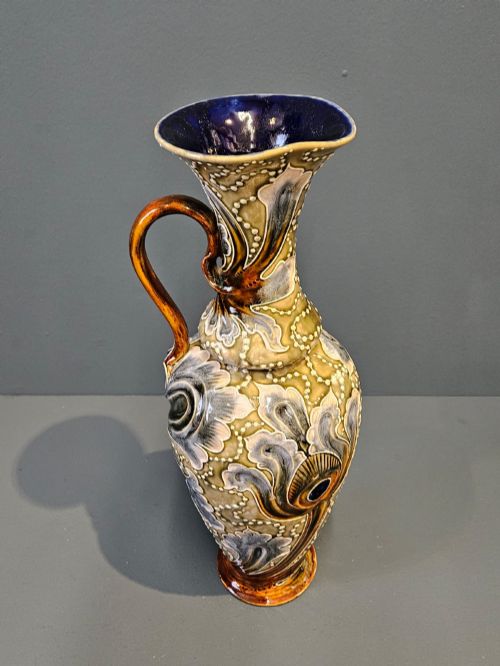
The objects take many forms, from tall baluster vessels and bottle vases to spill vases, ewers, and amphorae. Many examples reflect the natural motifs of their era, incorporating slip decoration, tube lining, and lustrous surface finishes that highlight the qualities of the clay.
How they were made
Makers utilised earthenware, stoneware, and ceramic bodies, shaping them into distinctive vessels often finished with specialised glazes, enamel, and faience. Techniques such as tube lining allowed artists to draw raised outlines on the damp clay before applying rich, pooled glazes that settled into deep green tones during firing.
Studio potters and factory decorators employed fluid glazes, lustre techniques, and hand-thrown or moulded bodies to create individual surface textures. The interaction between the clay base and the chemical composition of the glaze produced the characteristic depth seen across these works.
Listings feature works from the Victorian, Edwardian, and early twentieth-century periods, utilising earthenware, stoneware, and faience bodies.
What varies in quality
Quality rests upon the ambition of the design, the precision of the modelling, and the success of the glaze chemistry during firing. Pieces carrying named decorators or distinguished factory marks often display superior control over tube-lined patterns and lustre effects.
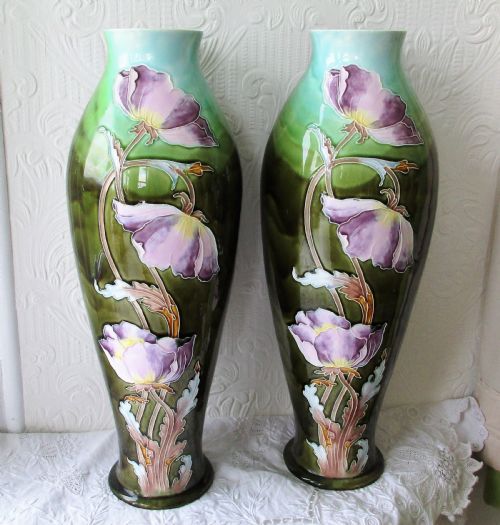
The depth and variation of the green glaze itself signal the standard of production, where flat or muddy surfaces separate ordinary commercial output from works that capture the full dynamism of the Art Nouveau and Arts and Crafts movements.
Royal Doulton·Moorcroft·Burmantofts·Zsolnay Pecs·Ernst Wahliss
The Green Art Pottery Vase Glossary
- Stoneware
- A robust, vitrified ceramic fired at high temperatures until non-porous. It accepts dense salt or coloured glazes with exceptional durability.
- Faience
- Earthenware decorated with opaque coloured glazes over a tin-enamel ground. It provides a smooth canvas for painted or lustred designs.
- Tube lined
- A decorative technique where liquid clay slip is squeezed through a fine nozzle onto the vessel body to form raised outlines for subsequent glazes.
- Baluster
- A vertical architectural form characterised by a swollen lower portion tapering towards a narrow neck. This silhouette frequently appears in nineteenth-century vases.
- Lustre
- A metallic glaze sheen achieved by introducing metallic salts in a reducing kiln atmosphere. It creates an iridescent, light-catching surface.
Green Art Pottery Vase: Frequently Asked Questions
How do I date a green art pottery vase?
Dating relies on factory stamps, registration numbers, and stylistic markers such as Art Nouveau whiplash lines or Arts and Crafts simplicity. Comparing the base marks against known periods helps narrow the decade of production.
Changes in glaze chemistry and the transition from Victorian ornamentation to Edwardian minimalism also provide reliable chronological clues.
What is the difference between earthenware and stoneware?
Earthenware is fired at lower temperatures, remaining porous unless fully glazed, whereas stoneware is fired until vitreous and completely waterproof. Stoneware handles heavier glazes and resists chipping more effectively.
Potters selected these bodies based on the desired weight and the intended chemical interaction with surface colours.
How were these vases displayed originally?
In period interiors, vases of this scale often stood upon mantelpieces, occasional tables, or dedicated pedestals as focal points of decorative scheme. Many were paired symmetrically to flank a fireplace or mirror.
They served both as ornamental display pieces and as functional vessels for displaying dried or fresh stems.
Who designed these pieces?
Designs came from both factory staff artists and independent studio potters working within broader design movements. Figures like William Moorcroft, Christopher Dresser, and studio artists signed individual works or developed signature shapes for commercial production.
Factory marks often record the specific hand responsible for the painted decoration alongside the pottery's stamp.