



Green Art Deco Glass
Green art deco glass brings together vibrant emerald tones and geometric silhouettes from the interwar years to anchor a room.
Green Art Deco Glass
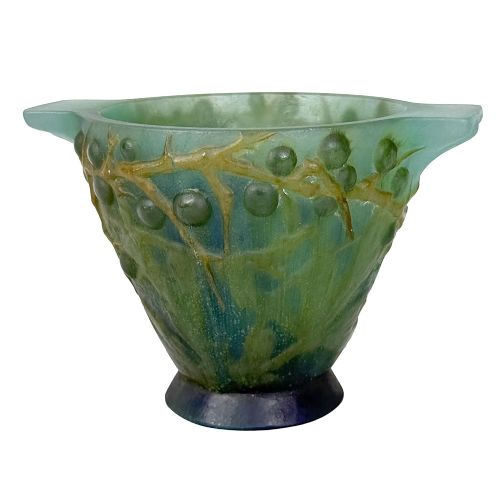
When you search for green art deco glass, you are looking at items designed during the period spanning the nineteen-twenties and nineteen-thirties that use rich emerald or uranium green coloration. These pieces range from heavy moulded vases and desk clocks to mirrored glass panels and delicate scent bottles.
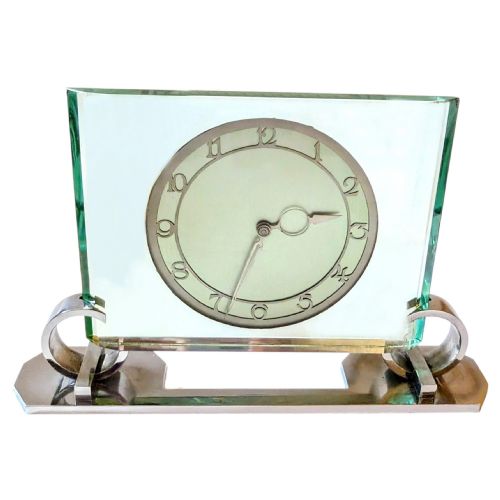
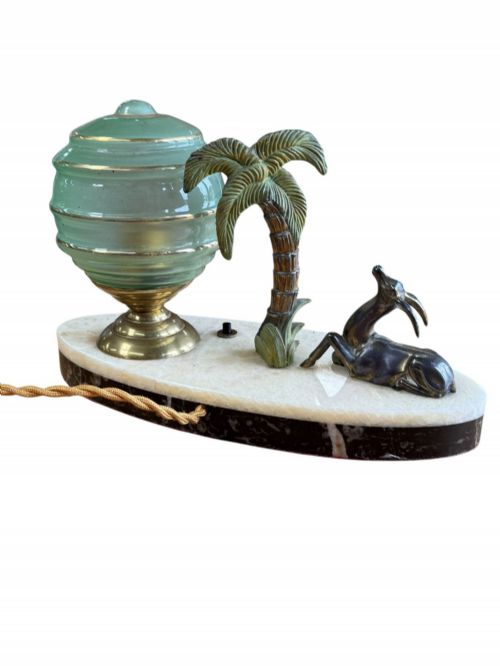
The most common examples on this page are decorative vessels, dressing table pieces and timepieces framed in chrome or mounted on marble bases. Makers often utilised translucent or frosted finishes to catch the light and accentuate the angular motifs typical of the era.
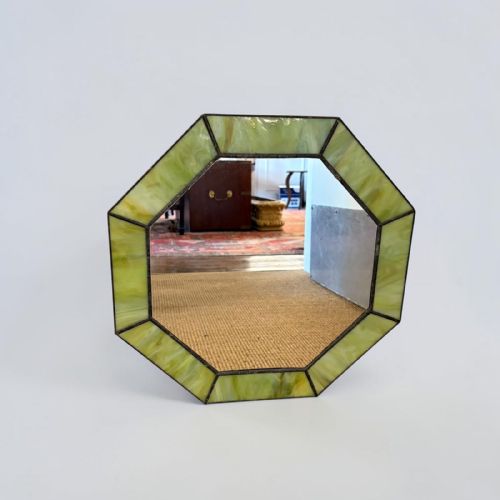
Vases and bowls from Scottish, French and Belgian makers appear frequently alongside British mantel clocks featuring green mirror glass borders. Buyers will also find smaller accessories, including enamel compacts, silver-mounted jars and pressed glass earrings.
Materials and Techniques
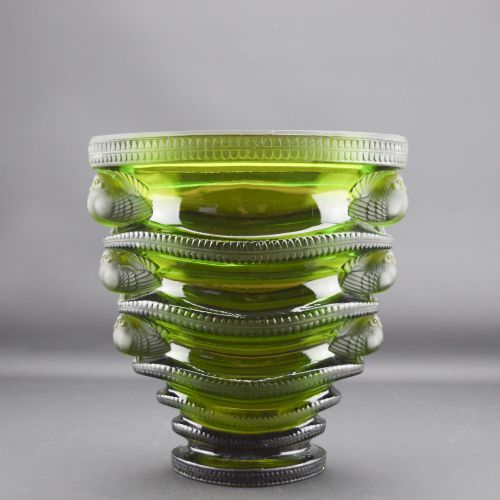
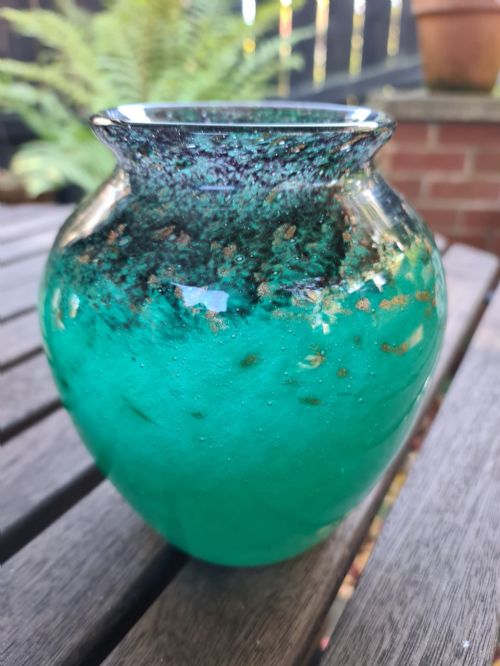
Many of the items rely on heavy pressed or moulded glass techniques, often incorporating aventurine inclusions or uranium to achieve striking depth of colour. French and Scottish studios favoured free-blown methods that created mottled patterns within thick-walled vessels.
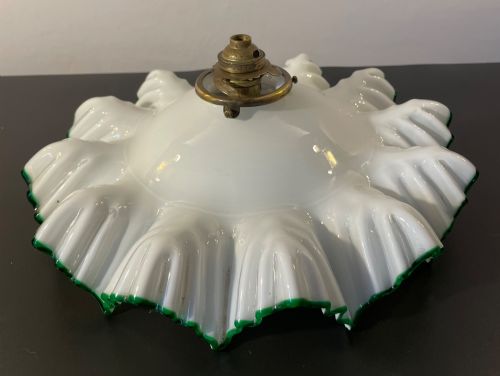
Metal mounts in chrome, brass, silver and wrought iron provide structural contrast to the bright green glass elements. Enamel, shagreen and marble are frequently combined with the glass components in lighting, clocks and vanity sets.
The listings span pieces originating from Britain, France, Belgium and Norway, executed in glass, enamel, chrome and sterling silver.
Assessing Quality and Execution
Quality rests on the crispness of the moulding, the weight of the glass body and the integration of secondary materials like sterling silver or enamel. Superior examples exhibit deliberate artistic design from named makers rather than anonymous mass production.
The clarity of the green colourway and the preservation of original metalwork, mirror bevelling or applied patination elevate certain pieces well above standard domestic wares of the period.
Rene Lalique·Monart Glass·Smiths Clock Company·Val St. Lambert·Mappin and Webb·Gabriel Argy Rousseau·Walther and Sohne·Henry Berge
The Green Art Deco Glass Glossary
- Pate de verre
- A glass-working technique where finely crushed glass is mixed with a binder and fired in a kiln to produce a frosted, textured object. This method creates rich colour saturation and soft gradients.
- Uranium glass
- Glass that contains trace amounts of uranium dioxide added to impart a vivid yellow-green fluorescence under ultraviolet light. It was widely produced for decorative vessels and tableware during the interwar decades.
- Guilloche enamel
- A decorative metal technique where an intricate geometric pattern is engine-turned onto a silver base before translucent enamel is applied over the top. This finish appears frequently on vanity jars and compacts.
- Malachite glass
- Pressed glass designed to imitate the banded appearance of the semi-precious stone malachite, usually moulded in deep green shades. The high-relief details are often highlighted with a darker stain.
- Over crystal
- A method of casing one layer of glass over another, where clear or contrasting crystal is cut away to reveal the green layer beneath. This technique allows for complex faceted designs on hock glasses and vases.
Green Art Deco Glass: Frequently Asked Questions
How do I spot uranium glass?
Uranium glass typically exhibits a distinct yellow-green tint in normal daylight and glows brightly under an ultraviolet blacklight due to its chemical composition.
Most pieces from this era that feature this property are decorative bowls, vases or vanity items produced in high volumes during the nineteen-thirties.
Are these clocks still operational?
Many mantel clocks and desk clocks use mechanical eight-day or electric movements that can often be serviced by a specialist horologist if they are not currently running.
Collectors should check individual listings to confirm whether a clock has been re-wired or tested for daily use.
How should I clean antique glass?
Wash the glass gently in lukewarm water with mild soap, avoiding harsh chemical cleaners that might damage applied metal mounts, silver plating or delicate enamel work.
Dry the pieces thoroughly with a soft cloth to preserve the surface finish and any original patination on the surrounding chrome or brass.
What defines art deco design?
Art deco style embraces symmetry, streamlined geometric forms and industrial materials like chrome, mirrored glass and polished metals.
This aesthetic emerged after the First World War, celebrating modernity through bold colours and stylized motifs found across lighting, mirrors and clocks.