



1930s Vanity Table Bottle
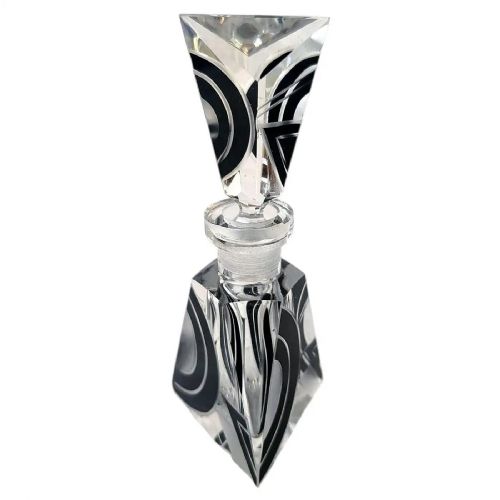
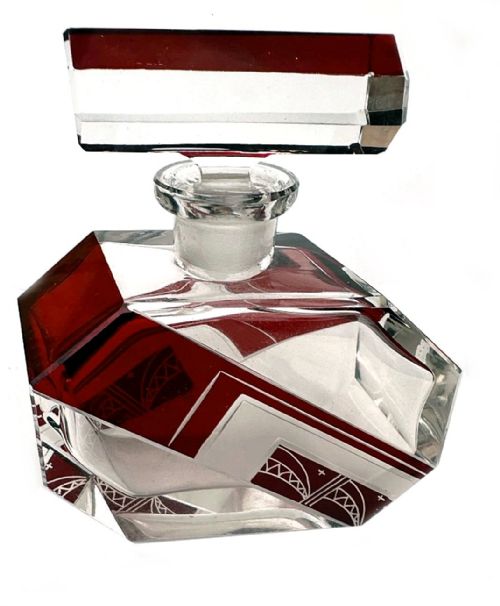
These 1930s vanity table bottle examples bring the distinct geometry and colour of the period directly to a dressing table.
1930s Vanity Table Bottle
A 1930s vanity table bottle encompasses scent bottles, perfume atomisers, and lidded jars designed for dressing table use during the Art Deco era. Buyers encounter glassware produced in Bohemia, France, and England, often paired with metalwork.
The most common versions on this page are cut glass and crystal perfume bottles alongside colourful enamel and glass atomisers from Czech makers and English silversmiths.
How they were made
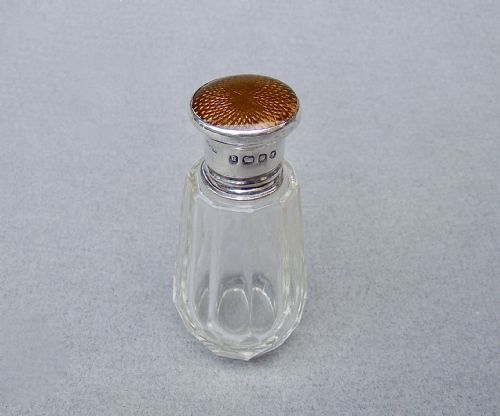
Makers utilised heavy cut glass and crystal, shaping geometric patterns and opalescent forms that reflect the prevailing Art Deco design language. Glass bodies were frequently combined with sterling silver collars, mounts, and intricate guilloche enamel decoration.
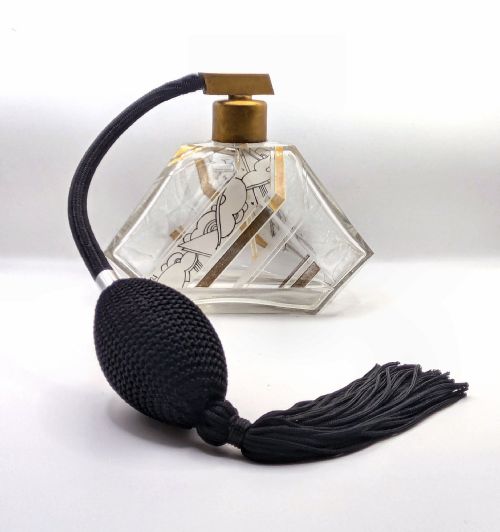
Atomisers incorporated metal spray mechanisms and fabric fittings, while jars and scent bottles relied on precision cutting, moulding, and hand-applied enamel to achieve their finished appearance.
1930s Vanity Table Bottle Retail Price Guide 2026
Typical asking prices for 1930s vanity table bottle among the pieces listed under this phrase on Sellingantiques today, from the lower quarter to the upper quarter. They describe what is for sale here now, not the wider market.
What varies in quality
Quality separates through the weight and clarity of the glass, the precision of the geometric cutting, and the crispness of the enamel work on silver components. Pieces bearing attributed or signed maker marks demonstrate higher levels of workshop execution.
The sophistication of the design, such as complex sunray patterns or heavy opalescent moulding, distinguishes standard dressing table accessories from finer studio examples.
Karl Palda·Henry Perkins·Rudolf Hlousek·Hermanova·Goldsmith's and Silversmith's Co.·Sabino
The 1930s Vanity Table Bottle Glossary
- Atomiser
- A perfume bottle fitted with a spray mechanism and bulb to diffuse scent. These frequently feature metal mounts and glass reservoirs.
- Guilloche enamel
- Decorative metalwork covered with translucent enamel over an engine-turned geometric pattern. It appears on silver bottle caps and jar lids.
- Opalescent glass
- Glass containing ingredients that create a milky, semi-translucent appearance with bluish or pearly highlights. This finish is characteristic of French production.
- Vanity jar
- A lidded container used on a dressing table for cosmetics or small items. These often match the glass and silver style of companion perfume bottles.
1930s Vanity Table Bottle: Frequently Asked Questions
What is a 1930s vanity table bottle?
It is a decorative glass or crystal container designed to hold scent, perfume, or cosmetics on a dressing table. These objects typically display Art Deco styling through geometric cuts and colourful enamel.
Such pieces reflect the dressing habits of the period, serving both a functional purpose and an aesthetic role in interior display.
How do I identify an atomiser?
An atomiser includes a mechanical spray fitting attached to the bottle neck, often paired with a squeeze bulb and fabric mesh. They differ from standard stoppered bottles by projecting scent in a fine mist.
Many examples combine cut glass bodies with metal hardware and maker signatures.
How do I display these on a vanity?
They group effectively by colour, material, or form, bringing together cut crystal, blue glass, and opalescent pieces. Matching sets of atomisers and powder boxes create a cohesive arrangement.
Placing them on mirrored trays enhances the reflective qualities of the glass and enamel surfaces.