




Green and Yellow Pottery
Green and yellow pottery brings together vibrant earthenwares and porcelains decorated in contrasting palettes, offering collectors a striking record of historic glaze techniques.
Green and Yellow Pottery
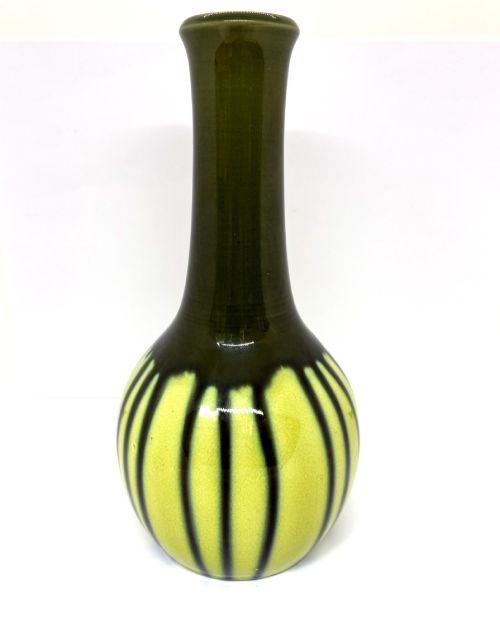
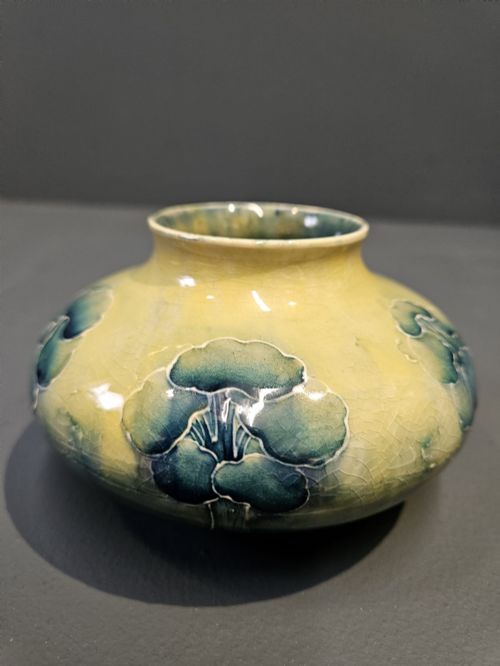
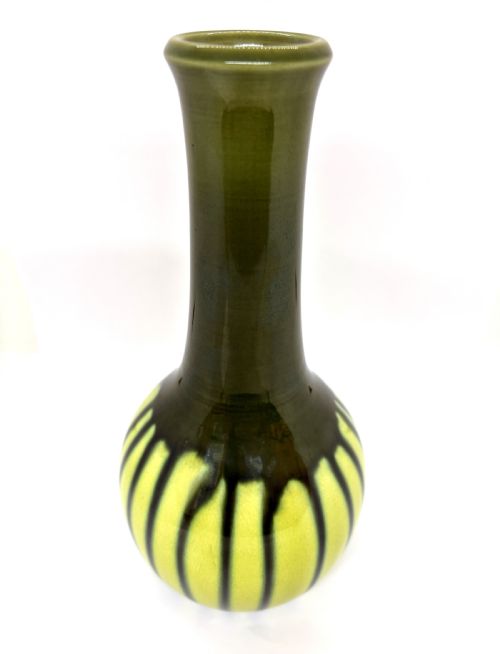
Green and yellow pottery encompasses a wide spectrum of ceramic forms, including vases, planters, vessels, tiles, and decorative figures spanning multiple centuries. When searching for green and yellow pottery, collectors encounter diverse expressions ranging from nineteenth century majolica and Arts and Crafts pieces to Chinese porcelains executed in traditional styles.
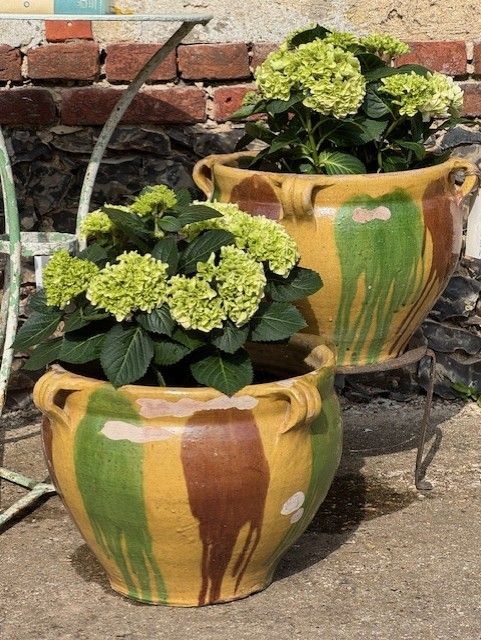
The objects on this page reflect varied stylistic origins, from English studio potteries and French provincial planters to Italian revival pieces and Chinese transitional jars. These diverse pieces share a common visual appeal rooted in the lively interplay of green and yellow pigments across ceramic surfaces.
How they were made
Potters achieved these characteristic palettes through the application of specialised glazes onto earthenware, terracotta, or porcelain bodies, often firing the pieces to fix rich surface colours. Tin glaze and sancai techniques allowed makers to fuse metallic oxides directly onto the clay, producing the glossy, variegated finishes seen on majolica and provincial wares.
Makers utilised contrasting enamels and underglaze pigments on ceramic bodies, as demonstrated by pieces featuring painted motifs against white or coloured grounds. The interaction between the fluid glaze and the underlying clay body required precise kiln temperature control to prevent running while maintaining vibrant hues.
Green and Yellow Pottery Retail Price Guide 2026
Typical asking prices for green and yellow pottery among the pieces listed under this phrase on Sellingantiques today, from the lower quarter to the upper quarter. They describe what is for sale here now, not the wider market.
Chinese porcelain ducks rendered in sancai glaze bring an unexpected touch of waterfowl realism to historic ceramic collections.
What varies in quality
Quality in these ceramics rests on the control of the glaze and the crispness of the modelled or painted details across the surface. Pieces where the green and yellow tones retain depth without muddying show superior technical execution by the potter.
The distinction between standard production and finer examples lies in the artistic ambition of the form and the sophistication of the surface decoration, whether in figural modelling or hand-painted enamel work.
Moorcroft Hazeldene·Burmantoft's Pottery·Wedgwood·William de Morgan·Minton
The Green and Yellow Pottery Glossary
- Majolica
- A type of earthenware decorated with an opaque tin glaze, frequently painted with metallic oxide colours that produce bright green and yellow surfaces.
- Sancai
- A traditional Chinese three-colour glaze technique, predominantly featuring amber yellow, green, and creamy white tones applied to earthenware or porcelain bodies.
- Earthenware
- Porous pottery fired at lower temperatures, serving as the common structural base for many historic glazed vessels and decorative figures.
- Transitional
- A period in Chinese ceramic history bridging dynasties, noted for experimental painting styles that combined yellow, green, and iron red enamels.
- Glaze
- A glassy coating fused to a ceramic body through firing, which provides the distinctive green and yellow coloration alongside a protective sheen.
Green and Yellow Pottery: Frequently Asked Questions
How do I identify majolica?
Majolica is characterised by its heavy earthenware body covered in an opaque tin glaze that accepts vibrant coloured pigments such as green and yellow.
These pieces often feature moulded botanical or figural designs that catch the glossy glaze across their relief surfaces.
What is sancai glaze?
Sancai translates to three colours, typically combining amber yellow, green, and creamy white glazes on historic ceramic vessels and figures.
The colours frequently merge and overlap naturally during the high-temperature firing process, creating subtle tonal variations.
Where were provincial planters made?
Provincial planters often originate from regional European workshops, such as those in the South of France, utilising local potting traditions.
These working pieces were designed for practical garden or interior use, displaying robust earthenware bodies beneath dripped glaze decoration.
How should I clean glazed ceramics?
Glazed pottery requires gentle dusting with a soft cloth to preserve the historic surface and prevent abrasion to the delicate glaze layer.
Harsh chemical cleaners and immersion in water should be avoided, particularly on pieces with porous earthenware bodies or historic kiln flaws.