


Graphite Sketch on Paper
When you search for a graphite sketch on paper, you enter a diverse field of original monochrome works spanning multiple centuries and subjects.
Graphite Sketch on Paper
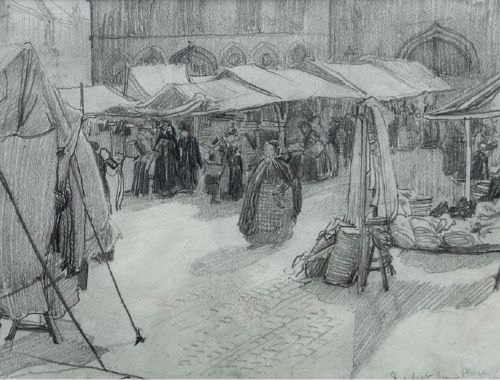
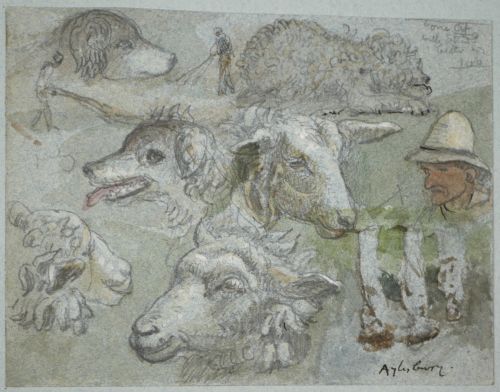
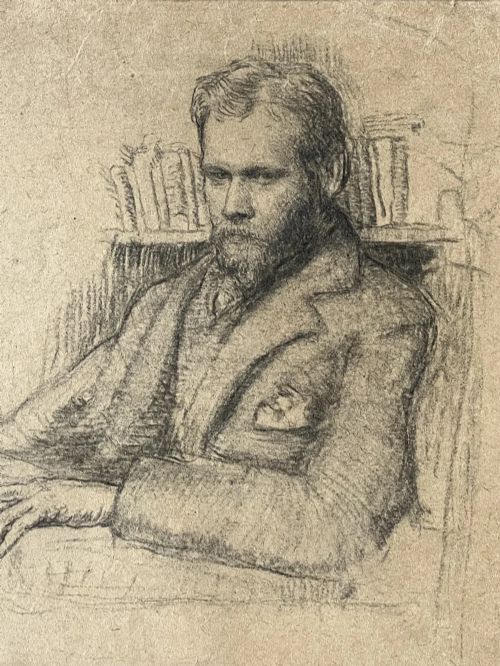
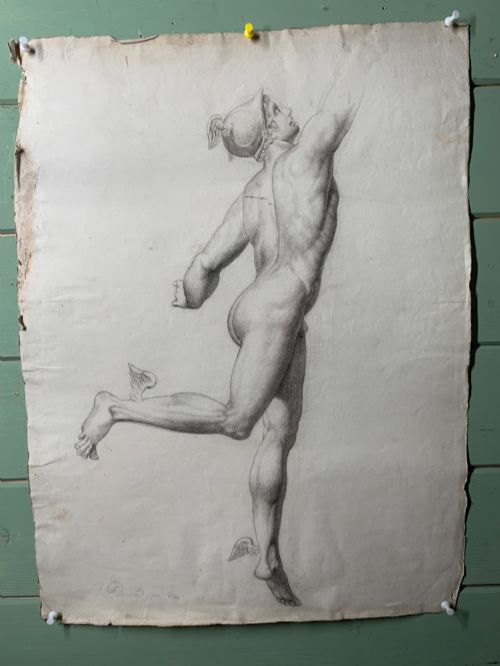
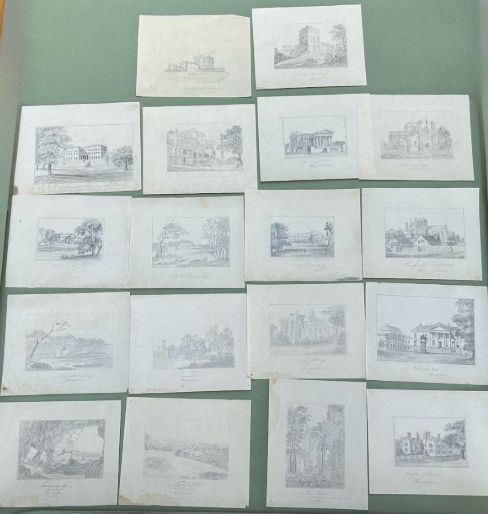
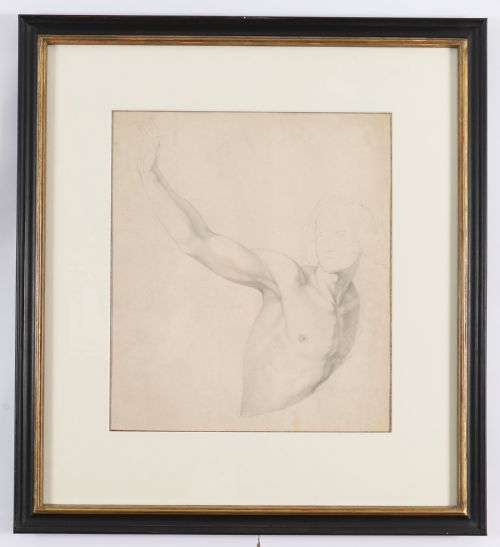
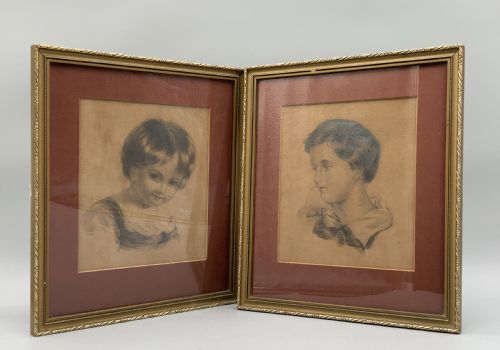
A graphite sketch on paper comprises original works executed primarily in pencil, charcoal, and chalk, frequently mounted in frames or preserved loose. You encounter academic life studies, detailed architectural perspectives, and intimate portraiture reflecting distinct historic periods.
The selection ranges from eighteenth-century figural compositions and Regency child portraits to mid-twentieth-century surrealist pieces and aeronautical studies. These items capture direct observations and preliminary artistic thoughts rendered directly onto paper supports.
Portraits of historical figures, landscape studies of specific towns, and anatomical drawings demonstrate the wide utilitarian and artistic scope of these works. Many retain signatures, artist stamps, or period frames that contextualize their origins.
Materials and technique
The primary mediums involve graphite, pencil, charcoal, and chalk applied directly to various paper stocks, occasionally supplemented by ink or watercolour touches. Artists relied on these dry media for precise line work as well as soft tonal shading.
Works frequently employ framing under glass to protect the delicate paper surfaces and friable graphite or charcoal markings from environmental degradation. Some examples include accompanying copper plates or conservation mountings.
Graphite Sketch on Paper Retail Price Guide 2026
Typical asking prices for graphite sketch on paper among the pieces listed under this phrase on Sellingantiques today, from the lower quarter to the upper quarter. They describe what is for sale here now, not the wider market.
Listings span periods from the 18th century through to the 1950s, utilising paper, graphite, glass, wood, pencil, charcoal, watercolour, and ink.
What determines quality
Quality rests upon the sureness of the draughtsmanship, the expressive capture of the subject, and the preservation of the delicate paper ground. Stronger examples display confident line economy and anatomical or architectural precision rather than hesitant marks.
Henry Percy Huggill·James Smetham·Augustus John·Hans Holbein·Sir Francis Leggatt Chantrey·Fred Lawson·LS Lowry·Ted Halliday·Mariette Lydis·Faeq Hassan·Dame Laura Knight·Henri Josephe Hesse·Alexandre Decamps·Sir Nathaniel Dance-Holland·Henry Edridge
The Graphite Sketch on Paper Glossary
- Academic Realism
- A style resulting from rigorous training in European art academies emphasising precise anatomical accuracy and classical subjects. This approach underpins many nineteenth-century life studies.
- Graphite
- A form of carbon used as a drawing medium in pencils, producing varying tones from silvery grey to deep black. It replaced lead and became standard for fine sketching.
- Manner of
- A designation indicating a work created in the stylistic tradition of a specific master without being an authentic piece by that hand. It reflects the influence of prominent artists on their contemporaries or followers.
- Regency
- The British historical period spanning the early nineteenth century characterised by distinct neoclassical aesthetic sensibilities. Sketches from this era often display clean lines and classical restraint.
- Charcoal
- A dry drawing material made from burnt organic matter that yields rich, dark, and easily smudged lines. Artists use it for atmospheric shading and rapid preliminary studies.
Graphite Sketch on Paper: Frequently Asked Questions
How do I care for a graphite sketch?
Keep drawings away from direct sunlight to prevent the paper from yellowing and the graphite from fading over time. Ensure they remain behind protective glass in stable humidity conditions.
Avoid hanging them in damp spaces such as kitchens or bathrooms where moisture can damage the paper fibres. Professional framing with acid-free materials safeguards the longevity of older works.
Are these drawings original or reproductions?
Every piece recorded here is an original unique work drawn by hand rather than a mechanical print or reproduction. You can observe the actual texture of the pencil or charcoal strokes on the paper surface.
Close inspection under magnification reveals the pressure of the hand and subtle variations in line density. Artist signatures, studio stamps, and collector marks further confirm their unique status.
How can I tell the period of a drawing?
Stylistic clues such as Regency neoclassical clothing or Victorian portrait framing styles offer initial indications of a piece's age. Watermarks on the paper stock and ink inscriptions on the reverse often provide additional chronological evidence.
Comparison with documented works by known artists or schools helps narrow down the decade of execution. Academic standards shifted significantly between the eighteenth and mid-twentieth centuries.
What subjects are most common?
Portraits of individuals, both named and anonymous, form a significant portion of the available drawings. Academic life studies of the human form also appear frequently across the nineteenth-century selections.
Landscapes, architectural studies of specific European buildings, and animal portraits complete the typical subject matter. Artists often used these quick sketches as preparatory records for larger oil paintings.