


Grand Tour Souvenir Artwork
Grand tour souvenir artwork brings home the classical monuments, vibrant cities and timeless antiquities of nineteenth century Italy.
Grand Tour Souvenir Artwork
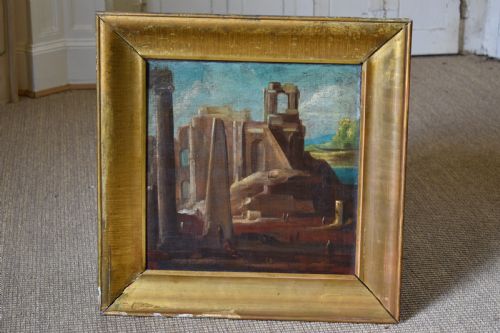
Grand tour souvenir artwork comprises the oil paintings, watercolours, gouaches, micromosaics and pietra dura marble pictures that travellers collected during their continental journeys through Italy during the nineteenth century. These pieces record the classical ruins, temples, monuments and sweeping coastal views of destinations such as Rome, Pompeii and Naples.
Buyers seeking grand tour souvenir artwork most frequently encounter framed works on paper, including gouaches and watercolours, alongside oil paintings and detailed stone inlay panels. The selection spans the nineteenth century, capturing the enduring fascination with neoclassical subjects and Italian scenes.
The objects serve as tangible records of historical travel, preserving the topography and classical heritage that captivated nineteenth century collectors. Each piece reflects the specific sights encountered on the grand tour, ranging from architectural monuments to picturesque local figures.
How they were made
Makers utilised paper, canvas and wood as the foundational supports for the painted scenes, applying watercolour, gouache and oil on canvas to render classical architecture and landscapes. Pigments capture the brilliant light of Naples and the muted tones of ancient stone ruins.
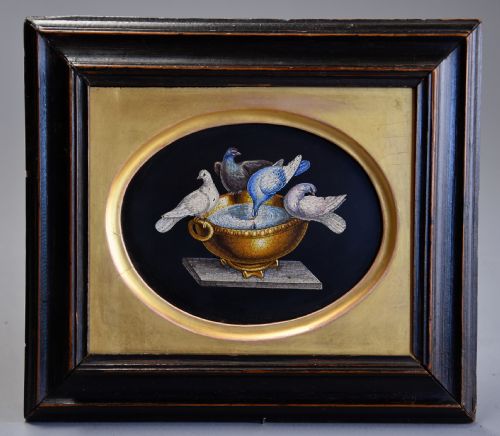
Specialised techniques include delicate micromosaic work, seen in depictions of subjects like the Doves of Pliny, and pietra dura marble inlay, which builds figurative compositions from precisely cut hardstones. These stone and glass techniques required immense patience and skill from nineteenth century artisans.
Listings feature works from the nineteenth century, including specific dates such as 1836, 1860, 1880 and 1890.
What varies in quality
The distinction between ordinary and exceptional grand tour souvenir artwork lies in the precision of the draughtsmanship and the fidelity of the architectural or figurative detail. Master artisans achieved remarkable perspective and depth, whereas lesser works rely on formulaic execution and hurried brushwork.
Material complexity also separates categories, with meticulous pietra dura panels and intricate micromosaic plaques representing a significantly higher order of craftsmanship than standard watercolours. The quality of the framing, whether ebonised wood or gilt wood, further reflects the original status of the commission.
The Grand Tour Souvenir Artwork Glossary
- Gouache
- An opaque watercolour medium used extensively for bright, saturated views of Italian coastal scenes and monuments. It provides flat, solid areas of vibrant colour.
- Micromosaic
- A detailed decorative technique formed by fusing thousands of tiny glass tesserae together to create intricate pictorial representations. These were prized luxury souvenirs.
- Pietra dura
- An artistic technique using cut and fitted polished coloured stones to create geometric or figurative images on marble panels. It requires exceptional skill in stonemasonry.
- Neoclassical
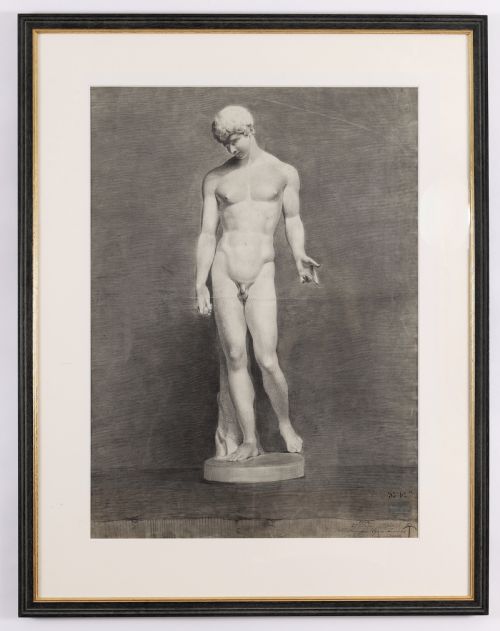
- A style rooted in the art and culture of classical antiquity, which heavily influenced the subject matter chosen by travellers. It manifests in depictions of ruins and classical sculptures.
- Grand Tour
- The traditional trip of Europe undertaken by upper-class European young men of sufficient means during the nineteenth century. It formed the basis for collecting these specific artworks.
Grand Tour Souvenir Artwork: Frequently Asked Questions
What is grand tour souvenir artwork?
Grand tour souvenir artwork encompasses the paintings, watercolours, gouaches and stone inlay panels brought back by nineteenth century travellers visiting classical sites in Italy.
These pieces document famous monuments, antiquities and landscapes that defined the educational and cultural journey of the period.
How were these pieces used historically?
Travellers displayed these artworks in their homes to signal their classical education, refined taste and firsthand experience of European cultural centres.
They functioned as both personal mementos of travel and decorative conversation pieces for drawing rooms and libraries.
How do I live with them?
These framed works suit traditional and contemporary interiors alike, provided they are kept away from direct sunlight to protect delicate watercolours and gouaches.
Pairing them with period frames enhances their visual impact on the wall.
How do I tell periods apart?
Dating relies on stylistic clues, inscriptions, materials and framing techniques characteristic of the nineteenth century.
Exact dates are occasionally recorded on the works or their mounts, while broader periods are indicated by the evolution of the Neapolitan school and associated artistic styles.