
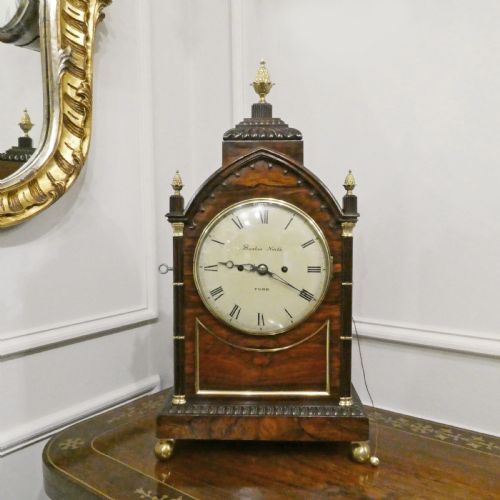


Gothic Wooden Clock
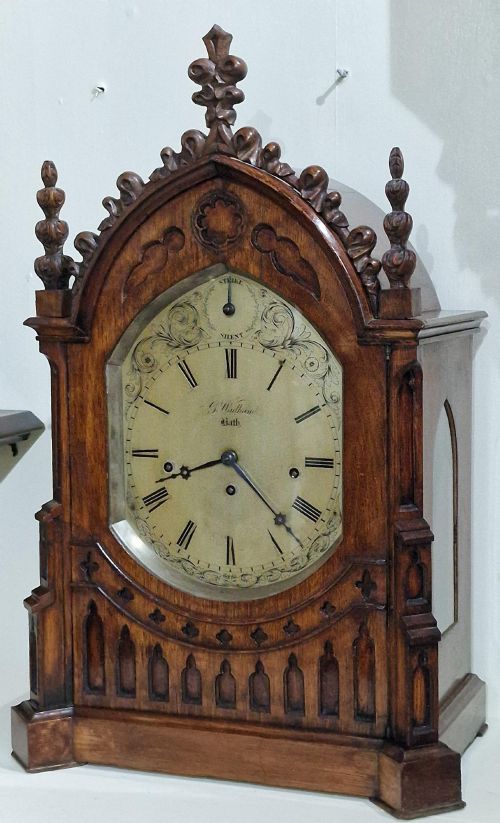
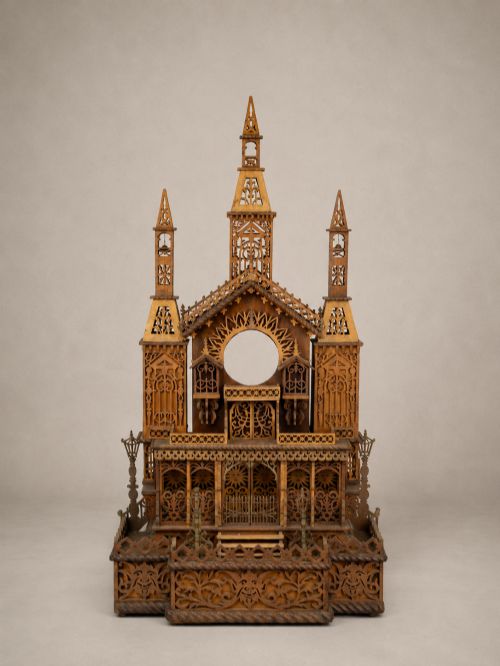
A gothic wooden clock brings heavy timber presence and architectural form to a mantel, drawing the eye with cathedral arches and pointed details.
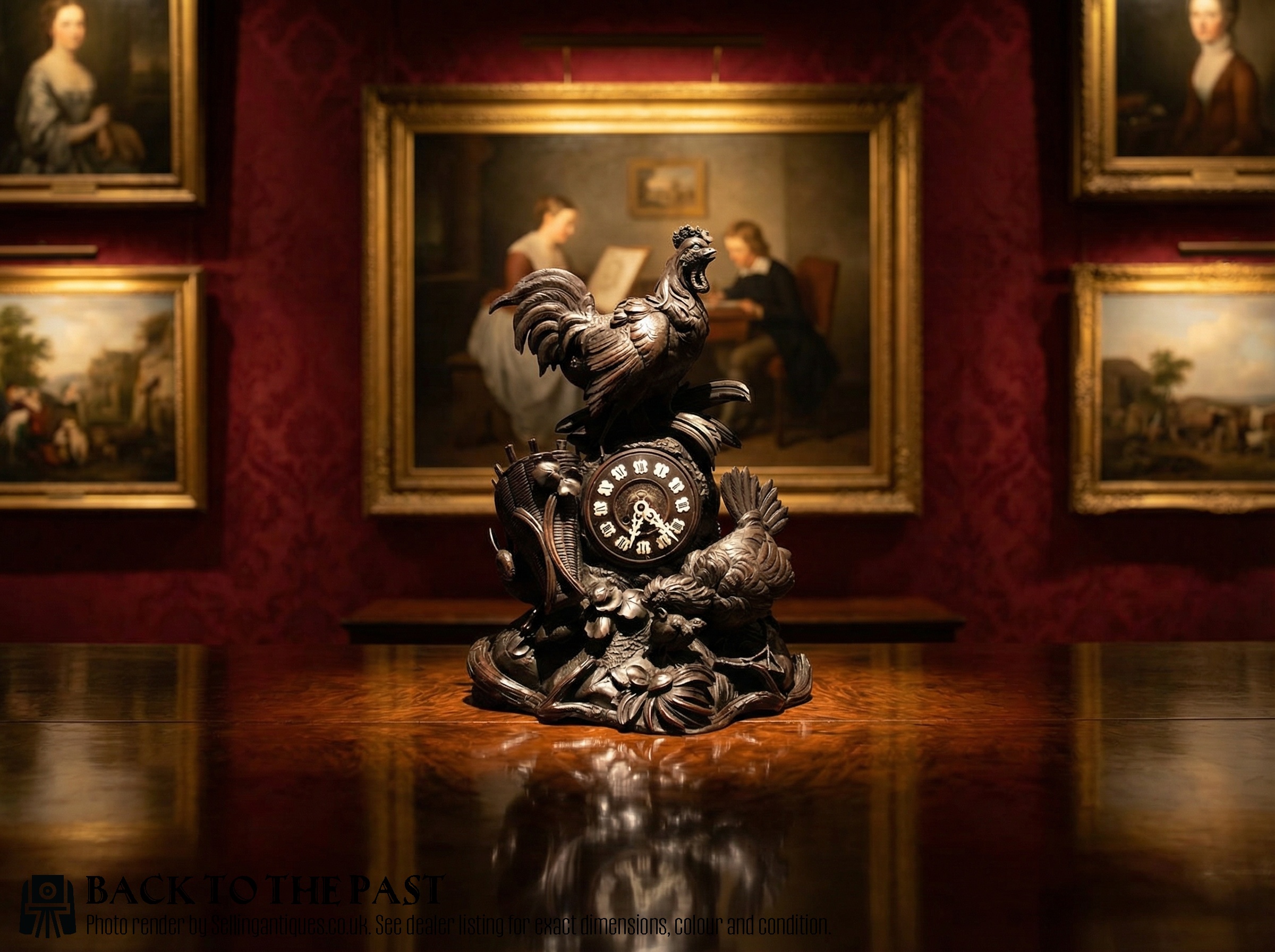
Gothic Wooden Clock
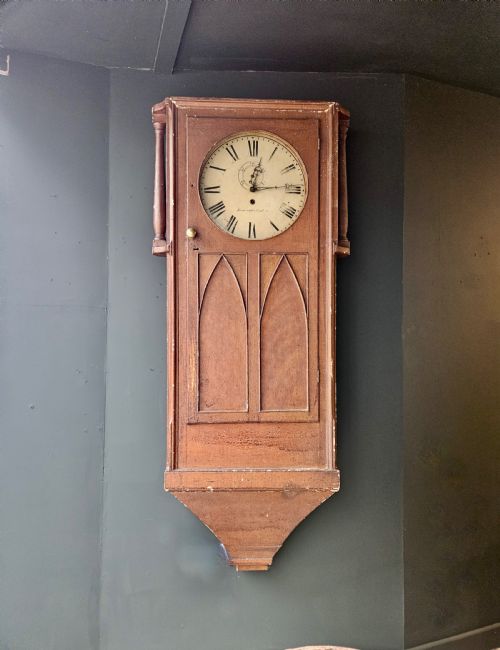
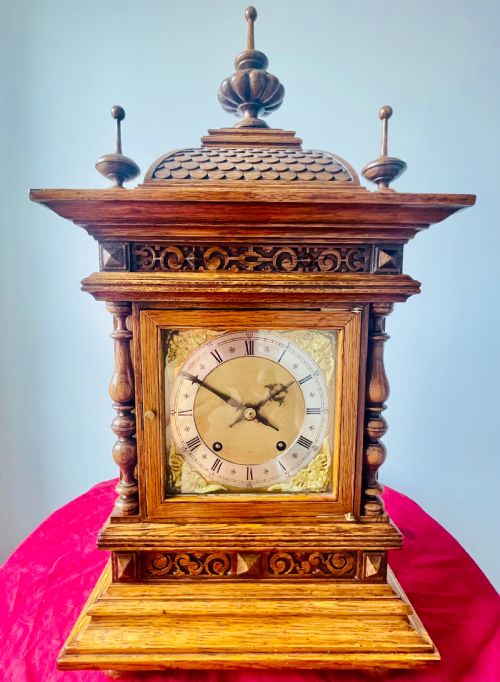
A gothic wooden clock encompasses everything from imposing bracket designs to architectural wall timepieces and tall longcase forms. These items span the Georgian, Regency, Victorian, and Edwardian periods, reflecting changing tastes in revival design over decades.
Mantel clocks and bracket clocks dominate the selection, often taking inspiration from ecclesiastical architecture with pointed arches and fretwork. Longcase and wall clocks also appear, constructed from substantial timbers.
Makers such as Winterhalder and Hofmeier, George Wadham, and regional clockmakers like Barber and North of York produced these works in mahogany, oak, walnut, and pine.
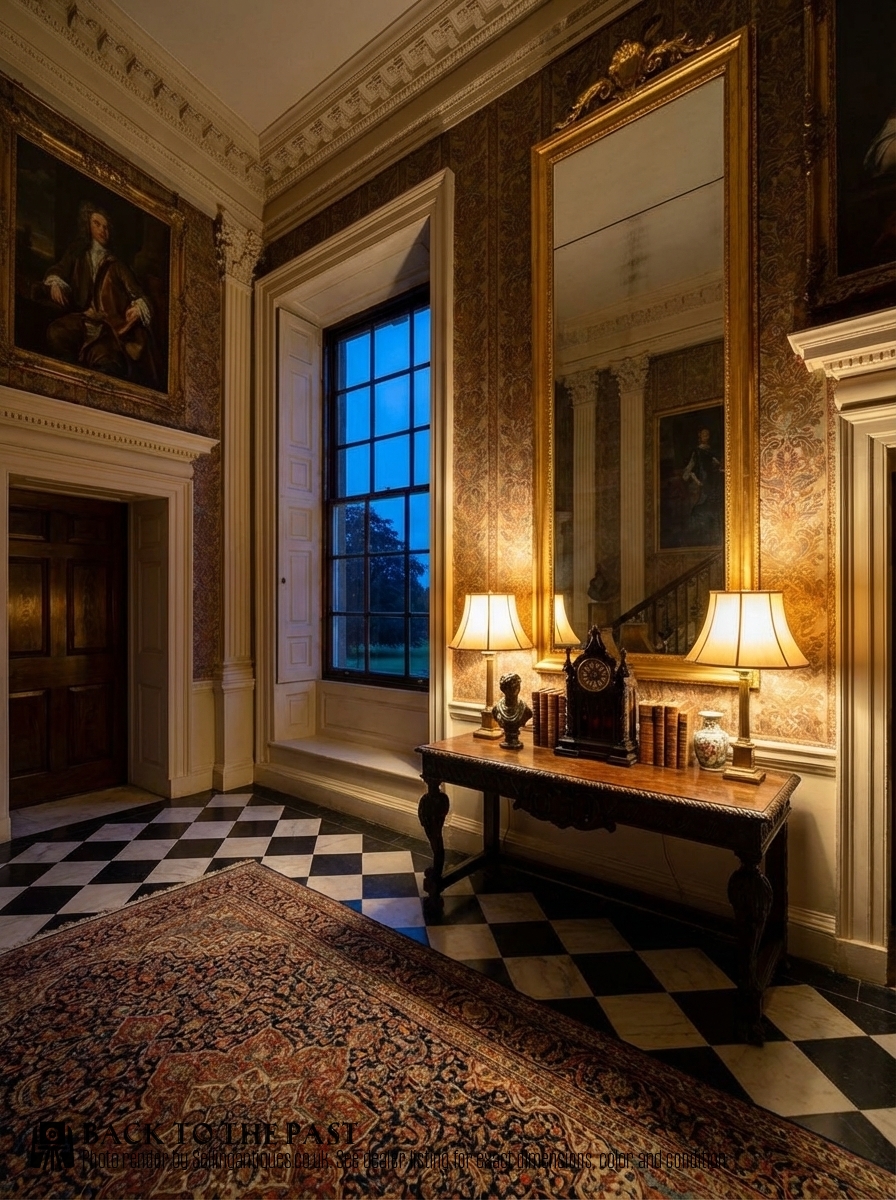
Materials and construction
Cabinet makers utilised dense hardwoods like mahogany, oak, rosewood, and walnut alongside pine, shaping them with fretwork, carving, and geometric inlay. Ebonised finishes and original paint appear on selected timber cases.
Movements incorporate brass components, fusee mechanisms, and bells for striking the hours, quarter hours, or chime sequences. Dials feature enamel or ceramic surfaces beneath protective glass bezels.
Listings feature woods including mahogany, oak, walnut, rosewood, and pine, paired with brass and enamel components.
Distinctions in craftsmanship
Superior examples demonstrate meticulous timber selection, such as flame mahogany or figured walnut, paired with crisp architectural carving and fretwork. The complexity of the movement, including triple fusee mechanisms and multiple bells, elevates the standard.
The integration of the case design with the dial work distinguishes standard production from exceptional pieces. Original painted surfaces or patinated timber finishes preserve the historical integrity of the clock.
George Wadham·Winterhalder and Hofmeier·Barber and North·Cording of London·Perigal Bond Street
The Gothic Wooden Clock Glossary
- Fusee
- A conical pulley connected to the mainspring by a cord or chain, designed to equalise the driving force as the spring unwinds. This mechanism ensures more consistent timekeeping throughout the power reserve.
- Bracket clock
- A portable timekeeper originally designed to sit on a wall bracket or table. These pieces often feature complex striking trains and refined wooden cases.
- Lancet top
- A case design featuring a pointed arch profile reminiscent of Gothic church windows. This silhouette defines many nineteenth-century mantel clocks.
- Quarter-striking
- A movement complication that sounds the bells every fifteen minutes in addition to striking the full hour. This feature requires additional gear trains within the clock.
- Ting-tang
- A two-bell striking system that sounds a two-note sequence at the quarters. It creates a distinct chime pattern found in larger bracket and boardroom clocks.
Gothic Wooden Clock: Frequently Asked Questions
How do I wind a fusee clock?
Wind the clock using the appropriate key inserted into the dial arbor, turning it carefully until resistance stops the movement. Take care not to overwind the mechanism.
Ensure you support the case while operating the key to prevent shifting the clock on its surface.
Where should I place a heavy bracket clock?
Position the clock on a stable, level surface such as a heavy mantelpiece, sideboard, or dedicated wall bracket. A solid foundation helps the pendulum swing evenly.
Keep the timber away from direct heat sources and strong sunlight to protect the polish and wood grain.
What is a cathedral arch case?
A cathedral arch case mimics the pointed architectural openings and window designs of Gothic architecture. Makers used fretwork and carved timber to achieve this effect.
This style became popular during the nineteenth century within revival movements.
How do I identify a Victorian gothic clock?
Look for architectural motifs such as pointed arches, ebonised wood, heavy mouldings, and carved fretwork details. These elements reflect the aesthetic preferences of the period.
Examine the dial and interior movement for maker signatures and hallmarks consistent with nineteenth-century production.