

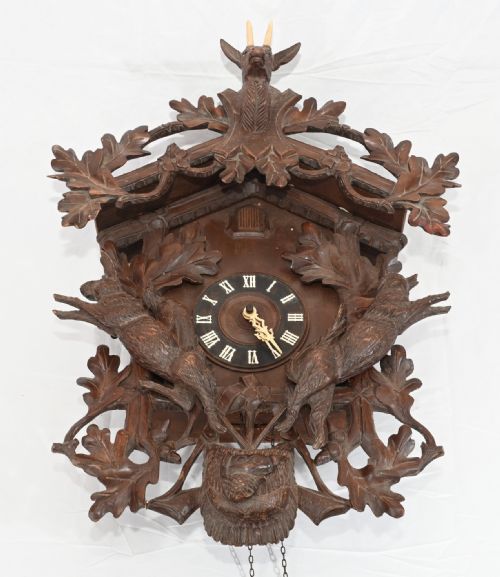


Black Forest Wooden Clock
These black forest wooden clock examples bring carved linden wood, walnut, and elaborate mechanics straight into the room.

Black Forest Wooden Clock
A black forest wooden clock encompasses regional carved timepieces originating from the Black Forest mountains in Germany, spanning wall and mantel formats. These pieces often incorporate traditional mechanical movements alongside elaborate animal and foliage motifs.
Materials and construction
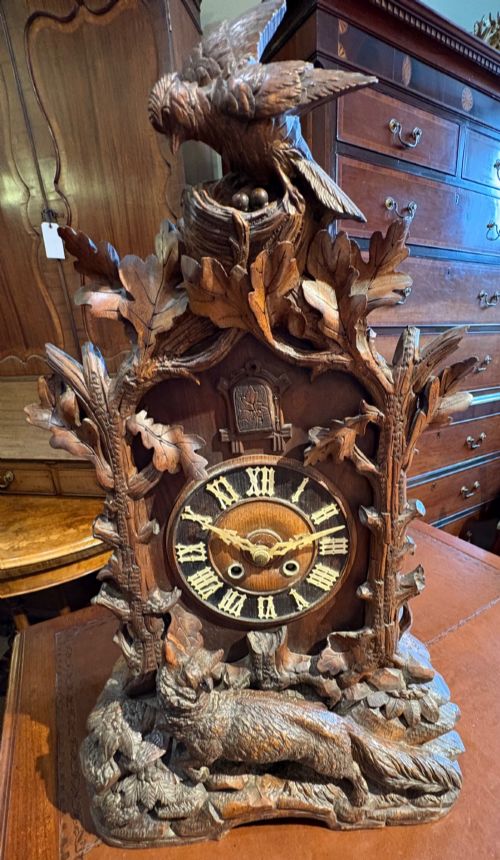
Carved wood forms the foundation of these timepieces, utilising materials such as walnut, linden wood, and blond oak. Master carvers shaped these timbers into detailed foliage, animals, and architectural chalet facades.
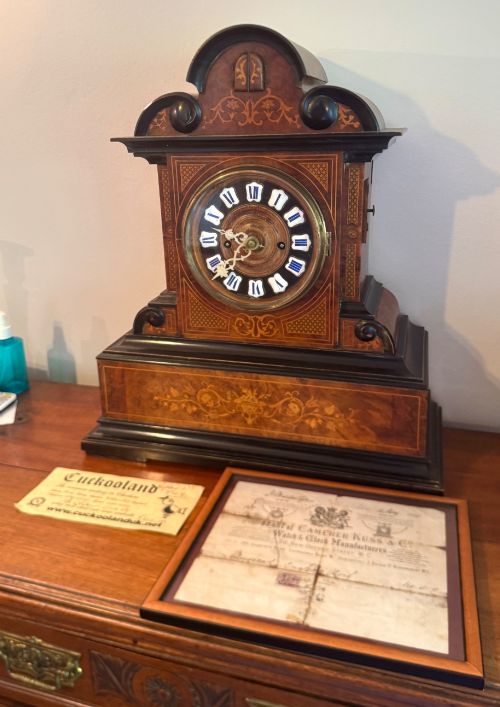
Brass movements power the internal clockwork, frequently accompanied by enamel dials, glass bezels, and mechanical musical automatons. Skilled artisans combined precision metalwork with robust wooden cabinetry.
Swinging maiden pendulums turn domestic chores into a hypnotic rhythmic dance behind the glass door.
Assessing quality
The depth and crispness of the wood carving distinguish superior examples from simpler production pieces. Highly detailed animal figures and undercut foliage indicate exceptional hand-carving skill.
The complexity of the internal mechanism also dictates quality, particularly where mechanical musical elements or automation are present. Original components and signed movements by known makers elevate the standing of a piece.
Philipp Haas·Johann Baptist Beha·Bergen & Co·Junghans
The Black Forest Wooden Clock Glossary
- Cuckoo clock
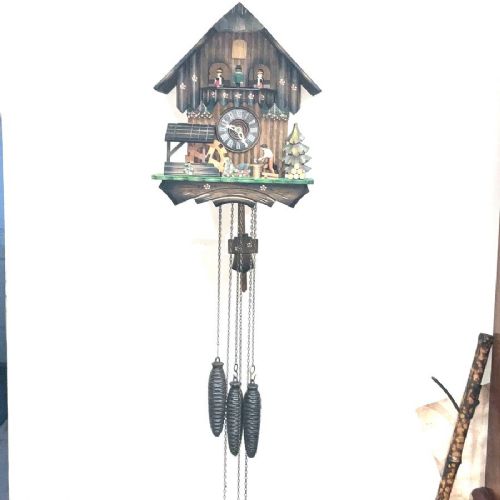
- A striking clock that uses bellows and whistles to imitate the call of the common cuckoo. These mechanisms often coordinate with automated bird figures that emerge from small doors.
- Automaton
- A self-operating mechanical device designed to mimic human or animal actions. In these clocks, automated figures frequently move in time with the music.
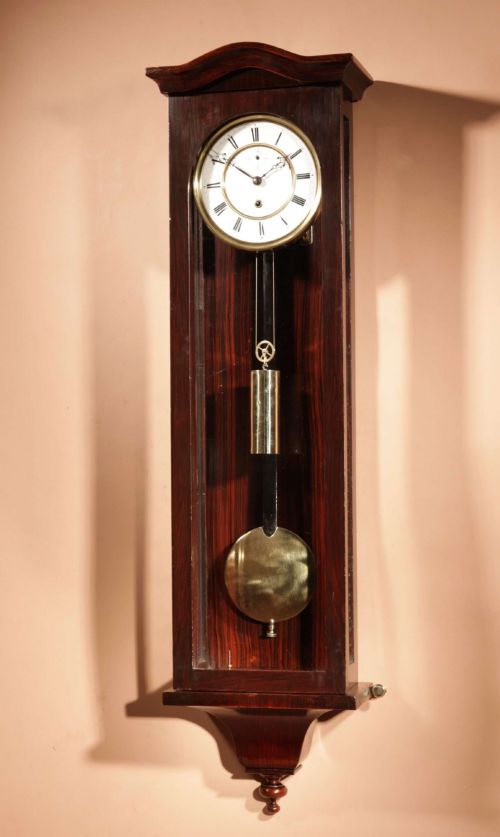
- Vienna regulator
- A precision pendulum clock characterised by a long wooden case and a clear glass door. This style gained popularity during the nineteenth century for superior timekeeping accuracy.
- Linden wood
- A soft, pale timber favoured by carvers for its fine grain and ease of manipulation. It allows artisans to execute intricate undercut foliage without splintering.
Black Forest Wooden Clock: Frequently Asked Questions
How do I wind a cuckoo clock?
Wind the chains gently while supporting the weight rather than pulling directly on the pinecone weights. This prevents undue strain on the internal gears and chains.
Ensure you do not overwind the spring or weight mechanism, stopping as soon as resistance is felt.
Are these clocks suitable for daily use?
Many nineteenth-century examples remain fully functional and keep reliable time when properly serviced and levelled on a wall. Regular maintenance by a specialist helps preserve the mechanical parts.
Placement away from direct heat sources and damp areas protects the wooden cabinetry from warping.
How do I identify a genuine nineteenth-century piece?
Examine the construction of the wooden case, hand-carved details, and the aged patina of the linden wood or walnut. Genuine period items often display hand-cut brass gears and maker stamps on the movement.
Machine-toothed modern gears and synthetic finishes generally indicate mid-twentieth-century production rather than the Victorian era.
What causes a cuckoo call to stop working?
Stops in the cuckoo call often result from slipped linkages between the movement and the bellows or worn leather on the bellows themselves. Dust accumulation inside the small pipes can also muffle the sound.
A clockmaker can easily re-leather the bellows and adjust the linkage wires to restore the traditional call.