





Gothic Umbrella Stand
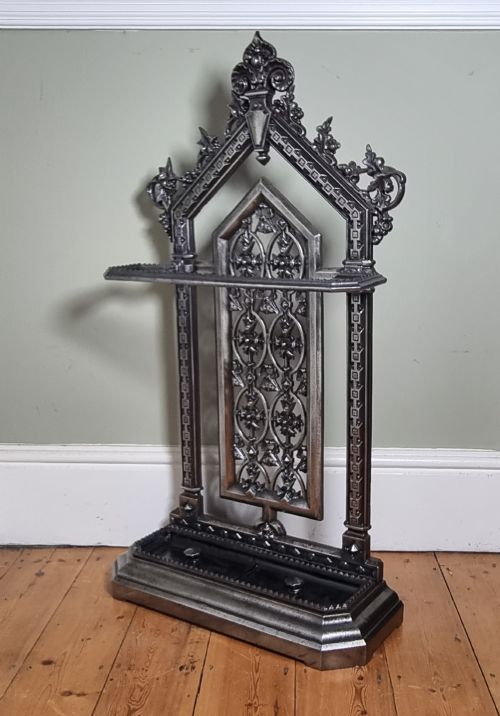
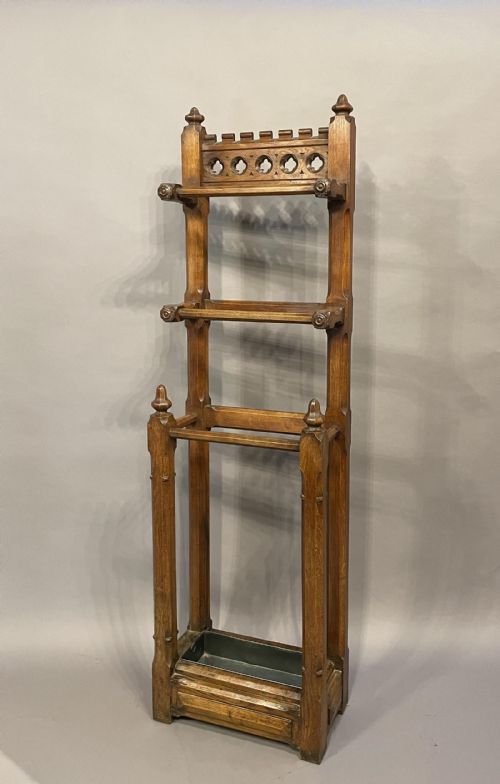
A gothic umbrella stand anchors the hallway with architectural cast iron or carved oak, bringing solemn pointed arches and quatrefoils to wet-weather storage.
Gothic Umbrella Stand
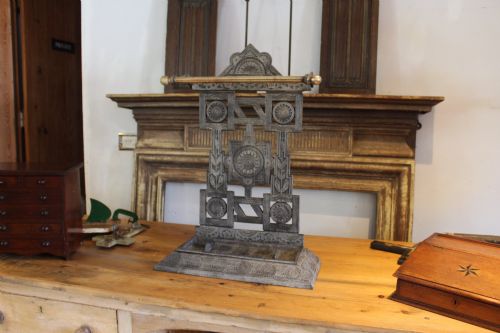
A gothic umbrella stand combines the structural utility of a stick rack with the pointed arches, tracery and foliate carving of the Gothic Revival movement. Most examples on this page date from the Victorian era, spanning the mid-nineteenth century through to the early twentieth century.
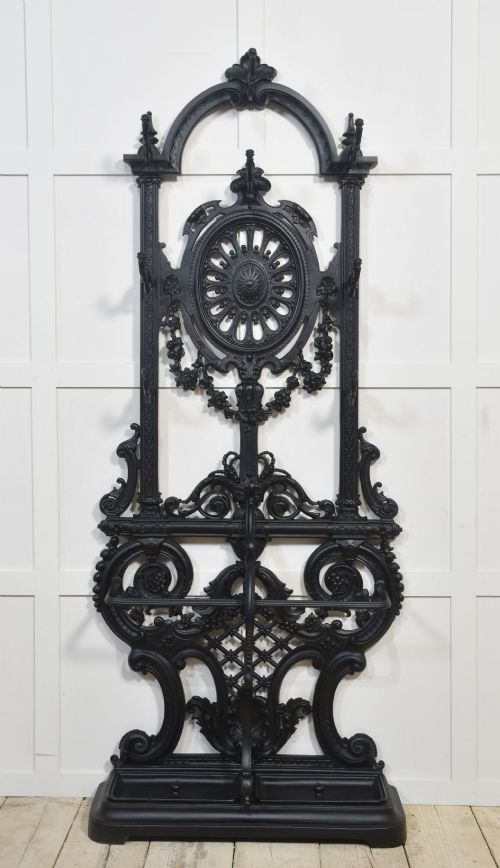
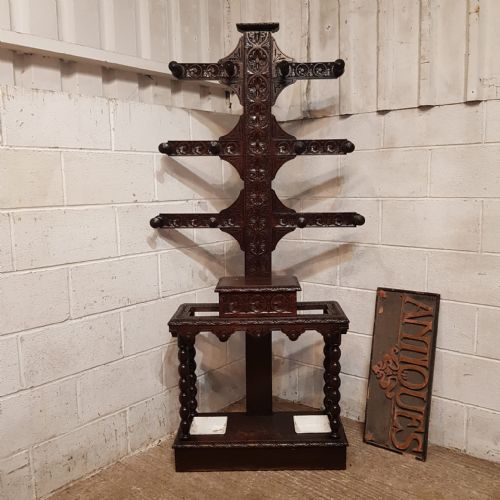
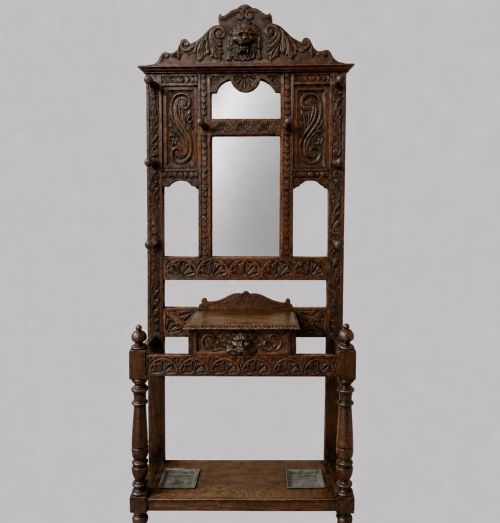
Buyers will encounter these pieces chiefly executed as heavy cast iron frames designed to catch rainwater, or as substantial carved oak hall stands incorporating mirrors, coat hooks and umbrella wells. Styles range from strict architectural revival designs to Aesthetic Movement variations and Arts and Crafts interpretations.
Origins are predominantly British, featuring foundry-cast ironwork alongside provincial and country house joinery. Forms vary from compact corner racks to large hall cupboards and combined coat stands.
Materials and construction
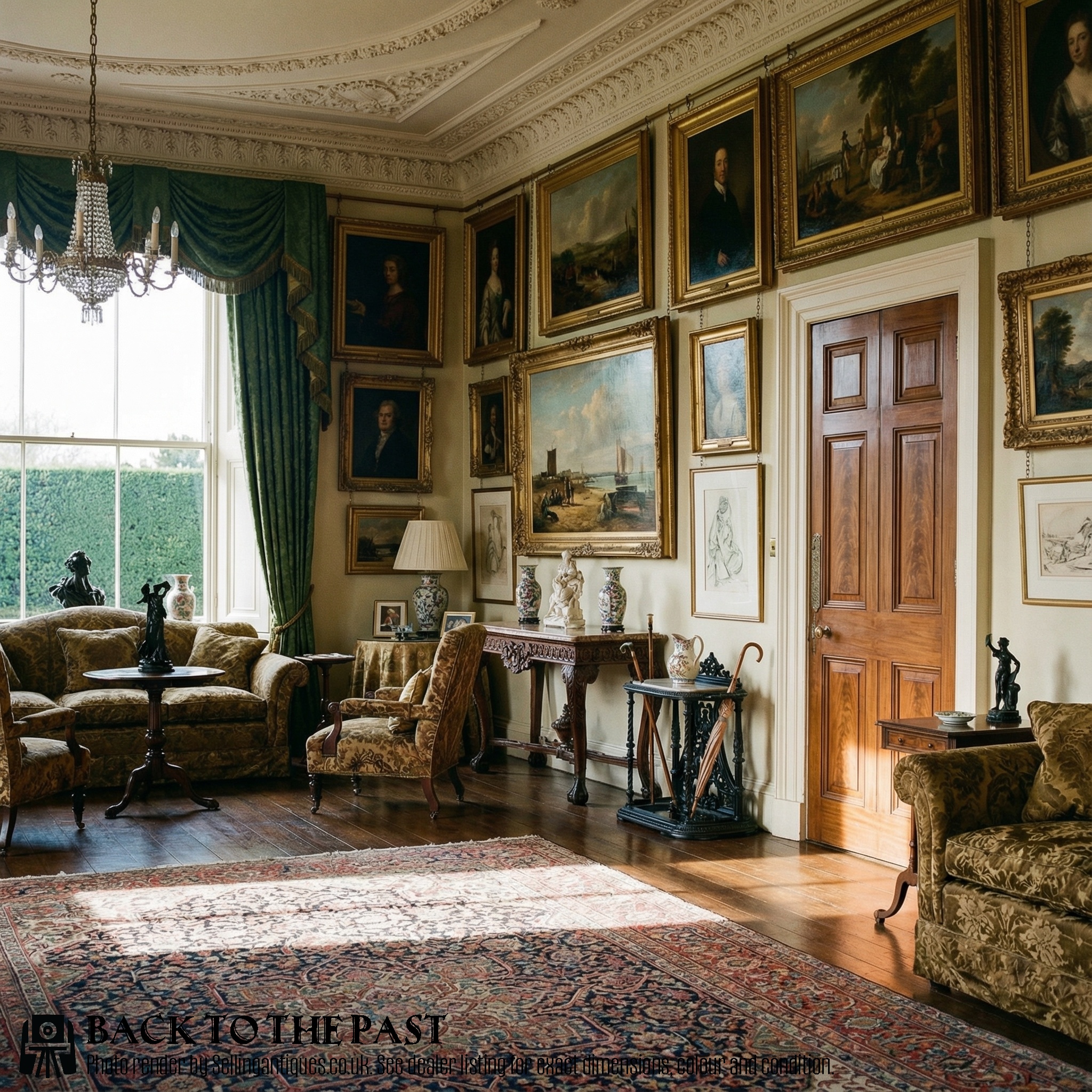
Cast iron production relied on sand moulds to create intricate openwork patterns of quatrefoils, pointed arches and figural reliefs. These metal frames often incorporated removable zinc or iron drip pans at the base to collect water.
Oak joinery utilised mortise and tenon construction, frequently embellished with deep relief carving depicting foliage, Green Man motifs or heraldic figures. Brass rails, hooks and fittings complemented both the dark timber and the painted metalwork.
Stands depicting William Wallace stand ready to guard your hallway against the elements with Scottish grit.
Distinctions in craftsmanship
Signatures and registry marks from notable foundries or makers elevate a piece above unmarked work. The survival of original drip pans and matching hardware also marks a better-preserved example.
Thomas Jeckyll·Coalbrookdale·Falkirk Foundry·William Whiteley
The Gothic Umbrella Stand Glossary
- Gothic Revival
- An architectural and decorative style drawing inspiration from medieval design, featuring pointed arches, trefoils and heavy vertical lines. This aesthetic dominated nineteenth-century institutional and domestic furnishing.
- Green Man
- A sculptural motif depicting a human face carved from or disgorged from foliage, commonly found on Victorian carved oak hall stands. It symbolises rebirth and spring.
- Hall Stand
- A multi-functional hallway furnishing combining an umbrella or stick stand with coat hooks, a hat shelf and frequently a central mirror. Many incorporate glove boxes and small drawers.
- Drip Pan
- A shallow metal tray placed beneath the umbrella wells to catch moisture from wet walking sticks and brollies. These are frequently removable for emptying and cleaning.
- Tracery
- Openwork ornamentation resembling stone window framing, translated here into cast iron or carved timber. It forms the primary decorative screen of many gothic umbrella stands.
Gothic Umbrella Stand: Frequently Asked Questions
Where should I place a heavy cast iron stand?
Cast iron stands require a firm, level surface such as a tiled, stone or hardwood hallway floor to support their substantial weight.
Position the stand near the primary entrance so dripping umbrellas land directly within the integrated tray without crossing vulnerable carpets.
How do I protect timber from wet umbrellas?
Oak hall stands rely on metal liners or zinc drip trays to keep moisture away from the surrounding wood. Ensure these trays remain clean and dry to prevent water damage to the baseboards.
If a stand lacks a removable liner, use modern waterproof inserts inside the wells to catch standing water.
How do I date a cast iron gothic stand?
Dating relies on stylistic clues, foundry marks and registration stamps cast directly into the ironwork. Pieces from the mid-nineteenth century often display crisper detail and registry diamonds.
Later Victorian and Edwardian reproductions sometimes simplify the Gothic motifs or omit foundry stamps entirely.
Can these stands hold heavy walking sticks?
The wide rings and sturdy divisions of nineteenth-century iron and oak stands easily accommodate heavy walking sticks, heavy umbrellas and riding crops. Their deep bases prevent tipping when loaded.
Smaller corner models suit lighter parasols and compact brollies rather than heavy country walking poles.