


Marble Top Umbrella Stand
A marble top umbrella stand keeps the hallway tidy while bringing robust stone and timber into your entrance.
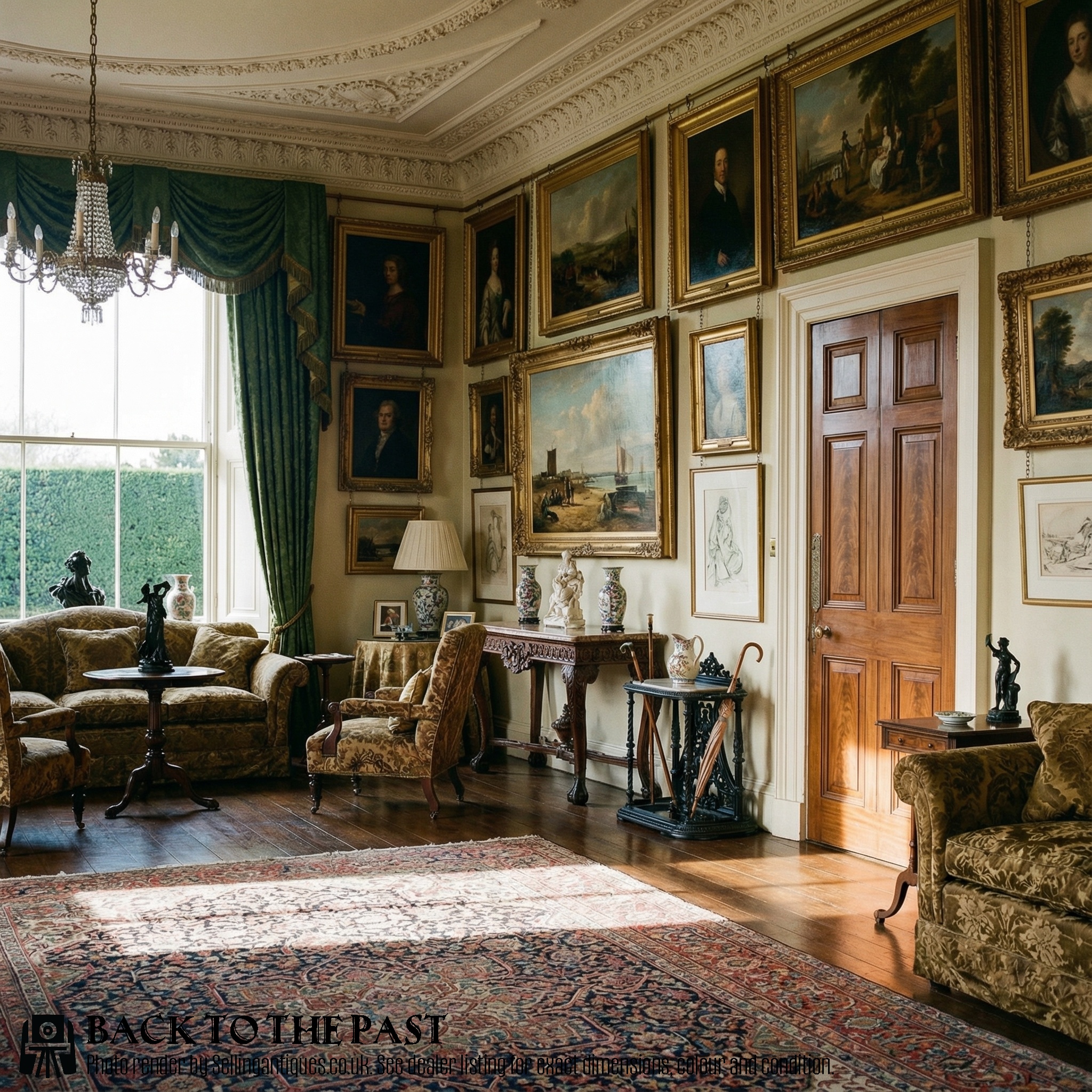
Marble Top Umbrella Stand
A marble top umbrella stand generally appears as part of a larger hall stand, combining umbrella storage with hooks and mirrors. The pieces on this page span the Victorian era, bringing together domestic utility and grander country house styling.
Most examples date from the nineteenth century, specifically between eighteen sixty and nineteen hundred, reflecting the period's focus on organised hallway furniture. You will encounter both compact narrow versions and larger architectural oak or mahogany designs.
The combination of a stone shelf with timber or metal framing defines the functional character of these hall stands. They serve to catch water from walking sticks and umbrellas while offering a solid surface for everyday items.
How they were made
Constructed primarily from oak and mahogany, these stands often integrate heavy cast iron or brass for durability in high-traffic hallways. Marble is set into the timber framework to provide a wipe-clean shelf that resists moisture from wet coats and umbrellas.
Makers utilised traditional joinery alongside metalcasting techniques, particularly evident in the Coalbrookdale style frames and decorative stick holders. Glass mirrors and inlaid details frequently complete the assembly, combining heavy structural timbers with refined decorative elements.
Marble Top Umbrella Stand Retail Price Guide 2026
Typical asking prices for marble top umbrella stand among the pieces listed under this phrase on Sellingantiques today, from the lower quarter to the upper quarter. They describe what is for sale here now, not the wider market.
Many Victorian hall stands include hidden metal drip trays beneath the umbrella wells to save entrance floors from persistent British drizzle.
What varies in quality
Quality rests on the integrity of the materials and the sophistication of the joinery rather than mere age. Pieces featuring detailed timber inlay, bevelled mirrors, and substantial marble shelves sit at the upper end of the range.
The integration of the metal stick racks with the wooden or cast iron body also dictates the refinement of the piece. Well-balanced proportions and heavy, stable bases separate standard domestic hall furniture from finer country house examples.
Coalbrookdale
The Marble Top Umbrella Stand Glossary
- Hall stand
- A piece of hallway furniture combining umbrella storage, coat hooks, and frequently a mirror and small shelf. It anchors the entrance space.
- Coalbrookdale
- A famous ironfoundry known for intricate cast iron work. Pieces bearing this association feature ornate openwork metal framing.
- Arts and Crafts
- A design movement focusing on craftsmanship and simple materials. Inlaid mahogany versions often reflect this aesthetic.
- Victorian Gothic Revival
- A nineteenth-century style drawing on medieval architectural motifs. Such pieces display heavier pointed arches and robust timber construction.
Marble Top Umbrella Stand: Frequently Asked Questions
What is a marble top umbrella stand?
A marble top umbrella stand is a piece of hallway furniture designed to hold wet sticks and umbrellas while providing a stone shelf for everyday items.
These stands frequently incorporate mirrors, coat hooks, and drip pans to manage hallway clutter effectively.
How were these stands used historically?
In nineteenth-century homes, visitors and residents placed their wet coats, hats, and walking gear in the hallway upon entry.
The stone shelf offered a convenient spot for calling cards or small accessories while keeping moisture away from vulnerable timber.
How do I care for the marble shelf?
Marble requires gentle cleaning with warm water and a soft cloth to avoid scratching the polished surface.
Avoid acidic cleaning agents that can etch the stone and dull its natural finish over time.
How can I tell the period of a hall stand?
Dating relies on observing construction methods, timber choices, and stylistic cues such as Victorian Gothic Revival details or Arts and Crafts inlay.
Nineteenth-century pieces often display heavy cast iron components and hand-cut joinery specific to that era.