



Gothic Tracery Table
These gothic tracery table pieces bring medieval architectural motifs into domestic rooms through robust timber construction.
Gothic Tracery Table
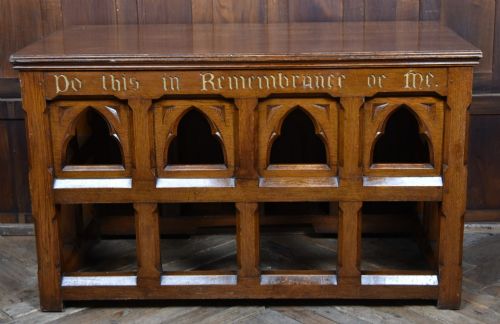
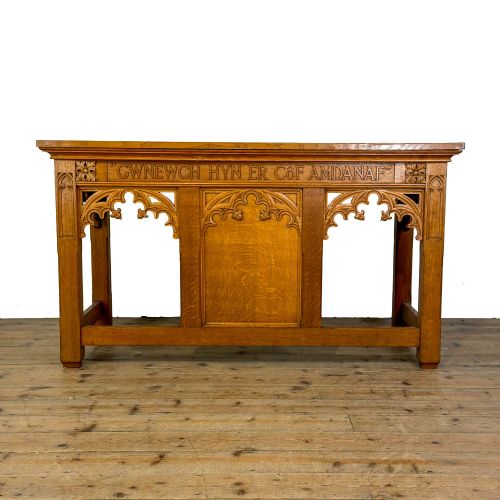
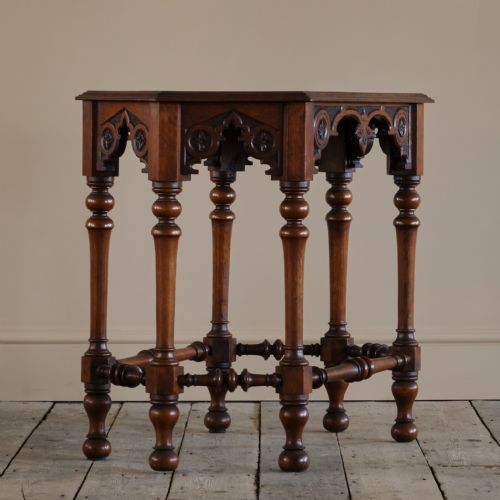
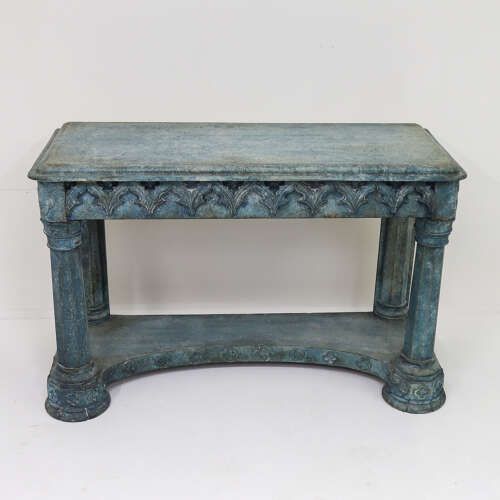
A gothic tracery table brings medieval architectural patterns into domestic rooms, often taking the form of side tables, serving tables, or altar tables. Most examples on this page date from the nineteenth century and the Edwardian era, reflecting revivals of interest in medieval design.
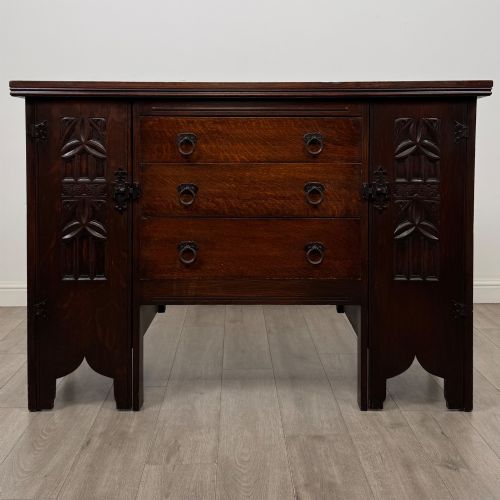
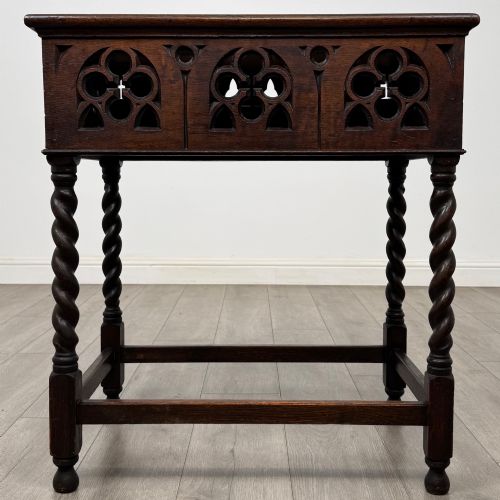
Makers adapted stone window designs into timber frames, producing sideboards, desks, and occasional tables with pointed arches and geometric cutouts. The selection ranges from robust oak chapel furniture to polished mahogany library tables designed for nineteenth-century homes.
How they were made
Oak and mahogany form the structural core of these pieces, joined with traditional carpentry techniques suited to heavy timber. Workshops also utilised painted wood, brass, and iron hardware to accentuate the architectural styling.
Carving defines the surface decoration, translating stone tracery into wood panels and friezes. Secondary materials such as glass, silk, and bronze appear in associated items like cabinets and clocks.
One nineteenth-century Victorian style table even hides a clock directly in the centre, proving that Gothic scholars could also be punctual.
What varies in quality
The depth and crispness of the carved tracery separate standard production from superior cabinet work. Sharp, well-defined linenfold and geometric patterns require skilled hand carving rather than shallow machine routing.
Timber selection dictates the finish and integrity of the piece, with dense quarter-sawn oak and figured mahogany holding fine details better over generations. Proportions matching authentic architectural models also elevate the design.
The Gothic Tracery Table Glossary
- Tracery
- The stonework supports in Gothic windows that inspired the geometric wooden patterns on these tables. This framework divides the glass into distinct vertical sections.
- Gothic Revival
- An architectural and decorative movement spanning the eighteenth and nineteenth centuries that revived medieval forms. Designers applied these ecclesiastical motifs to domestic furniture.
- Altar table
- A heavy ecclesiastical table adapted from church interiors for secular or chapel use. These pieces often feature substantial oak construction and carved friezes.
- Console table
- A wall-mounted or freestanding table supported by brackets or legs, frequently used in halls and reception rooms. Examples in this style often incorporate painted finishes.
Gothic Tracery Table: Frequently Asked Questions
Where did people use these tables?
These tables served various domestic and institutional functions, from dining and serving in nineteenth-century homes to chapel use.
Library tables and desks occupied study spaces, while console and side tables stood in hallways and reception rooms.
How do I date a piece?
Dating relies on timber characteristics, construction methods, and the specific historical revival period associated with the item.
Nineteenth-century examples often display heavy oak or mahogany framing, whereas Edwardian pieces show lighter proportions.
Are these pieces purely decorative?
While the architectural carving provides a strong visual statement, most items retain practical utility as functional tables and storage.
Serving tables, sideboards, and desks perform everyday roles while displaying period craftsmanship.
What woods are most common?
Oak and mahogany dominate the construction of these tables, providing the necessary strength for heavy architectural carving.
Alternative materials like painted wood and walnut also appear across specific nineteenth-century styles.