
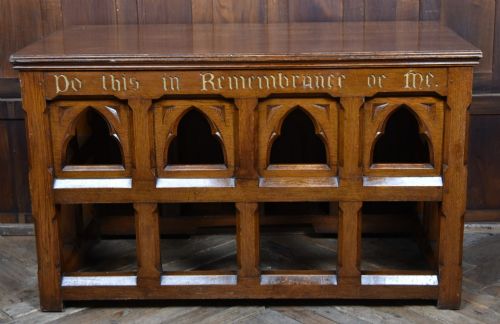
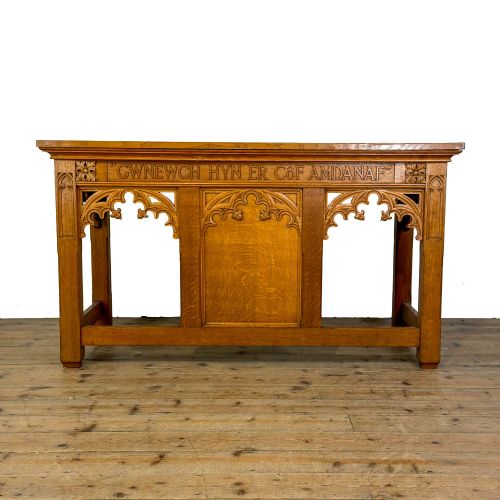


Carved Ecclesiastical Table
A carved ecclesiastical table brings centuries of chapel craftsmanship and timber character straight into a room, offering robust function rooted in sacred spaces.
Carved Ecclesiastical Table
A carved ecclesiastical table encompasses forms originating from chapels and churches, including altar tables and prayer desks designed for devotional use. These pieces carry the heavy timber presence of religious architecture into domestic and institutional settings.
The versions most commonly met on this page span the Victorian era and the early twentieth century, heavily shaped by the Gothic Revival movement. They arrive in sturdy constructions of oak and pitch pine, reflecting centuries of utilitarian worship.
Alongside tables, the broader grouping includes related church furnishings such as prie-dieu prayer desks and console tables sharing the same architectural lineage. Each object serves as a tangible link to historical ecclesiastical interiors.
How they were made
Construction relies heavily on dense native hardwoods like oak and pitch pine, selected for their structural endurance and ability to hold deep chisel work. Joinery is traditionally robust, designed to withstand heavy use within a chapel or church.
Surface enrichment often involves meticulous hand carving, sometimes paired with giltwood, gesso, and gold leaf applications to highlight architectural motifs. Metal elements in brass and ormolu appear on associated lighting pieces and altar furnishings.
Several altar candlesticks on record enjoyed a second act as table lamps, proving that holy light easily adapts to the bedside table.
What varies in quality
Depth and precision of the hand carving separate standard utilitarian church furnishings from pieces displaying exceptional artistic ambition. Crisp detailing in tracery and linenfold panels indicates a higher tier of workshop execution.
The integrity of the original timber and the restraint shown during any subsequent conversions, such as lamp adaptations, dictate the overall standing of an item. Untouched surfaces retain a depth of character that heavy restoration diminishes.
The Carved Ecclesiastical Table Glossary
- Gothic Revival
- An architectural and decorative style drawing inspiration from medieval forms, featuring pointed arches and trefoils. This aesthetic dominates nineteenth-century ecclesiastical furniture.
- Prie-Dieu
- A devotional desk or chair specifically designed for prayer, featuring a sloping shelf for books and a padded kneeling rail. These items provide intimate scale within church furniture.
- Giltwood
- Timber that has been coated with gold leaf or a gold-coloured finish to create a brilliant, reflective surface. It frequently highlights carved details on altar furnishings and candlesticks.
- Pitch Pine
- A durable, resinous softwood utilised for ecclesiastical joinery and furniture during the nineteenth century. It offers a distinct grain pattern and considerable structural strength.
- Pricket Stick
- A candlestick featuring an upright spike or pricket upon which a large candle is secured. These were standard altar accessories in traditional liturgical settings.
Carved Ecclesiastical Table: Frequently Asked Questions
What is a carved ecclesiastical table?
A carved ecclesiastical table is a piece of furniture originating from churches or chapels, typically constructed from robust timber like oak or pitch pine. These items include altar tables and console tables designed with traditional architectural motifs.
They bring historical gravity and sturdy craftsmanship into modern rooms, functioning as focal points with deep roots in religious heritage.
How were these tables used?
These tables served practical and ceremonial purposes within religious spaces, acting as altars for communion or surfaces for holding liturgical books and vessels. Their heavy construction ensured they remained stable during frequent ecclesiastical services.
Today, they transition into domestic interiors as distinctive side tables, desks, or console surfaces that anchor a room with architectural presence.
What materials should I expect?
The listings show a strong reliance on sturdy woods such as oak, pitch pine, and general pine, chosen for their enduring strength. Decorative elements frequently incorporate giltwood, gesso, and gold leaf to accent the carved surfaces.
Metal components like brass and ormolu also appear on related pieces such as candlesticks and converted lamp bases, adding textural contrast to the timber.
How do I identify the period?
Dating relies heavily on the stylistic markers of the Gothic Revival and Victorian eras, alongside specific construction methods visible in the timber. Pieces often reflect the revival movements of the nineteenth century and the early twentieth century.
Examining the depth of the hand carving, the choice of wood, and any ecclesiastical context helps place an item within its historical timeframe.
Can these tables be used daily?
These tables are built from durable hardwoods designed to withstand centuries of use, making them exceptionally suited for everyday modern living. Their solid joinery provides reliable functionality as working surfaces or display tables.
Placing them in a home simply requires appreciating their historical surfaces while putting their robust frames to practical use.