



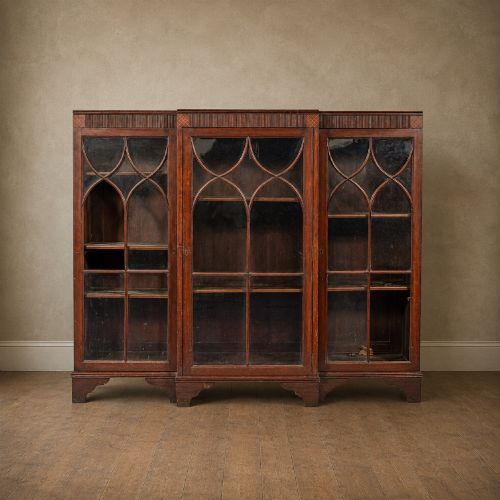

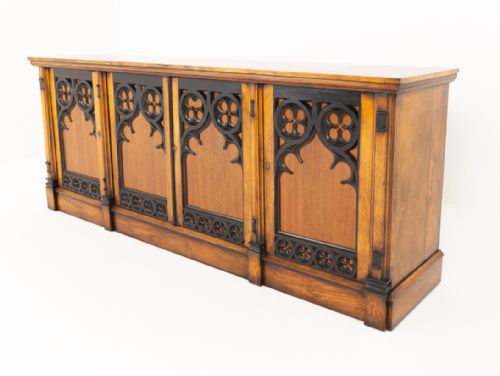


Gothic Tracery Cupboard
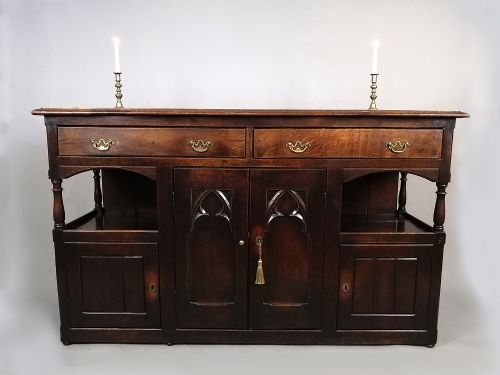
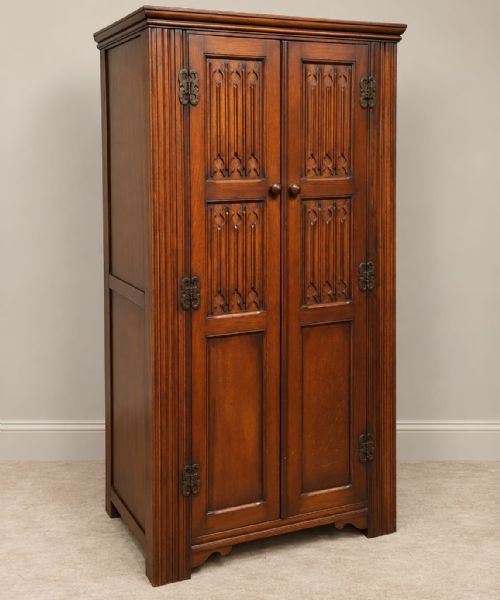
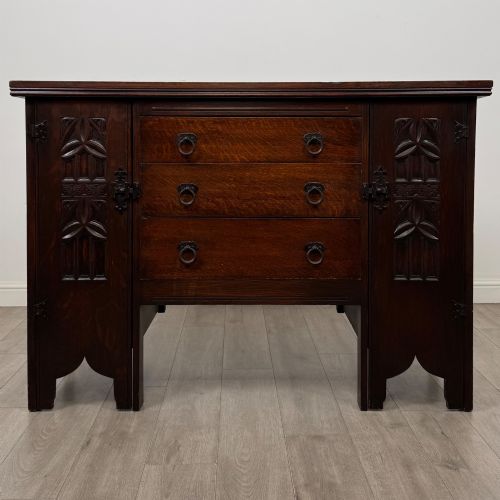
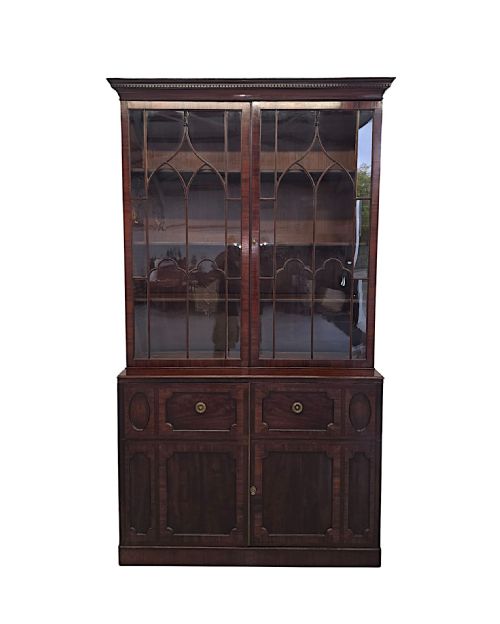
These gothic tracery cupboard pieces bring architectural pointed arches and carved panelling into domestic rooms, offering both storage and ecclesiastical presence.
Gothic Tracery Cupboard
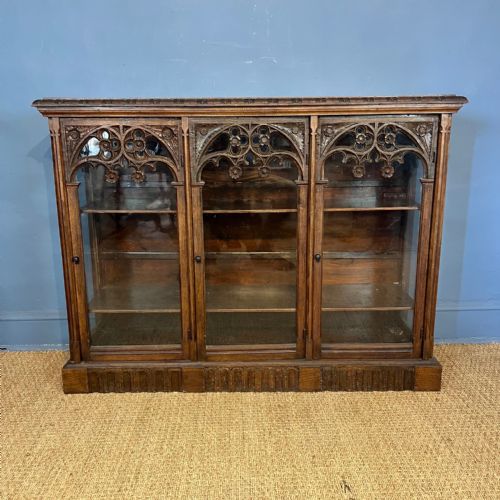
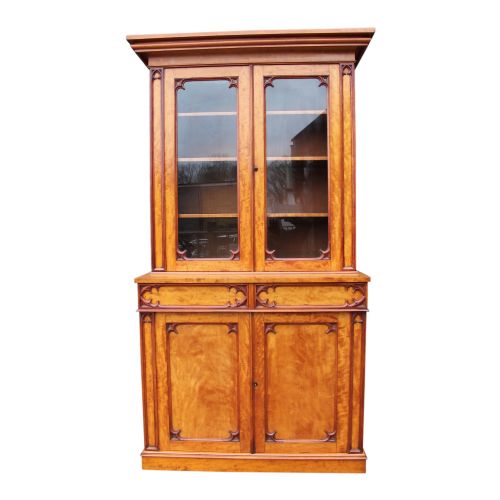
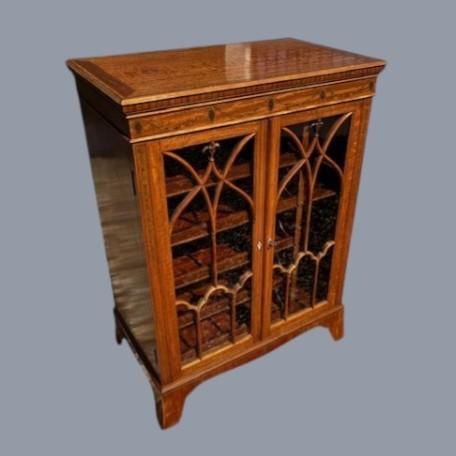
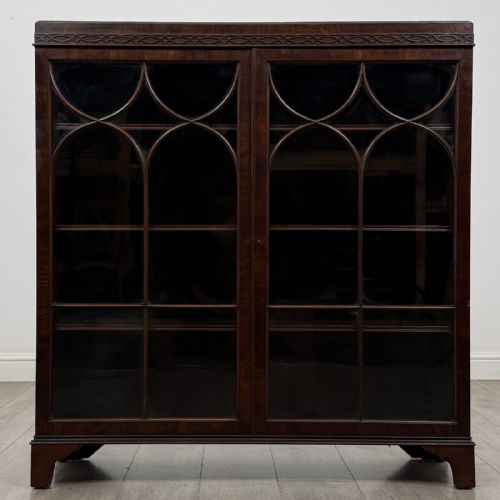
A gothic tracery cupboard combines practical storage with architectural woodwork, taking forms such as bookcases, sideboards, hall cabinets, and bedside pedestals. Most examples on this page date from the nineteenth century and the Edwardian period, executed in the Gothic Revival style.
Makers adapted medieval church architecture for domestic furniture, resulting in pieces with glazed doors, carved panels, and characteristic pointed arches. Buyers encounter diverse functional types, ranging from large breakfront libraries to compact hall cupboards and creedence cabinets.
The aesthetic draws heavily on historical revivals, incorporating stylistic elements from Georgian, Regency, and Victorian interpretations of medieval design. Oak remains the predominant timber, accompanied by mahogany, walnut, satinwood, and rosewood.
Materials and construction
Cabinetmakers utilised solid timbers and veneers, with oak forming the backbone of heavy revival pieces while mahogany and satinwood served finer bookcases. Brass hardware and iron hinges provided functional yet decorative contrasts to the dark wood surfaces.
Carving, tracery work, and panel construction defined the technique, often executed by hand to replicate ecclesiastical stone window patterns in wood. Glazing bars structured large glass doors in breakfront bookcases, requiring precise joinery to maintain architectural proportions.
Gothic Tracery Cupboard Retail Price Guide 2026
Typical asking prices for gothic tracery cupboard among the pieces listed under this phrase on Sellingantiques today, from the lower quarter to the upper quarter. They describe what is for sale here now, not the wider market.
Listings feature oak, mahogany, satinwood, rosewood, walnut, and ebonised wood alongside iron and brass hardware.
Assessing craftsmanship and design
Quality rests in the crispness of the carved tracery and the structural integration of architectural motifs into functional furniture carcasses. Superior examples display balanced proportions, select timber figuring, and meticulous joinery that withstands heavy doors and internal shelving.
The distinction between standard commercial production and finer work lies in the depth of relief carving and the fidelity of the historical revival style. Material selection also elevates a piece, moving from standard pine and oak to figured mahogany, walnut, and exotic veneers.
The Gothic Tracery Cupboard Glossary
- Tracery
- The stonework supports in Gothic windows, adapted here as decorative wooden openwork or carved patterns on cabinet doors. This ornamental framing defines the visual identity of the style.
- Breakfront
- A piece of furniture where the central section projects forward from the flanking wings. This configuration adds architectural depth to large bookcases and sideboards.
- Scrumbled
- A paint finish applied to simulate the grain of more expensive wood or to create an aged texture. This technique appears on utilitarian painted pine pieces.
- Pedestal cupboard
- A narrow, freestanding storage unit designed to stand beside a bed or in a corner. These matched pairs are typical of nineteenth-century bedroom furnishings.
Gothic Tracery Cupboard: Frequently Asked Questions
How do I date a gothic tracery cupboard?
Dating relies on timber selection, construction methods, and the specific phase of the Gothic Revival movement represented in the design. Nineteenth-century pieces often combine machine-prepared framing with hand-carved details, while later Edwardian examples show standardised joinery.
Secondary woods and backboards provide further clues to age, shifting from hand-sawn oak and pine in earlier eras to uniform mill-sawn boards towards the twentieth century.
Where should I place a gothic cabinet?
These cabinets suit libraries, studies, and hallways where their architectural presence can anchor a room's interior scheme. Taller bookcases require stable wall placement, while smaller pedestal cupboards fit well beside seating.
Consider the lighting in the room, as dark timbers and glazed tracery doors benefit from natural light that highlights the carved woodwork and glass panels.
Are these pieces made of solid oak?
Oak is the most common timber seen in these listings, utilised for heavy hall cupboards, sideboards, and structural framing. Cabinetmakers frequently paired solid framework with stable veneered panels to prevent warping in large doors.
Other woods such as mahogany, walnut, and satinwood also appear, particularly in breakfront bookcases influenced by Georgian and Regency revival styles.
What is the difference between revival styles?
Victorian Gothic Revival pieces typically favour heavy, dark oak with deep relief carving and robust ecclesiastical proportions. Later interpretations, including Edwardian and Sheraton revival examples, often use lighter mahogany and refined inlay work.
Early nineteenth-century pieces may incorporate Regency elements, blending classical symmetry with pointed arches and tracery motifs.