
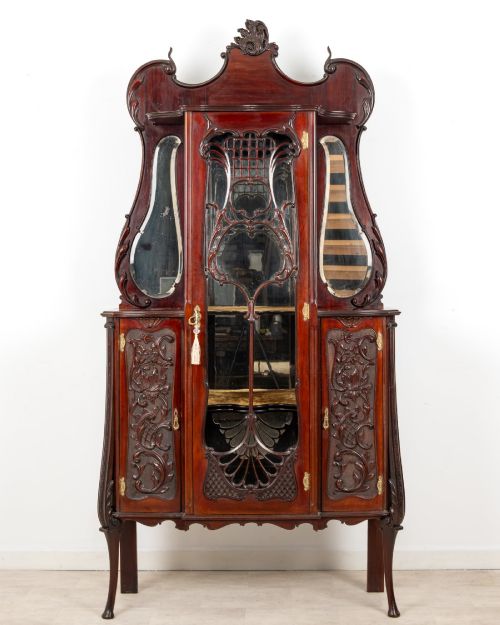


Carved Wooden Vitrine
A carved wooden vitrine brings glass and timber together to frame your collection, turning everyday display into an architectural feature of the room.
Carved Wooden Vitrine
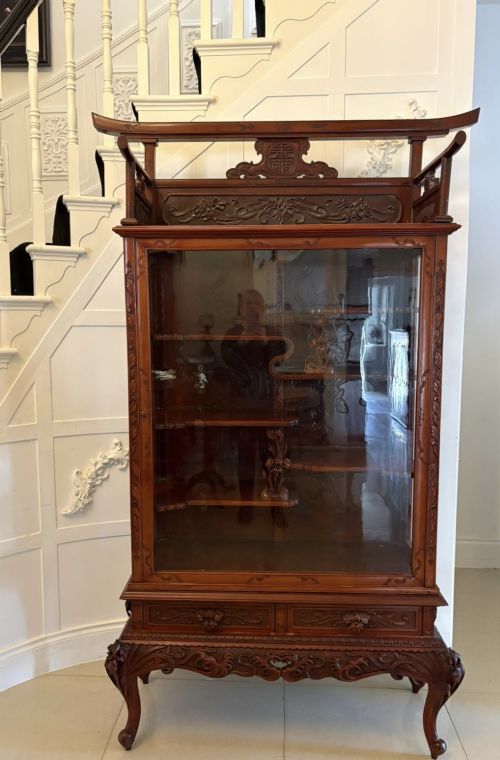
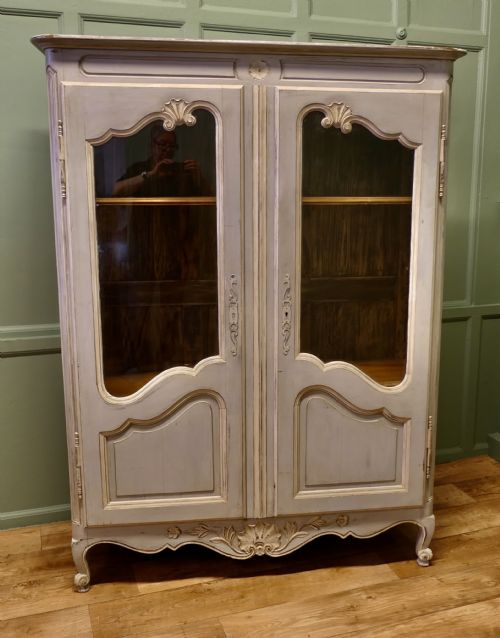
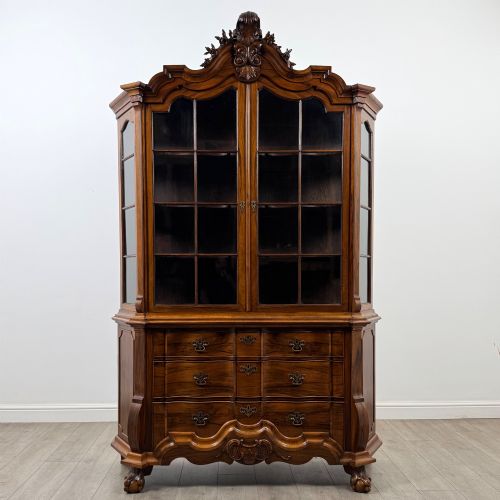
When you search for a carved wooden vitrine, you encounter tall display cabinets and bookcases spanning the nineteenth and early twentieth centuries. These pieces emerge from revivalist movements and domestic traditions, taking forms such as French Rococo, Chippendale Revival, and Japanese Revival.
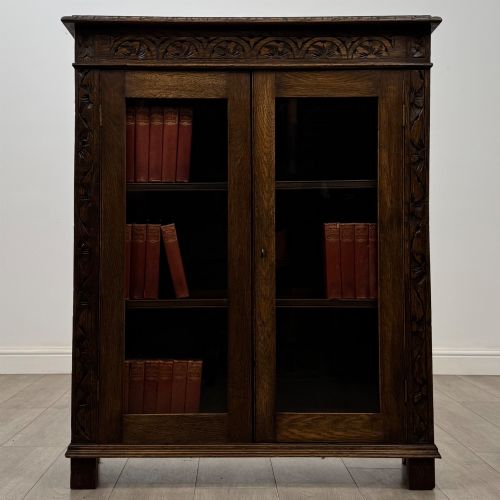
The version you most frequently meet on this page is the mahogany or walnut display cabinet outfitted with glass panels for showing ceramics and silver. Oak and lacquer examples also appear, offering alternative finishes from Victorian and Edwardian workshops.
Cabinets range from modest single-door units to double-door bookcases equipped with drawers. Each piece reflects the interior display habits of its period, prioritising visibility through glazed doors while anchoring the room with carved timber.
How they were made
Cabinet makers utilised dense hardwoods including mahogany, walnut, and oak to build structural carcases capable of supporting heavy glass doors. Timber selection dictated the weight and grain pattern of each cabinet.
Surfaces received carved ornamentation, marquetry inlay, or red lacquer depending on the regional style. Brass hardware fitted to doors and drawers completed the construction.
Listings feature mahogany, walnut, and oak alongside red lacquer, spanning the nineteenth century through the Edwardian period.
What varies in quality
The standard of carving and inlay defines the tier of a cabinet, shifting from simple linear mouldings to elaborate Rococo scrolls and intricate marquetry. Finer examples display crisp hand-carved detail in the timber rather than applied composition ornament.
Materials and glass selection also mark the division between standard production and superior work. Selected walnut and figured mahogany with original brass fittings represent the upper end of the scale.
Warings
The Carved Wooden Vitrine Glossary
- Vitrine
- A glass-fronted cabinet designed for the display of fine objects and curiosities. The form developed in France to protect fragile porcelain and silver from dust.
- Marquetry
- The art of applying pieces of veneer to a structure to form decorative patterns and pictures. Craftsmen cut contrasting woods to fit flush within the surface.
- Rococo
- A decorative style characterised by asymmetrical curves, scrollwork, and natural motifs. Revival pieces draw on eighteenth-century French and Dutch precedents.
- Lacquer
- A durable finish applied in multiple layers to wood surfaces, often associated with Asian-inspired export pieces and nineteenth-century revival work.
- Chippendale Revival
- A furniture style drawing on the mid-eighteenth-century designs of Thomas Chippendale. Pieces feature characteristic carved details and substantial timber frames.
Carved Wooden Vitrine: Frequently Asked Questions
What is a vitrine?
A vitrine is an enclosed cabinet featuring glass panels designed specifically for displaying decorative objects, porcelain, and silverware. The transparent walls protect items from dust while allowing full visibility from multiple angles.
Historically placed in reception rooms and parlours, these cabinets served to showcase a household's prized possessions to visitors. Today, they fulfil the same function in modern interiors.
Where should I place one?
These cabinets suit dining rooms, living spaces, or hallways where natural light can illuminate the glass display area. Positioning them away from direct sunlight protects both the timber finish and the objects inside.
Ensure the floor is level so the large glass doors hang straight and close evenly against the wooden frame.
How do I care for the wood?
Maintenance involves dusting with a soft, dry cloth and applying appropriate wax polish periodically to nourish the hardwood. Avoid chemical sprays that can degrade historic finishes.
Keep the interior clean and check the brass hinges and locks occasionally to ensure smooth operation of the doors.