

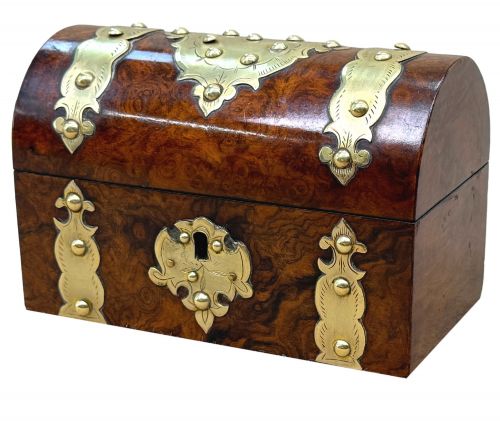


Gothic Stationery Box
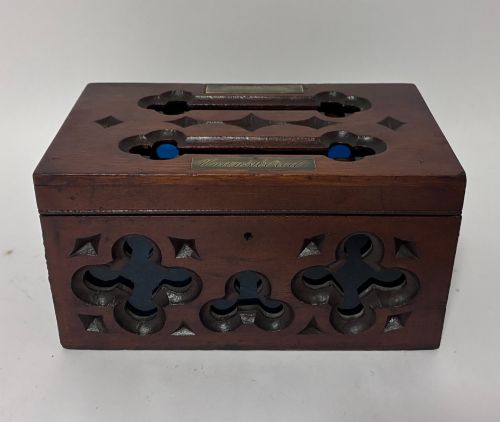
A gothic stationery box organises correspondence with architectural flair, pairing rich timbers with heavy metal mounts.
Gothic Stationery Box
When searching for a gothic stationery box, collectors encounter desktop containers designed to hold letters, envelopes, and writing paper in nineteenth-century studies. These pieces emerge predominantly from the Victorian period, spanning the mid-nineteenth century through the Edwardian era.
Makers of the period utilised durable foundational woods like walnut, mahogany, and pollard oak, frequently encasing them in exotic veneers such as coromandel and burr walnut.
Materials and construction methods
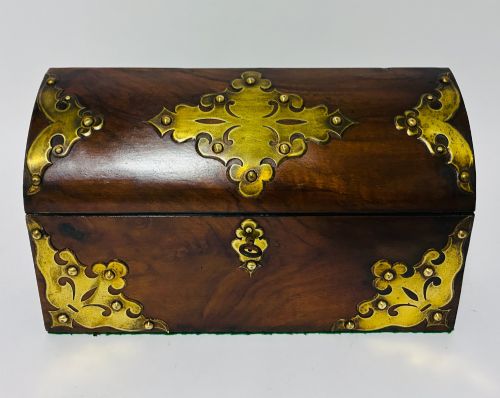
Cabinetmakers constructed these boxes using solid timbers and decorative veneers over sturdy carcases, mounting them with cast and chased brass strapwork, hinges, and ormolu. Artisans applied brass binding to edges and corners to reinforce the structure and echo architectural ironwork.
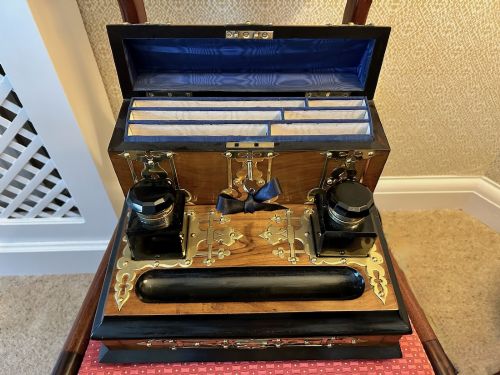
Surfaces exhibit detailed craftsmanship through the use of figured woods, mother of pearl inlay, and inset agate cabochons. Interior compartments feature fitted partitions for paper and envelopes, sometimes incorporating glass inkwells within matching desk stands.
Gothic Stationery Box Retail Price Guide 2026
Typical asking prices for gothic stationery box among the pieces listed under this phrase on Sellingantiques today, from the lower quarter to the upper quarter. They describe what is for sale here now, not the wider market.
A sturdy dome top ensures the love letters inside remain secure from curious eyes.
Distinctions in construction and material quality
Quality separates ordinary containers from superior examples through the selection of timber veneers, such as richly figured coromandel or burr walnut, and the weight of the metal mounts. Heavier cast brass strapwork and substantial hinges indicate a higher grade of production.
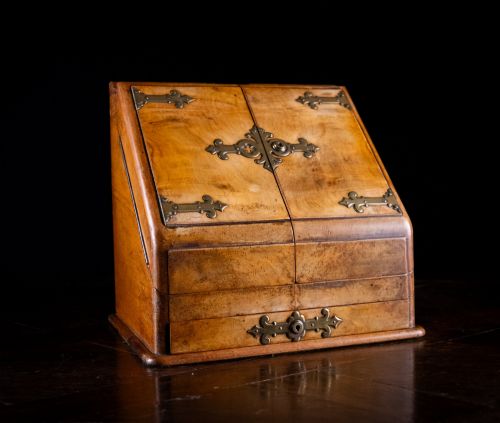
The complexity of the internal arrangement also defines the piece, with drop-front cabinets and fitted writing slopes representing more intricate design work than standard lidded boxes.
Rodman and Co of Belfast·Pugin
The Gothic Stationery Box Glossary
- Coromandel
- A dense, heavily figured exotic timber from Asia utilised for high-end Victorian box construction. Its dark grain provides a striking contrast against polished brass mounts.
- Gothic Revival
- An architectural and decorative style drawing on medieval forms, featuring pointed arches and structural metalwork. This aesthetic defines the strapwork and proportions of these boxes.
- Strapwork
- Ornamental metal bands applied to the exterior of a box to reinforce corners and joints. In these pieces, brass straps mimic medieval ironwork.
- Stationery Box
- A desk accessory fitted with tiered compartments to sort letters and writing paper. Examples often include matching slots for envelopes and stamps.
- Writing Slope
- A portable desk featuring a hinged, slanted lid that opens to reveal a writing surface and storage compartments. These pieces often share materials with desk boxes.
Gothic Stationery Box: Frequently Asked Questions
How were these boxes used?
Victorians used these boxes to keep personal correspondence, writing paper, and envelopes neatly sorted in the study or drawing room. Interior dividers and tiered compartments held different sizes of paper and cards out of sight.
Many examples function as part of a wider desk set, occasionally accompanying inkstands or blotters. They provided a secure, decorative repository for private letters before the widespread use of manufactured envelopes.
What woods are commonly found?
Makers relied on durable foundational timbers such as walnut, mahogany, and pollard oak for the internal carcase and primary structure. Exotic veneers like burr walnut and coromandel frequently cover the exterior surfaces to provide rich grain patterns.
Less common pieces utilise ash or incorporate decorative panels of mother of pearl and agate cabochons. These materials were chosen for both durability and visual impact on the desk.
How do I date a stationery box?
Dating relies on observing the combination of wood types, brass hardware, and stylistic indicators such as Gothic Revival strapwork. Most surviving examples date from the Victorian era, particularly the mid-to-late nineteenth century.
Dome-topped and drop-front configurations appear alongside cabinet formats across the 1860 to 1890 decades. Maker marks, where present, help narrow the chronology to specific workshops.