


Gothic Revival Side Cabinet
A gothic revival side cabinet brings architectural presence and dark timber grain into a room, offering both display and storage with medieval flair.
Gothic Revival Side Cabinet
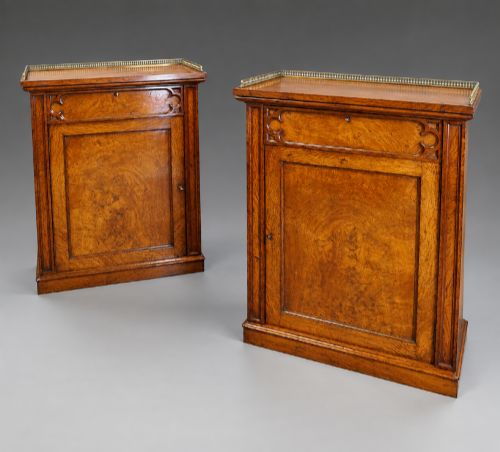
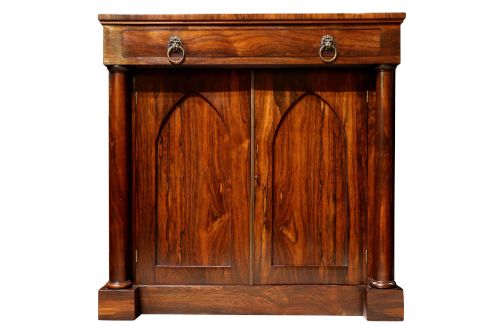
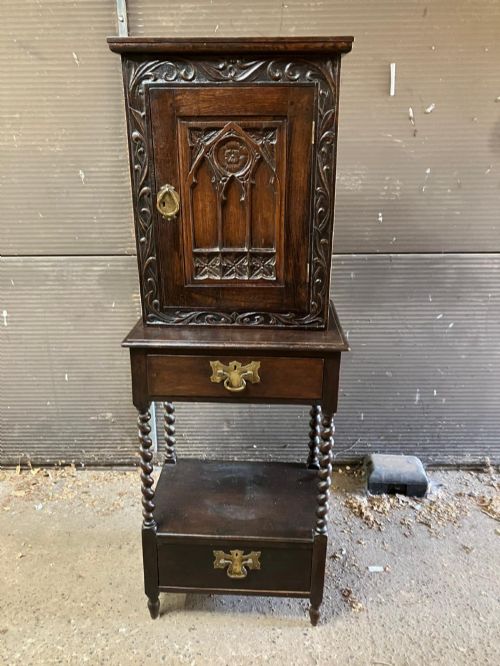
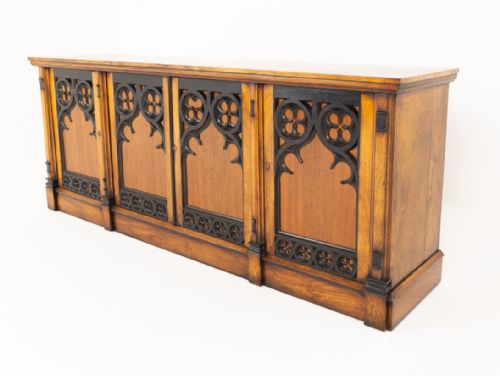
A gothic revival side cabinet sits against a wall to store tableware or books, drawing directly from medieval architecture with pointed arches and tracery. You will most frequently encounter nineteenth century examples rendered in solid oak or mahogany.
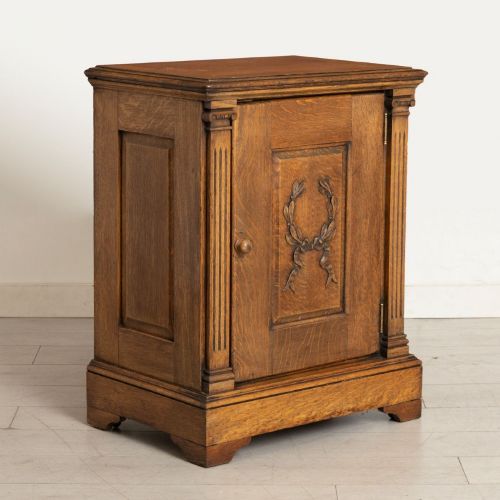
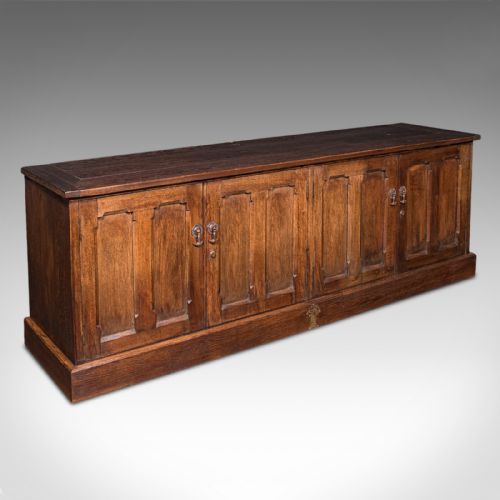
The form spans low bedside cupboards, tall bookcase combinations and wide chiffoniers fitted with panelled doors. Makers during the Victorian era adapted these ecclesiastical motifs for domestic interiors.
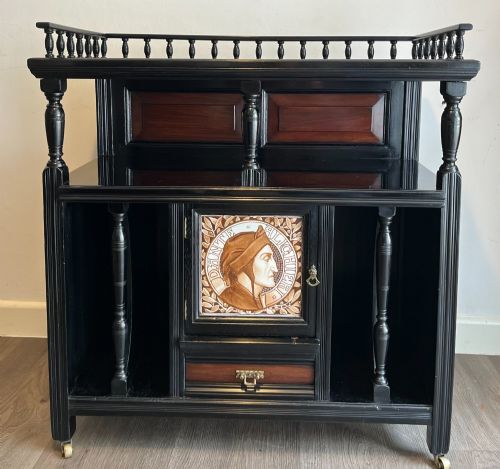
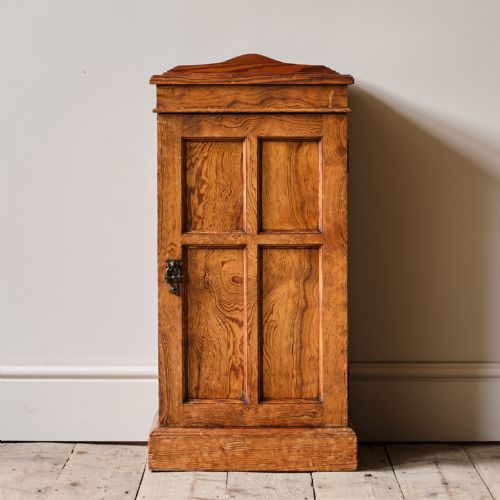
Pieces range from simple country pine pot cupboards to grand walnut and ebonised designs influenced by the Arts and Crafts and Aesthetic movements.
How they were made
Cabinetmakers relied heavily on solid oak, walnut and mahogany, often shaping the dense timber with deep relief carving and chamfered edges. Iron and brass hinges, straps and drop handles provide structural reinforcement and functional contrast against the dark wood.
Panels were frequently fielded or carved with linenfold and geometric tracery, demonstrating traditional joinery techniques designed to accommodate wood movement. Secondary timbers such as pine appear on interior shelves and backs.
One remarkably configured solid walnut coal purdonium hides its fuel container behind ecclesiastical tracery panels in the Puginesque style.
What varies in quality
Quality rests in the crispness of the architectural carving and the selection of figured timber grain across the principal doors. Heavy, well-seasoned oak timbers and substantial brass or wrought iron hardware distinguish superior workshop production from commercial output.
Proportion and structural integrity define the better examples, where joints remain tight and the decorative elements integrate harmoniously into the overall architectural silhouette rather than appearing as applied surface ornament.
Bruce Talbert·Gillows
The Gothic Revival Side Cabinet Glossary
- Gothic Revival
- A nineteenth century architectural and decorative style that revived medieval forms, pointed arches, and ecclesiastical motifs in domestic furnishings.
- Chiffonier
- A low sideboard or cabinet featuring enclosed cupboards below, sometimes surmounted by a small shelf or tier.
- Tracery
- Ornamental intersecting stonework patterns adapted by cabinetmakers for wooden door panels and glazing bars.
- Linenfold
- A style of wood carving that imitates folded parchment or linen, commonly found on fifteenth and nineteenth century cupboard doors.
- Creedence cabinet
- A traditional small side table or cupboard originally used for holding sacramental elements before being adapted for secular domestic storage.
Gothic Revival Side Cabinet: Frequently Asked Questions
Where should I place a gothic revival side cabinet?
These cabinets suit dining rooms, hallways or living spaces where their architectural carvings can anchor a wall alongside neutral paint and simpler furnishings. Their substantial presence works well against plain plaster or panelled backgrounds.
Because many examples provide enclosed shelving, they function effectively for storing books, glassware or table linen while adding distinct historical character to an interior.
How do I care for antique oak and walnut?
Maintain the timber by dusting with a dry lint-free cloth and applying a traditional beeswax polish sparingly when the surface feels dry. Avoid placing cabinets near direct heat sources or strong sunlight to prevent timber shrinkage and splitting.
Ensure metal fittings such as brass hinges and iron drop handles are kept dry, cleaning them gently without abrasive compounds if tarnish accumulates.
What is the difference between a chiffonier and a side cabinet?
A chiffonier typically incorporates a low enclosed cupboard base beneath a top surface, often featuring a raised shelf or back panel with mirrored or carved details. Side cabinets generally offer a broader rectilinear storage volume with doors or drawers.
Both forms served similar utility in nineteenth century rooms, but chiffoniers lean toward lighter display functions while side cabinets provide heavier structural storage.