


Tracery Carved Cabinet
Tracery carved cabinet examples are architectural storage pieces bearing pointed arch openwork, offering historic character and robust presence for discerning interiors.
Tracery Carved Cabinet
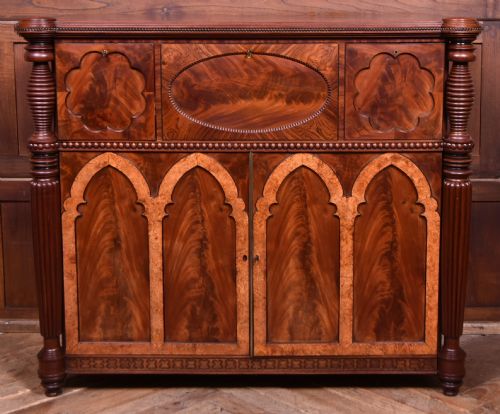
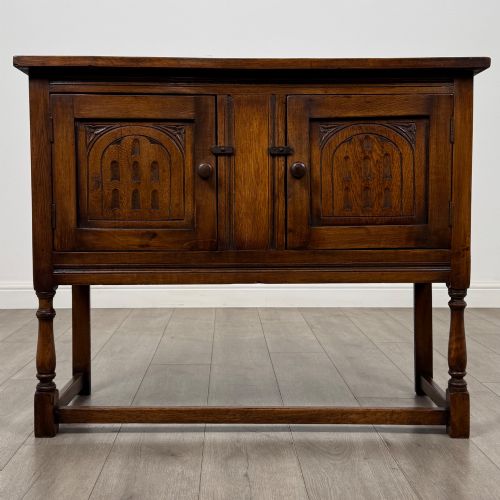
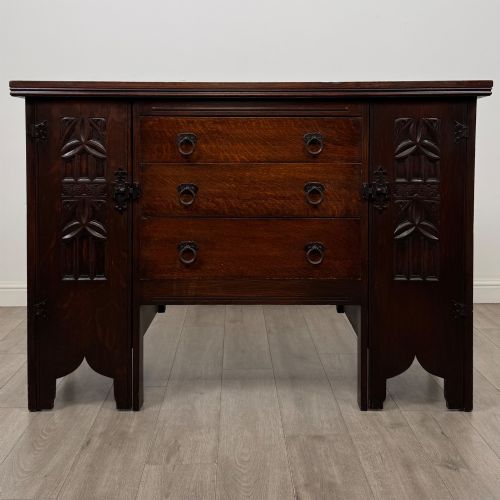
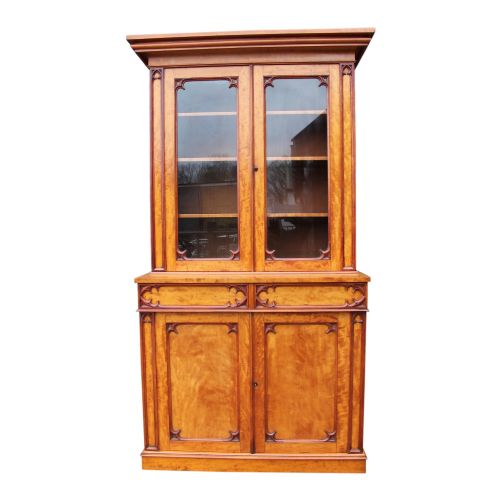
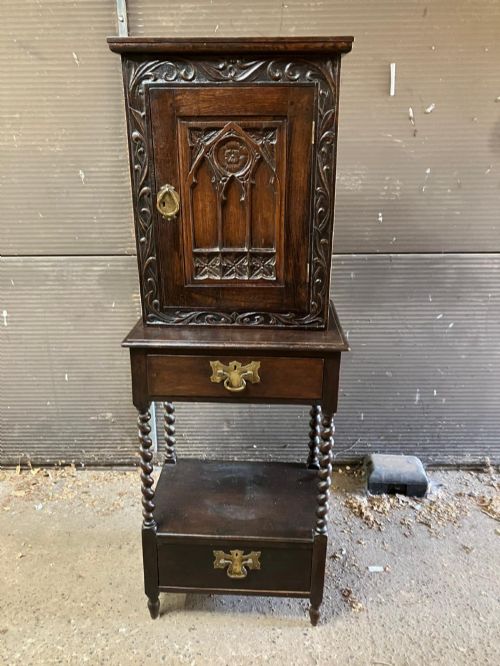
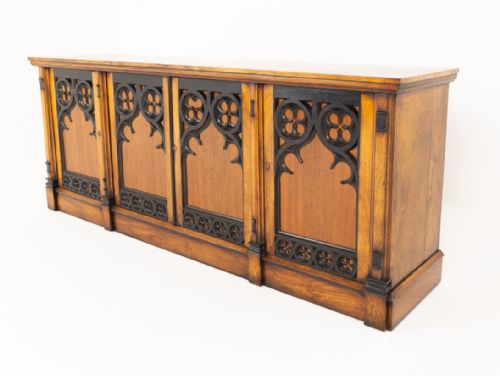
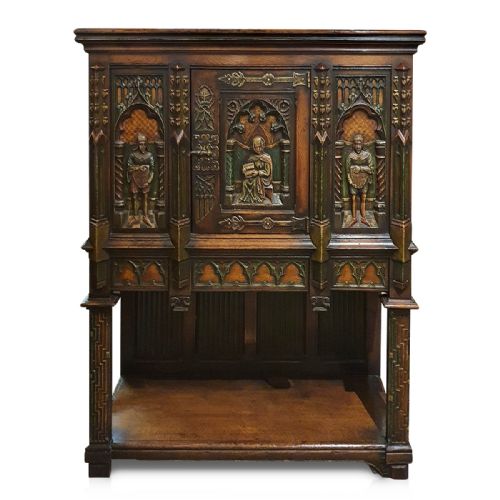
When you search for a tracery carved cabinet, you encounter architectural storage pieces drawing inspiration from medieval ecclesiastical design. The pieces available here span diverse forms including bookcases, sideboards, hall cupboards, and secretaire cabinets.
The version you are most likely to meet on this page is constructed from oak and aligned with the Gothic Revival or Victorian Gothic Revival style. These items integrate pointed arches, cusped openings, and panel tracery into functional domestic furniture.
Earlier periods are represented by sixteenth-century flamboyant Gothic pieces, while nineteenth-century and Edwardian interpretations dominate the current selection. Side cabinets, corner units, and creedence cabinets demonstrate how makers adapted ecclesiastical ornament for secular storage.
Materials and construction
The primary material underpinning these items is oak, frequently worked with deep relief carving to form geometric tracery panels. Secondary materials such as flame mahogany, burr walnut, and satinwood appear in specific nineteenth-century and Arts and Crafts examples.
Metalwork details in brass and iron provide structural reinforcement and functional hardware, while glass panels appear in bookcases and display cabinets. Ebonised wood is occasionally utilised to accent the carved surface motifs.
Listings span the sixteenth to the twentieth centuries, with a strong concentration of nineteenth-century Gothic Revival and Edwardian examples.
Determinants of quality
The depth and crispness of the carved tracery separate standard production from superior craftsmanship. Architectural proportion and the integration of the carved panels into the structural frame dictate the overall success of the piece.
Material selection plays a decisive role, particularly in how well the grain of the oak or walnut complements the carved geometric patterns. The integrity of secondary woods and original hardware further distinguishes finer examples from later alterations.
Gillows
The Tracery Carved Cabinet Glossary
- Tracery
- Openwork stonework or woodwork forming a pattern of intersecting lines, typically in the upper part of a window or panel. In these cabinets, it defines the architectural aesthetic.
- Gothic Revival
- An architectural and decorative style originating in the mid-eighteenth century and flourishing in the nineteenth century. It revives medieval structural forms and ornament.
- Creedence cabinet
- A small side table or cupboard traditionally used for holding church plate or secular food provisions. Surviving examples often display ecclesiastical carving.
- Secretaire
- A piece of furniture containing a writing drawer or fold-down desk flap. These combine enclosed storage with a dedicated writing surface.
- Flamboyant
- The latest phase of Gothic architecture in France, characterised by flame-like tracery patterns. Pieces from this period exhibit elaborate curvilinear designs.
Tracery Carved Cabinet: Frequently Asked Questions
What is a tracery carved cabinet?
A tracery carved cabinet is a storage piece decorated with openwork geometric patterns derived from Gothic architecture. These items incorporate pointed arches and window tracery motifs into doors and panels.
They function as bookcases, sideboards, and hall cupboards while displaying historic ecclesiastical design influences.
How do I date a Gothic Revival cabinet?
Dating relies on examining the timber species, construction joints, and stylistic markers of the period. Nineteenth-century interpretations often fuse medieval motifs with Victorian cabinet proportions.
Evidence from this selection shows pieces ranging from sixteenth-century flamboyant work to Edwardian oak cupboards and Arts and Crafts mahogany variations.
Where were these cabinets used?
These cabinets serve as architectural storage furniture in hallways, libraries, dining rooms, and living spaces. Their robust construction suits them for daily domestic use.
Historically, the design language stems from church architecture, adapted by nineteenth-century makers for secular domestic interiors.
What woods are commonly found?
Oak is the predominant material used across the majority of these Gothic Revival and medieval storage pieces. It provides the heavy structure necessary for deep relief carving.
Alternative woods such as flame mahogany, burr walnut, and satinwood appear in specific nineteenth-century bookcases and table cabinets.