

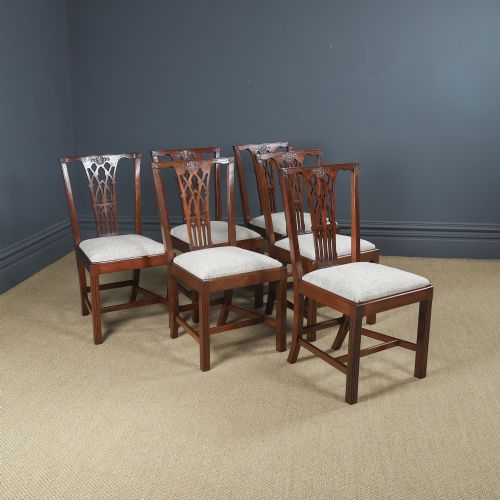


Gothic Revival Seating Set
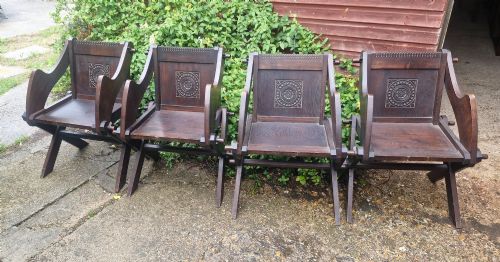
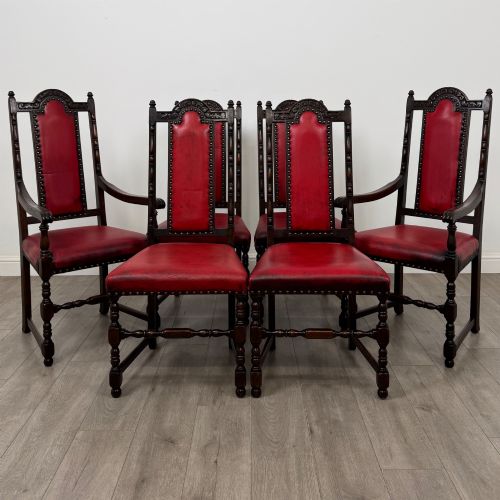
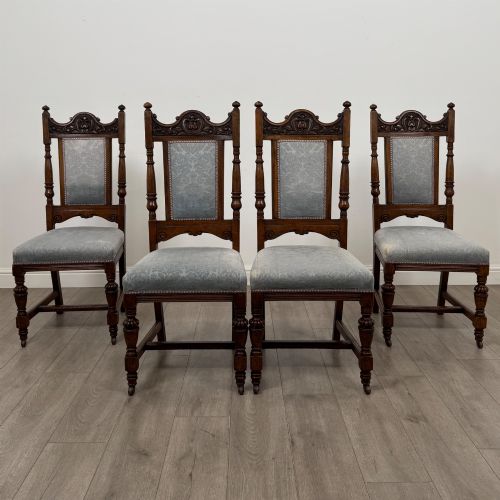
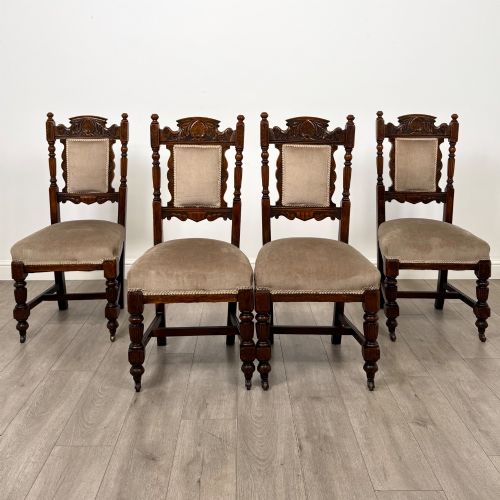
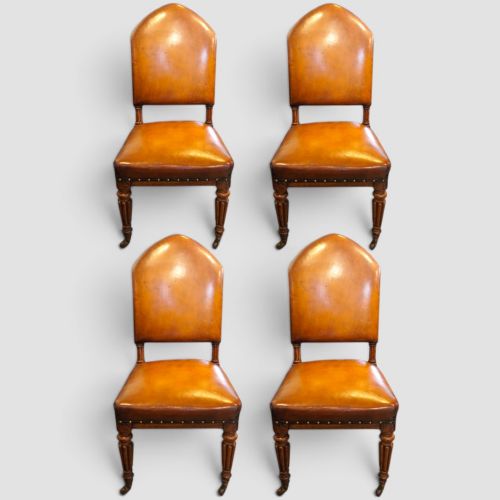
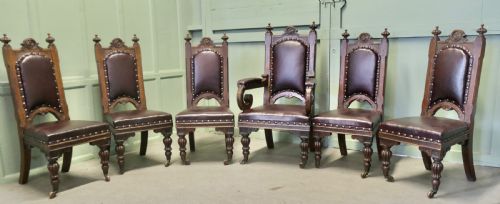
These gothic revival seating set examples bring architectural presence to a room through carved woodwork and substantial frames.
Gothic Revival Seating Set
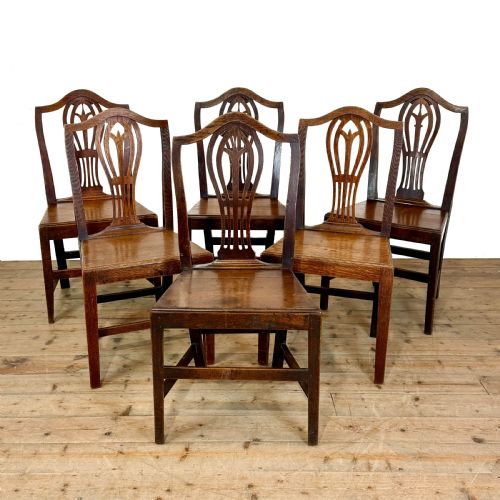
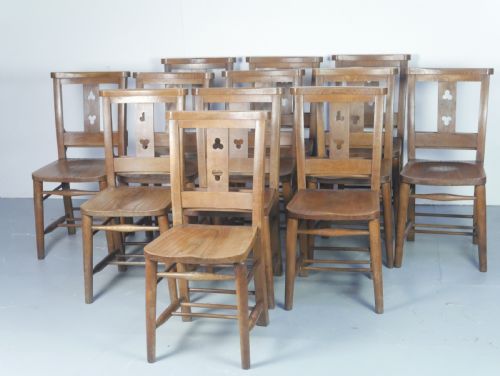
A gothic revival seating set gathers multiple chairs, commonly dining chairs, armchairs, or hall chairs, sharing medieval architectural motifs. Buyers seeking this phrase typically find groups ranging from four to twelve chairs fashioned during the nineteenth and twentieth centuries.
The materials in these suites focus heavily on oak and mahogany, often paired with leather, velvet, or fabric upholstery. Forms lean towards high backs and carved details that echo church furnishings and historic country houses.
How they were made
Cabinetmakers constructed these pieces primarily from solid oak and mahogany, using traditional joinery to support heavy, upright frames. Carving was executed by hand to render pointed arches, tracery, and heraldic details into the timber.
Seats incorporated leather, velvet, or woven upholstery fabrics, secured with brass tacks or webbing. Cross-frame constructions and turned supports provided the necessary structural integrity for daily seating.
The listings span from the early nineteenth century through the Edwardian era and into the 1930s, constructed mainly in oak and mahogany with leather and fabric upholstery.
What varies in quality
The depth and crispness of the timber carving separate standard production from superior examples. Workshops employing skilled carvers achieved sharper architectural lines and more complex tracery across the chair backs.
The choice of primary timber and the uniformity of a matched set influence the overall character. Sets retaining their original leather or high-grade upholstery fabrics display greater coherence than those altered over time.
George Morant
The Gothic Revival Seating Set Glossary
- Gothic Revival
- A design movement drawing inspiration from medieval architecture, pointed arches, and ecclesiastical forms. It resurfaced strongly in furniture production during the nineteenth century.
- Jacobean Revival
- A style referencing seventeenth-century English design, often featuring heavy turned legs and rectilinear panels. It frequently appears alongside gothic motifs in dining suites.
- Chippendale Style
- Furniture design based on eighteenth-century cabinetmaking patterns, sometimes blended with gothic fretwork and tracery. Mahogany was the preferred medium for this aesthetic.
- Hall Chair
- A rigid, often wooden seat intended for transitional spaces rather than long dining sessions. These examples frequently feature carved crests or heraldic motifs.
- Cross-Frame
- A structural form utilising intersecting diagonal members to support the seat and back. This configuration adds stability without heavy side stretchers.
Gothic Revival Seating Set: Frequently Asked Questions
How were gothic revival chairs used originally?
These chairs served around large dining tables in panelled rooms or functioned as formal seating in halls and libraries. Their imposing backs and architectural ornament projected historical authority and social standing.
Dining chairs accommodated lengthy meals, while side and hall chairs furnished entrance spaces where visitors waited before being received.
How do I care for antique oak seating?
Maintain timber surfaces by applying a traditional beeswax polish sparingly and buffing with a soft cloth. Keep chairs away from direct heat sources and strong sunlight to prevent the oak from splitting.
Check joints periodically for movement, as central heating can dry out historic adhesives and traditional joinery over time.
Are these seating sets suitable for daily dining?
Most nineteenth-century sets were built for sustained domestic use using sturdy timbers like oak and mahogany. Their solid frames handle regular seating comfortably when structurally sound.
Pairing them with a suitably proportioned dining table creates a practical setup for everyday meals as well as formal gatherings.
How do I distinguish nineteenth-century pieces from later revivals?
Examine the timber surfaces for tool marks, hand-carved inconsistencies, and the patina accumulated over decades of use. Nineteenth-century construction often employs hand-cut tenons and older fastener types.
Twentieth-century editions generally show greater uniformity in machine finishing and cleaner internal framing while maintaining the historic aesthetic.