





Gothic Revival Oak Box
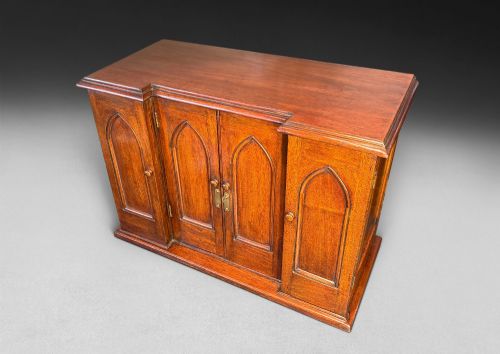
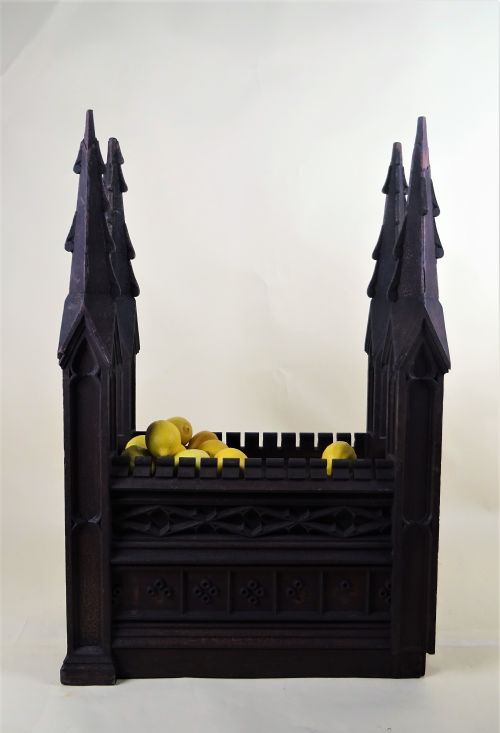
A gothic revival oak box brings medieval structural drama and dark timber into a Victorian interior.
Gothic Revival Oak Box
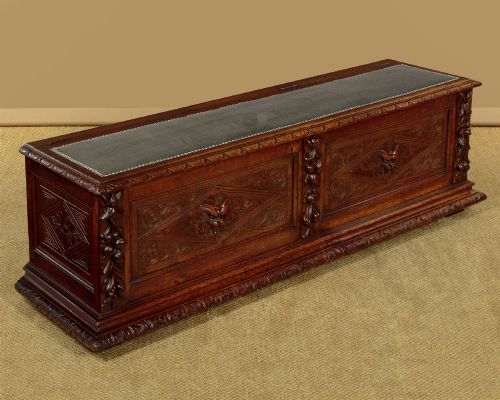
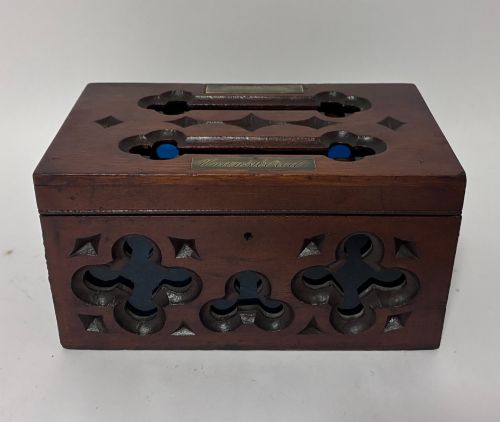
A gothic revival oak box appears in forms ranging from small desk stationery holders and correspondence boxes to larger coffers, blanket chests, and games compartments. These pieces emerge predominantly across the Victorian period, spanning decades from the mid-nineteenth century up to the early twentieth century.
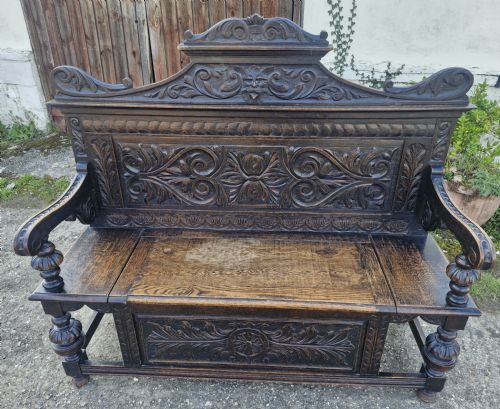
Makers and workshops of the era adapted mediaeval architectural motifs for domestic storage, producing functional items decorated with tracery, linenfold panels, and pointed arches. The selection available combines smaller tabletop items with larger seating-storage hybrids like hall benches and ottoman boxes.
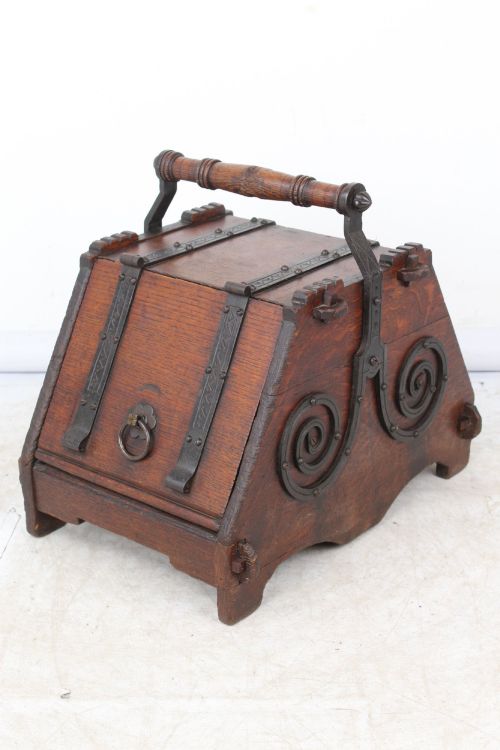
Many examples align with the broader aesthetic movements of the time, touching upon Arts and Crafts principles or Renaissance Revival styling while retaining solid timber construction.
Materials and construction
Solid oak provides the structural foundation for these pieces, sometimes complemented by decorative accents of pollard oak, walnut, or mixed hardwoods. Joinery relies on traditional methods suitable for heavy domestic use and deep carving.
Metalwork plays a functional and decorative role, incorporating brass, iron, wrought iron, and steel hinges, locks, and handles. Interior linings utilise leather and glass compartments where correspondence or decanters require dedicated storage.
Listings feature Victorian and nineteenth-century items alongside Arts and Crafts examples, utilising oak, brass, iron, leather, and glass.
Judging quality
Depth and crispness of the carved ornamentation distinguish standard production items from exceptional commissions. Relief work featuring architectural tracery or figural elements requires steady hand execution rather than shallow machine stamping.
Hardware integrity and timber selection dictate overall merit. Original brass or iron mounts, integrated locks with functional keys, and the choice of figured pollard oak veneers elevate an ordinary container into a superior collector piece.
Christopher Dresser·Jack Grimble
The Gothic Revival Oak Box Glossary
- Tracery
- Stonework-inspired openwork ornamentation adapted for wood carving. It defines the Gothic aesthetic on panels and box lids.
- Coffer
- A heavy wooden chest traditionally used for storing valuables. These robust containers often feature iron strapwork and deep relief carving.
- Teapoy
- A small stand or box designed specifically for holding tea caddies. Victorian examples frequently incorporate lockable compartments and internal containers.
- Pollard oak
- Timber taken from trees that have been pollarded, producing tightly grained, highly decorative burr patterns. It appears on quality Victorian boxes for visual contrast.
- Correspondence box
- A desk accessory fitted with dividers and slots for stationery, letters, and writing implements. They often feature sloping lids and lockable doors.
Gothic Revival Oak Box: Frequently Asked Questions
What were gothic revival oak boxes used for?
These boxes served practical domestic storage roles in Victorian homes, ranging from desktop stationery organisation to holding correspondence, games, and valuables.
Larger variants functioned as blanket chests, coffer storage, or integrated seating such as hall benches and ottoman boxes.
How do I date a gothic revival oak box?
Dating relies on observing construction methods, hardware styles, and documented design periods typically spanning the Victorian era.
Items often carry stylistic markers or registration details pointing to specific decades between eighteen-fifty and nineteen-hundred.
Are these boxes made entirely of solid oak?
While solid oak forms the primary structural material, makers frequently integrated other elements like pollard oak veneers for decorative contrast.
Internal fittings often incorporate brass hinges, iron locks, leather surfaces, and glass inserts depending on the specific box type.
How do I clean and care for antique oak?
Maintenance requires preserving the dry timber surface through gentle dusting and occasional application of appropriate conservation wax.
Avoid using modern liquid polishes or placing items near direct heat sources that might dry out the historic wood and metal mounts.