


Victorian Tantalus Box
A victorian tantalus box secures your spirits behind a locking mechanism while displaying the cut crystal decanters inside.
Victorian Tantalus Box
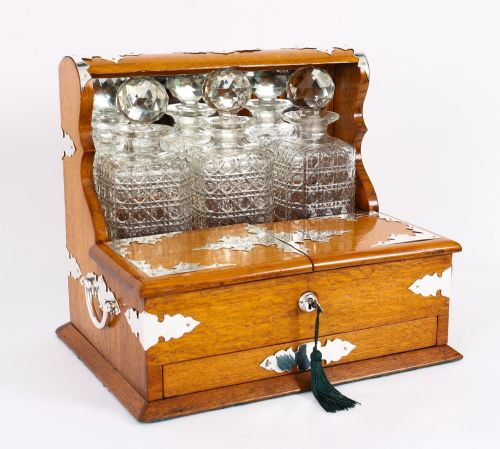
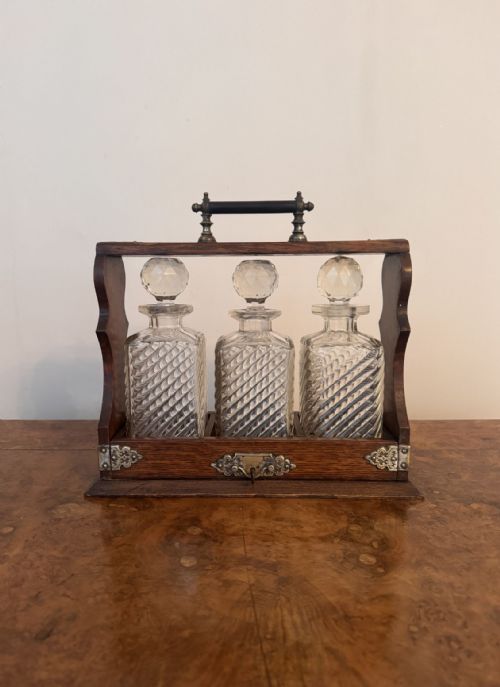
A victorian tantalus box combines secure storage for potable spirits with display, locking the decanters in place until the key is turned. The pieces you encounter most often on this page are oak and walnut cabinets housing three cut crystal or cut glass decanters, frequently paired with games compendiums.
Makers designed these barware pieces for the Victorian and Edwardian drawing room or smoking room. Versions range from single bottle and two bottle configurations to elaborate dry bars and combination boxes holding cards and games alongside the decanters.
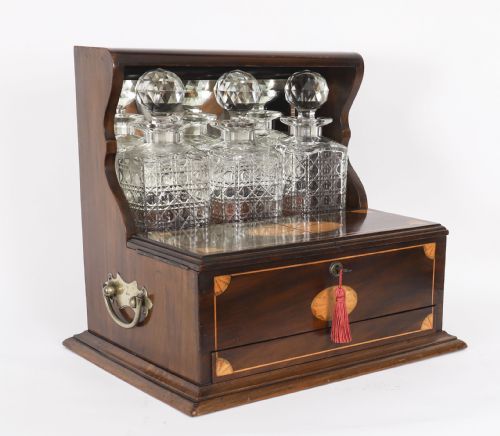
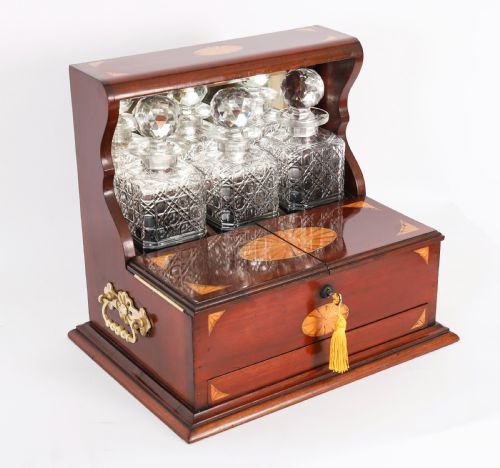
The materials and styles span standard Victorian oak and mahogany to elaborate Black Forest carvings, coromandel, and satin wood. Many examples incorporate brass mounts, mirror glass, and silver plate to catch the light behind the locked decanters.
Materials and Construction
Cabinetmakers built these boxes using solid timbers and decorative veneers including oak, walnut, mahogany, and coromandel, often enhanced with marquetry stringing and brass mounts. The internal compartments required precise joinery to house decanters, glasses, and sometimes folding game boards or scent bottles.
Locking mechanisms formed the defining technical challenge, utilising metal locking bars connected to a secure keyhole to trap the stoppers and prevent the removal of liquid. The glassware itself relied on heavy lead crystal or cut glass, shaped with deep facets to refract light.
Listings demonstrate a strong preference for oak and walnut cabinetry, frequently accompanied by cut crystal decanters and integrated games compendiums.
Assessing Quality and Execution
Quality rests upon the selection of timber and veneer, such as figured burr walnut, pollard oak, or coromandel, matched with substantial brass hardware rather than light plated alternatives. The complexity of the internal fittings also divides the standard pieces from superior examples.
Superior pieces integrate multiple functions, combining the decanter frame with fitted games compendiums, humidors, or dry bar compartments. The depth of the crystal cutting and the precision of the locking mechanism further separate ordinary containers from exceptional works.
Philip Ashberry
The Victorian Tantalus Box Glossary
- Tantalus
- A locking device for decanters that displays the contents while preventing unpermitted pouring. The name derives from the mythological figure who could see water but could not reach it.
- Compendium
- A fitted box containing multiple items for entertainment or dining, such as playing cards, counters, and games boards alongside the decanter set.
- Coromandel
- A dense, dark timber with striking grain patterns imported from Asia and utilised for high-status Victorian boxes and caskets.
- Marquetry
- Inlaid wood veneers forming decorative patterns or pictures on the exterior surfaces of the box.
- Cave de Liqueur
- A continental term for a portable liqueur cabinet or tantalus, often associated with ornate Black Forest woodwork.
Victorian Tantalus Box: Frequently Asked Questions
How does a tantalus lock work?
A metal bar passes across the necks of the decanter stoppers and fastens into a lock secured by a key. When locked, the stoppers cannot be removed, which prevents anyone from pouring the contents without authorization.
Unlocking the mechanism raises or slides the retaining bar, freeing the decanters to be lifted out for serving.
What is the difference between a tantalus and a decanter box?
A decanter box encloses the bottles entirely within a lidded wooden case with opening doors or a hinged top. A tantalus typically holds the decanters in an open or partially visible frame secured by a locking metal bar.
Both forms served the same social function in the nineteenth century, but the tantalus specifically displayed the locked bottles to guests.
Where were these boxes used in the home?
Victorian households placed these containers in drawing rooms, studies, and smoking rooms for after-dinner drinks. They allowed hosts to provide hospitality while keeping expensive spirits secure from household staff.
Many examples include integrated games compartments, making them central pieces for evening entertainment.
How do I identify an Edwardian tantalus from a Victorian one?
Victorian examples frequently feature heavier timber framing, darker polished oak or figured walnut, and elaborate brass mounts. Edwardian pieces often display lighter golden oak or satin wood finishes with simpler decorative stringing.
Construction details and registration marks can also help narrow the decade of manufacture within the broader nineteenth and early twentieth century periods.