




Oak Decanter Chest
An oak decanter chest keeps spirits safe and entertains guests, combining solid timber with secure locks for the home bar.
Oak Decanter Chest
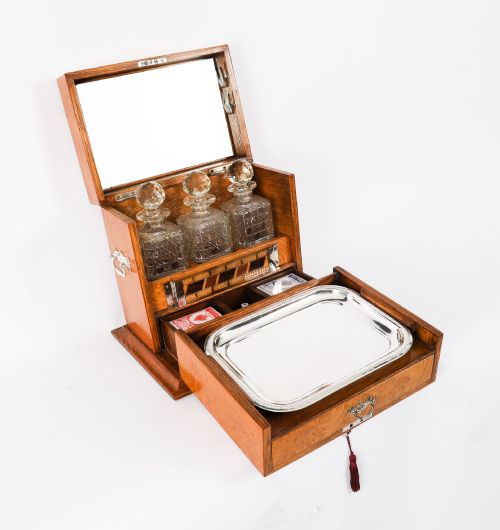
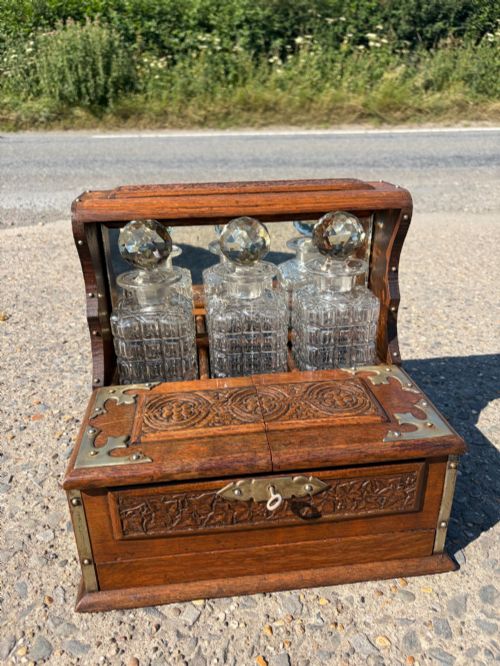
When you search for an oak decanter chest, you encounter sturdy timber boxes designed to house barware securely. These pieces function as portable dry bars, often holding glass bottles alongside compartments for games.
The versions most commonly met on this page date from the Victorian and Edwardian eras, stretching into the 1930s. They appear in blonde oak, golden oak, and dark tones, frequently incorporating brass fittings.
Many examples take the form of a tantalus, where a locking mechanism secures the decanters against unauthorised sampling. Others combine the drinks cabinet with a games compendium, holding cards and boards beneath the bottles.
How they were made
Cabinetmakers built these chests using solid oak timbers, occasionally enhancing the surfaces with marquetry stringing for visual contrast. The wood provides the heavy structural integrity needed to house fragile glass safely during transport.
Oak Decanter Chest Retail Price Guide 2026
Typical asking prices for oak decanter chest among the pieces listed under this phrase on Sellingantiques today, from the lower quarter to the upper quarter. They describe what is for sale here now, not the wider market.
Invented to frustrate thirsty guests and dishonest staff, the tantalus literally keeps your best whiskey in plain view yet entirely out of reach.
What varies in quality
The sophistication of the locking mechanism and internal framework dictates the standing of a piece. Finer examples integrate complex spring-loaded actions that release the decanters only when the correct key is turned.
The integration of a games compendium elevates the utility and complexity of the chest. Superior models show meticulous cabinet work in the fitted compartments, ensuring that cards, counters, and bottles rest securely within the single enclosure.
The Oak Decanter Chest Glossary
- Tantalus
- A locking security device for decanters that prevents removal of the bottles while displaying their contents. This mechanism typically uses a metal bar that engages over the stoppers and fastens with a key.
- Games compendium
- A multi-use box containing equipment for various indoor pastimes such as cards and board games. These compartments often sit beneath or beside the decanter section in larger barware chests.
- Marquetry
- Decorative inlay work using different coloured wood veneers to create patterns on the surface of the chest. It adds ornamental detail to the oak exterior.
- Cut crystal
- Heavy, faceted glass used for the decanters housed inside the chest, designed to catch the light. The cutting creates geometric patterns across the body of the bottle.
Oak Decanter Chest: Frequently Asked Questions
What is an oak decanter chest?
An oak decanter chest is a wooden box built to hold glass bottles and barware securely. Many incorporate locking mechanisms or combine drinks storage with games.
These pieces served as portable entertaining cabinets in nineteenth and twentieth-century homes. They keep spirits organised while displaying the glass decanters.
How do tantalus mechanisms work?
A tantalus mechanism uses a metal bar running across the stoppers of the decanters to lock them in place. The bar fastens at one end with a key-operated lock.
When locked, the bottles cannot be removed from the wooden frame without the key. This design prevented household staff from sampling the owner's spirits.
What periods do these chests come from?
The pieces seen here date from the Victorian period through the Edwardian era and into the 1930s. Victorian examples often feature robust oak construction and ornate brass hardware.
Edwardian and later versions continue the tradition of combining dry bars with games compartments. Each era brings subtle shifts in timber finish and decorative stringing.
How were games compendiums included?
Games compendiums were built into the lower drawers or internal lift-out trays of the decanter chests. They held items like playing cards, dominoes, and board game pieces alongside the bottles.
This dual-purpose design allowed hosts to provide both drinks and entertainment from a single piece of furniture. The internal compartments kept all the gaming equipment neatly stowed.