



Gothic Revival Lamps
Gothic revival lamps bring ecclesiastical form and heavy metalwork into domestic spaces, offering dramatic illumination through pointed arches and medieval motifs.
Gothic Revival Lamps
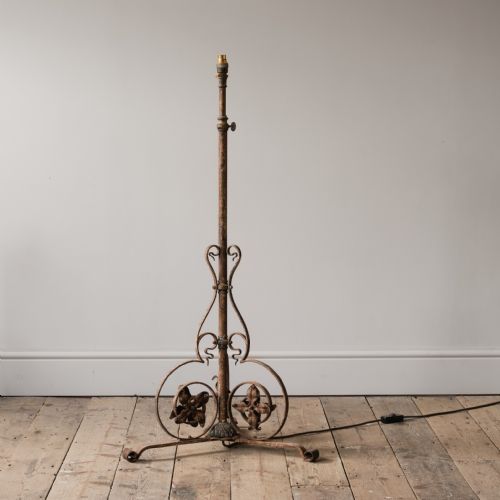
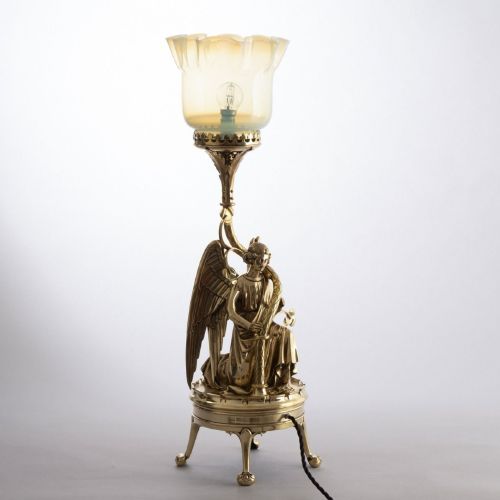
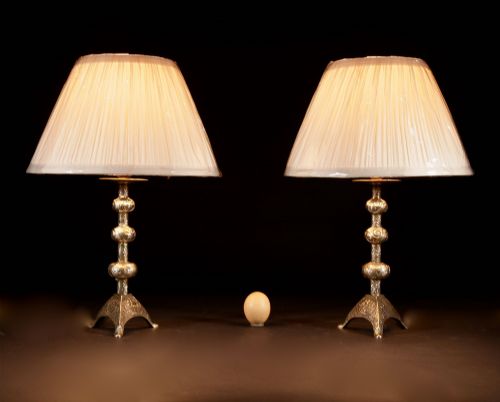
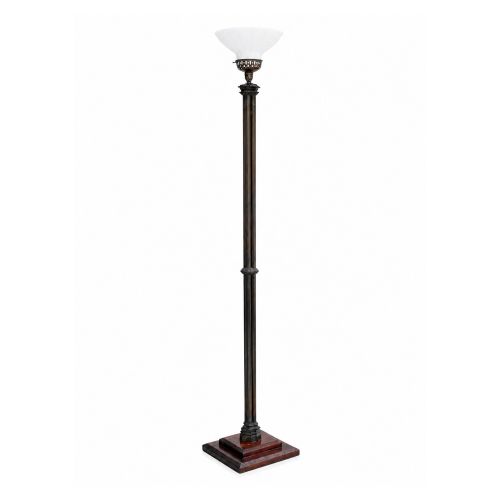
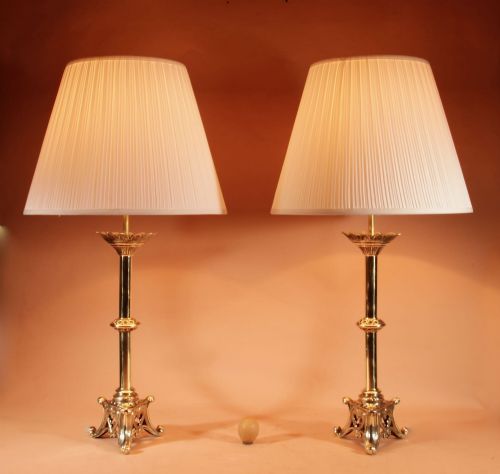
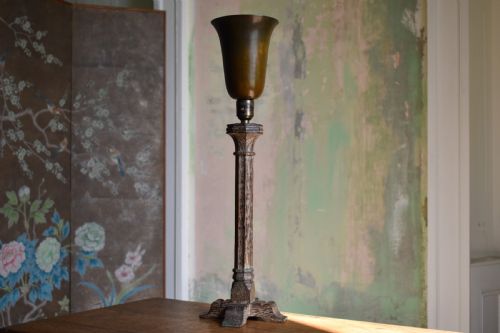
When you search for gothic revival lamps, you encounter lighting fixtures shaped by nineteenth-century architectural zeal and medieval revivals. The selection on this page leans heavily towards converted brass altar candlesticks, heavy cast brass table lamps, and wrought iron floor stands dating from the Victorian era.
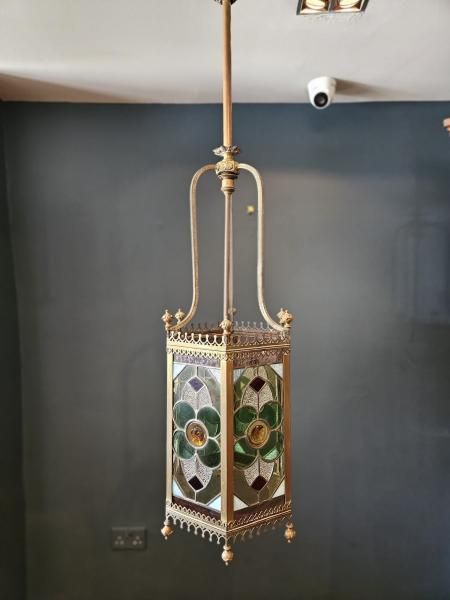
Makers and designers of these pieces drew directly from church architecture, translating lancet windows, quatrefoils, and buttresses into functional household items. You will also find ecclesiastical lanterns in brass and glass alongside floor-standing telescopic oil lamps adapted for modern electricity.
Materials and Construction
Brass and wrought iron dominate the construction, often cast with significant weight or hand-forged by blacksmiths to achieve structural rigidity. Timber elements utilise oak and mahogany, frequently carved with deep linenfold or geometric tracery.
Glass components introduce colour and texture through vaseline glass shades or leaded panels within hanging lanterns. Silver plating and gilding further enrich the metallic surfaces of ecclesiastical lighting.
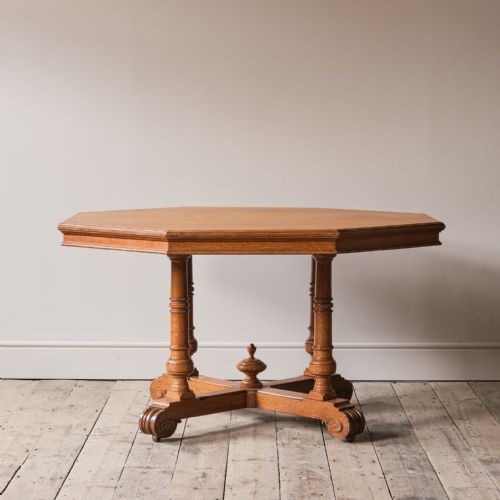
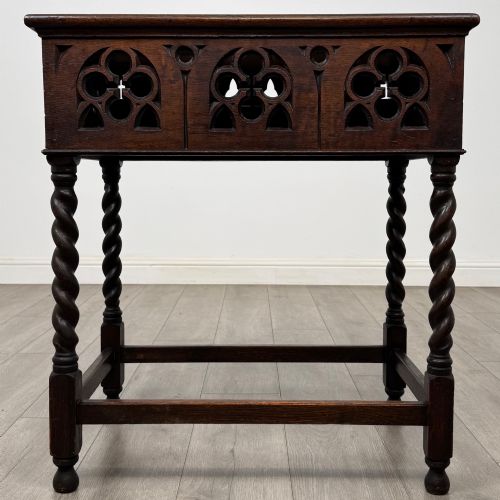
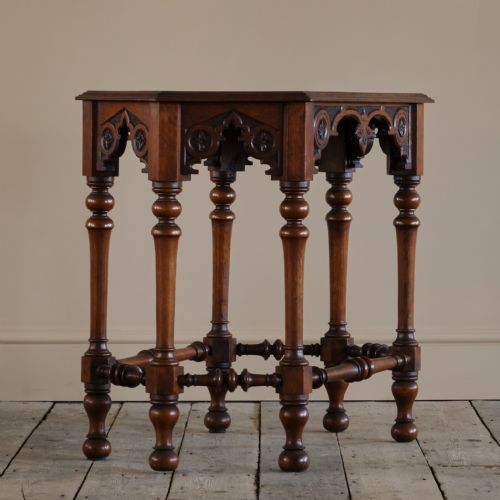
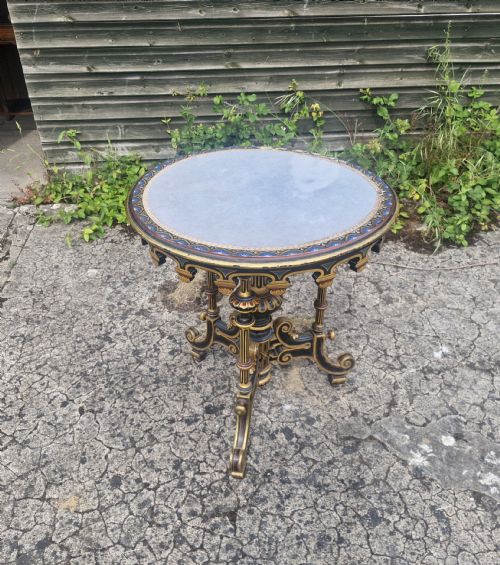
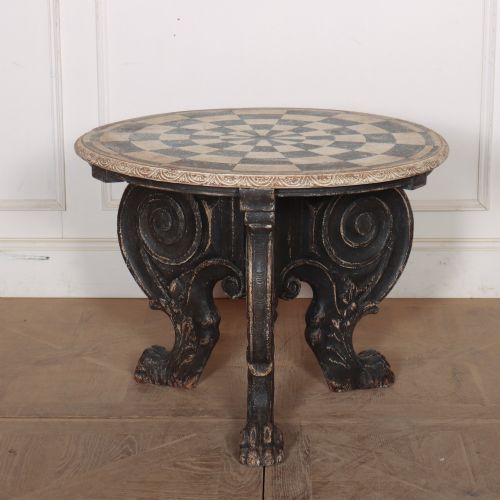
Listings combine lighting with oak side tables and occasional furniture from the nineteenth century and the Edwardian period.
Judging Quality and Execution
The distinction between ordinary production and finer items rests upon the crispness of the casting and the depth of the metalwork. Heavy gauge brass and sharply defined architectural motifs separate superior ecclesiastical conversions from simpler domestic copies.
Proportion and integrity of materials dictate overall merit, particularly in pieces combining timber bases with metal mounts. Original patination on unpolished brass and the retention of period coloured glass elevate the standing of a lamp.
Baillie Scott·Pugin
The Gothic Revival Lamps Glossary
- Altar Candlestick
- A tall ecclesiastical candlestick designed for church use, frequently converted into a table lamp. These items provide heavy brass construction and architectural bases.
- Tracery
- Architectural stonework ornamentation reproduced in wood or metal on furniture and lamp bodies. This ornamental stonelike pattern defines much of the gothic aesthetic.
- Vaseline Glass
- Uranium glass that glows under ultraviolet light, appearing yellow or greenish. It appears in late Victorian lighting to add colour and luminosity.
- Quatrefoil
- A decorative four-lobed shape resembling a four-leaf clover, common in gothic design. You see this motif pierced into metal bases and carved into wooden tables.
- Ecclesiastical
- Relating to the Christian Church or its clergy, describing items originally made for worship. These pieces entered domestic interiors during the nineteenth-century revival of medieval styles.
Gothic Revival Lamps: Frequently Asked Questions
What are gothic revival lamps?
These are lighting fixtures, predominantly from the nineteenth century, that draw their design inspiration from medieval church architecture. They translate architectural elements like pointed arches and heavy buttresses into functional domestic objects.
Most examples available are conversions of ecclesiastical brass altar candlesticks or heavy cast metal floor and table lamps produced during the Victorian period.
How were church candlesticks converted?
Period lighting often started life as heavy brass altar candlesticks used in churches, which were later drilled and fitted for electrical wiring during or after the Victorian era. This conversion allowed heavy metalwork to serve safely in domestic interiors as table lamps.
Makers maintained the original ecclesiastical form and patination while adding modern lamp holders and fabric flex to suit contemporary homes.
Where should I place a floor lamp?
Heavy wrought iron or brass floor lamps suit dark corners of a study, library, or living room where their substantial vertical presence anchors the furniture arrangement. Their telescopic frames allow adjustment over armchairs or beside low side tables.
Keep them away from damp environments and ensure the heavy metal base rests level on solid flooring to support the considerable weight.